

Top 11+ industrial style decoration trends: From raw warehouses to luxury offices
In 2026, industrial style decoration is evolving beyond its raw, utilitarian roots. Warmer textures, sculptural furniture, biophilic elements, and refined materials are reshaping the aesthetic into something more elevated and livable. From contemporary offices to luxury commercial interiors, today’s industrial spaces balance bold character with sophistication, functionality, and intentional design.
|
What Is Industrial Style Decoration? Industrial style decoration is an interior design approach that celebrates exposed structural elements (concrete, steel beams, brick, ductwork), raw and unfinished materials, high ceilings, open layouts, and a neutral-to-dark color palette. Originally inspired by repurposed factories and warehouses, it has evolved into one of the most versatile and enduring design languages in both residential and commercial interiors. |
1. The Rise of “Soft Industrial”
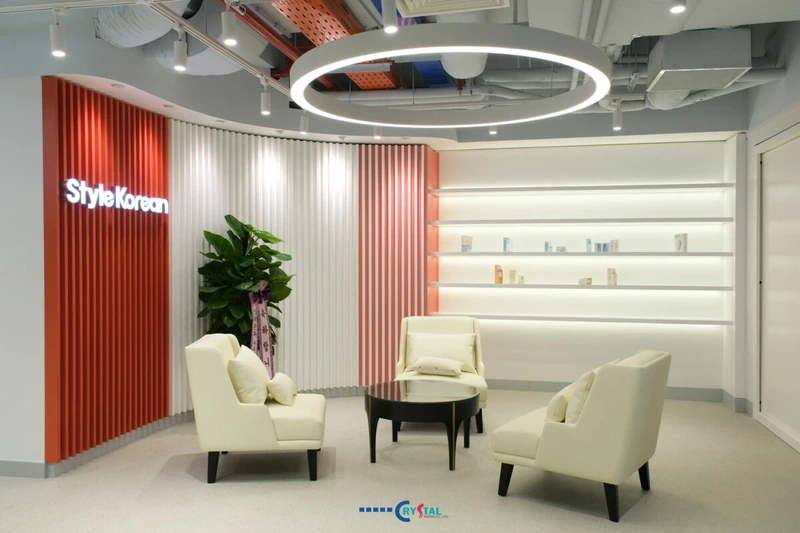
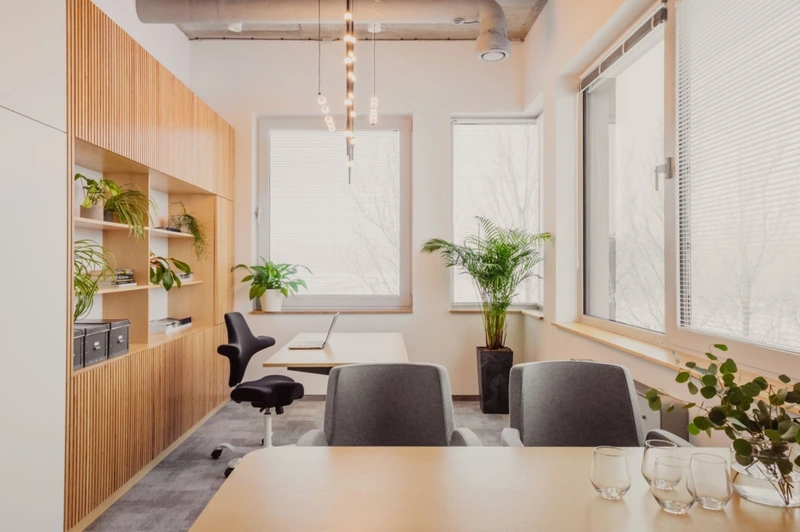
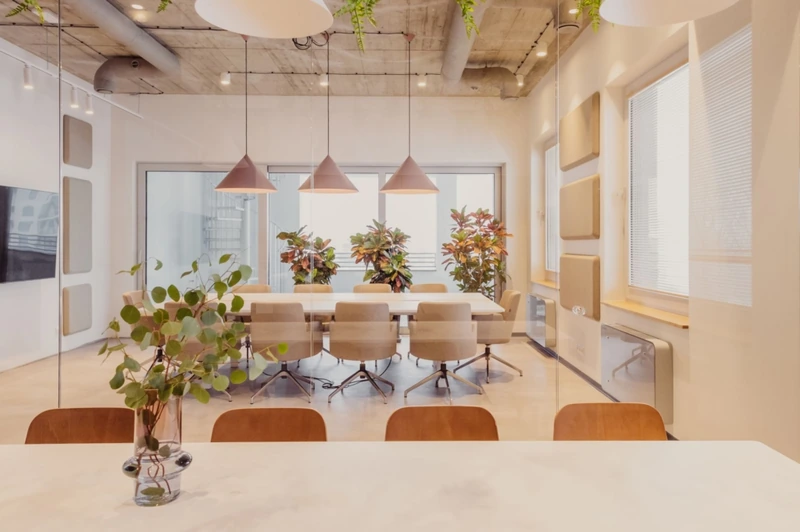
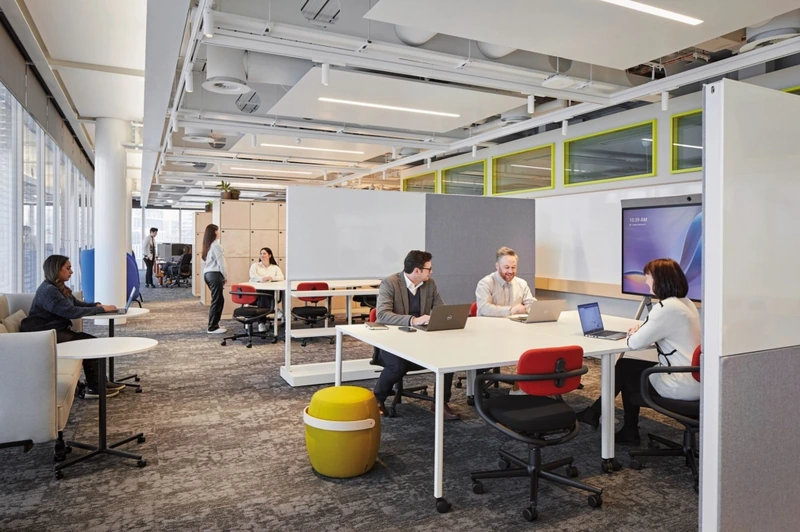
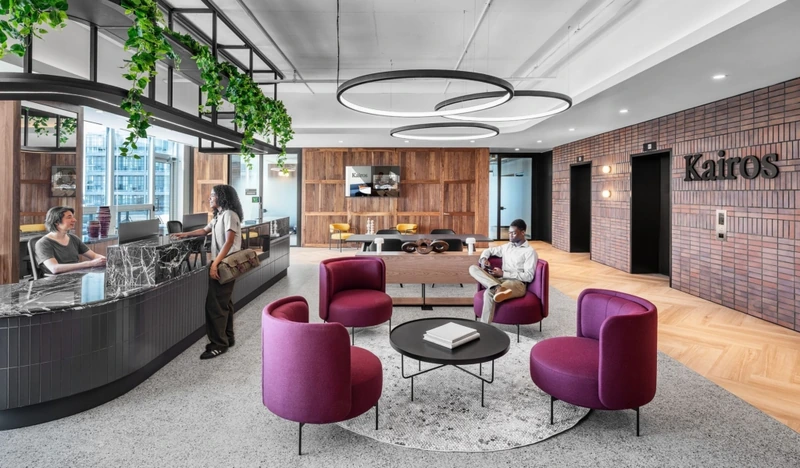
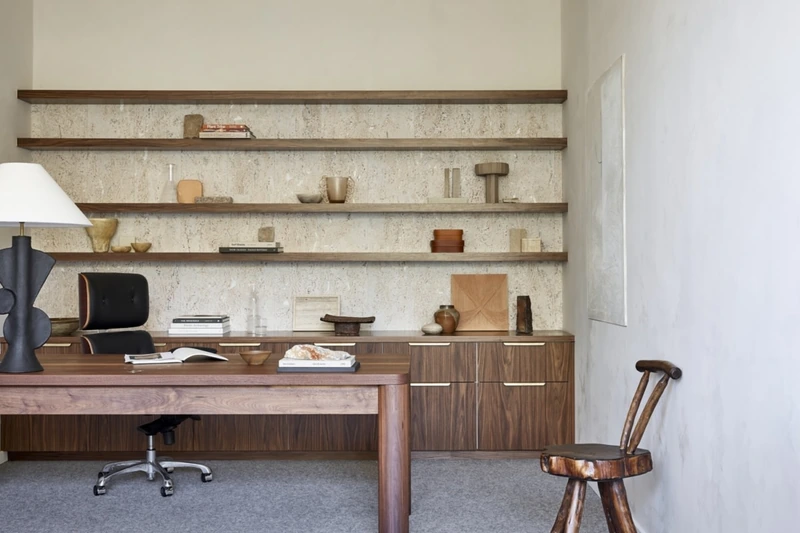
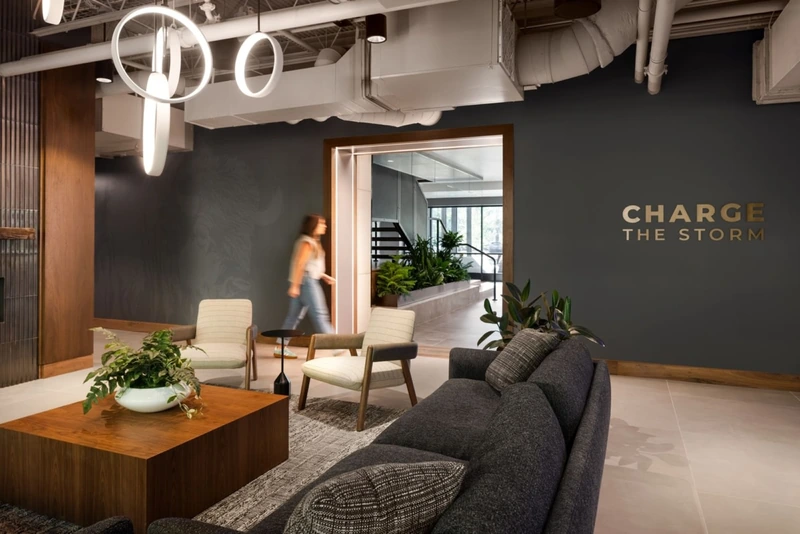
“Soft Industrial” is not a departure from the industrial style; it is its maturation. Modern industrial design is incorporating biophilic elements, living walls, hanging plants, and warm textures such as boucle, velvet, and walnut wood to create spaces that feel habitable rather than sterile. For example:
- A raw concrete feature wall with a boucle sectional sofa in warm ivory.
- Placing a live-edge walnut conference table beneath an industrial pendant cluster.
- For every hard surface, there is a tactile counterpoint – a sheepskin throw, a linen cushion, a trailing Pothos on a high metal shelf.
- Mix “soft” with the “hard”: for every exposed beam, add a flowing curtain; for every metal surface, add natural woven baskets. The result is a space that has industrial character but also invites you to sit down and stay.
For commercial clients, Soft Industrial solves a longstanding tension: how do you project a bold brand identity without making your employees or customers feel like they are working inside a “parking garage”? The answer is the same one that defines the best modern industrial interior design ideas of this era – precision in contrast, warmth through material honesty, and comfort as a design intention rather than an afterthought.

2. Transitioning to Curved Shapes and Fat Furniture
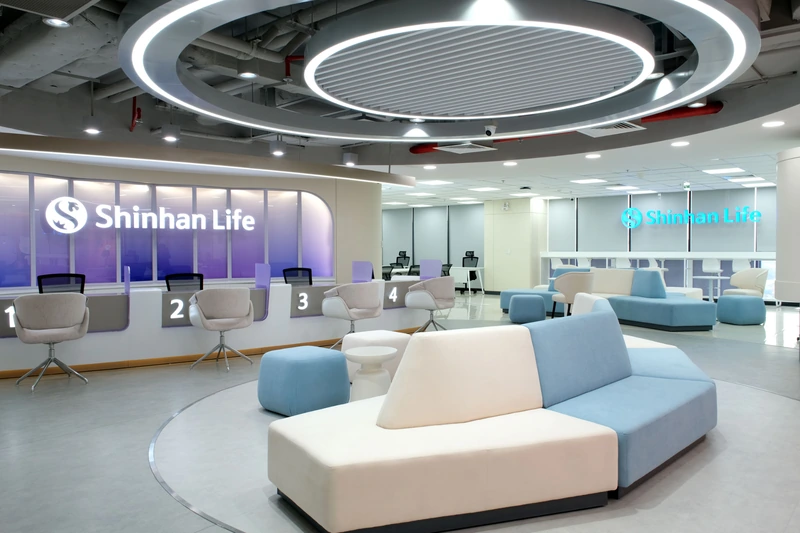
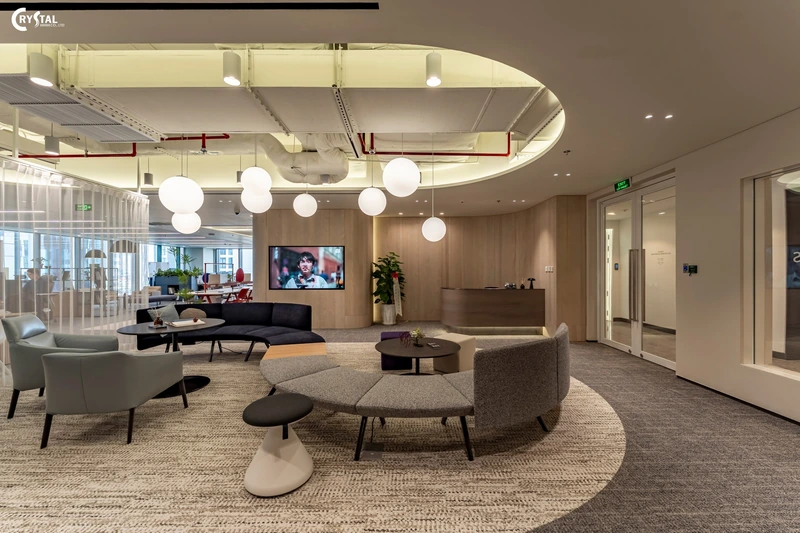
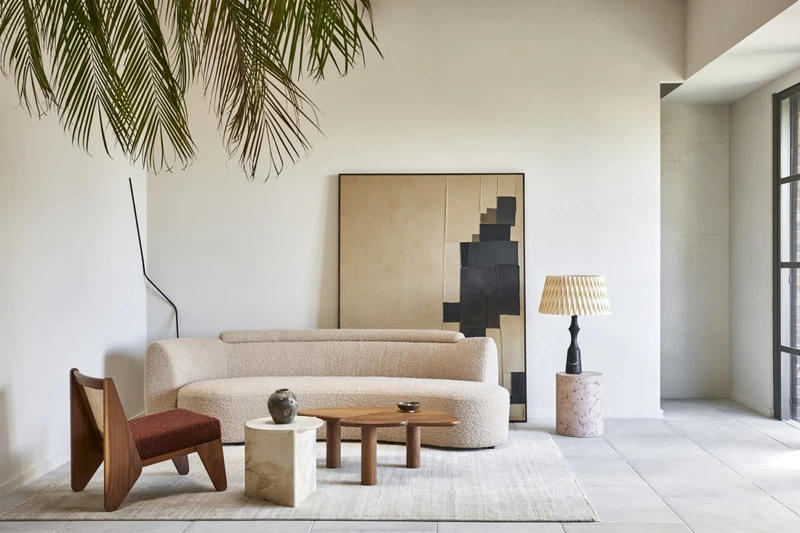
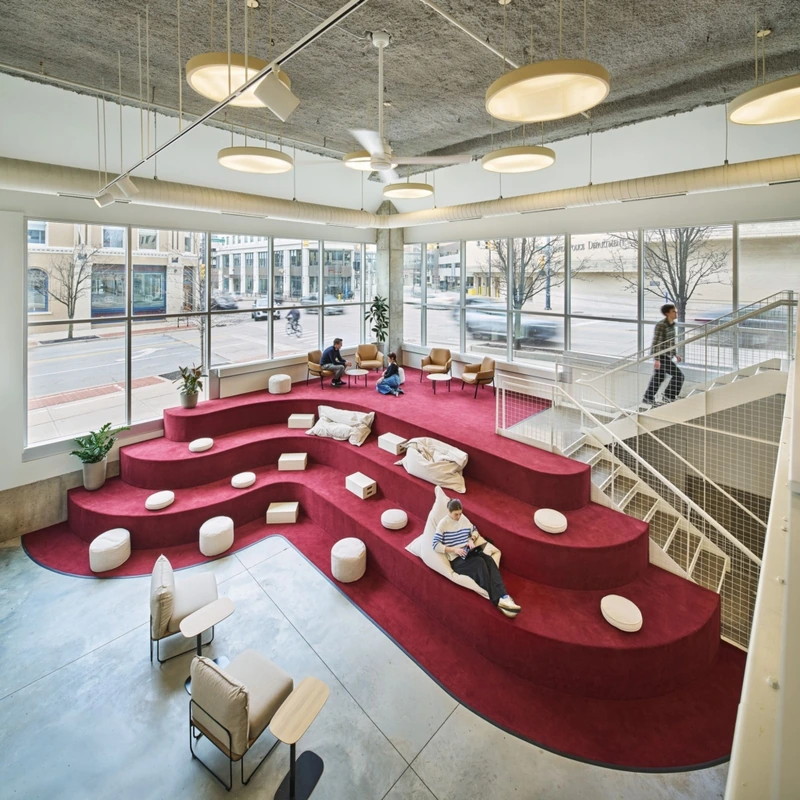
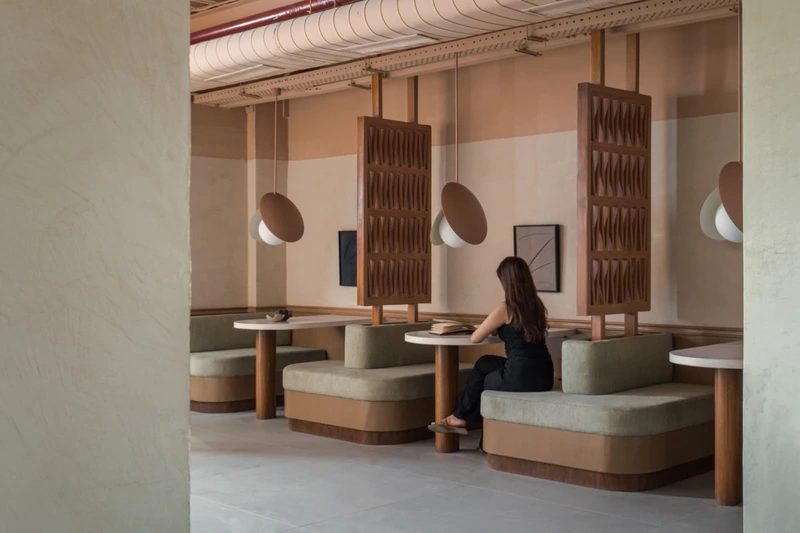
The sharp-edged, rigidly rectilinear pieces that once dominated industrial spaces have given way to something altogether different: furniture that swells, rounds, and breathes. For offices and commercial showrooms, curved fat furniture communicates luxury without being ornate. It signals comfort without sacrificing the structural drama that industrial style decoration demands. And it offers a practical solution to one of the oldest challenges in industrial interior design ideas: how to make a high-ceilinged, open-plan space feel human-scaled and approachable.
- Sweeping sideboards, rounded dining chairs, and sculptural tables that feel less like furniture and more like art you can sit on.
- Curves make a space feel alive, intimate, and instinctively welcoming.
- Curved furniture invites movement through a room, softens corners, and makes a home or workspace feel like it is breathing.
- Fat furniture, in particular, has become a signature element of the most ambitious industrial style decoration projects of this period:
- Oversized barrel chairs upholstered in distressed cognac leather. Deep, low-slung sofas with rounded arms in charcoal boucle.
- Plump curved banquette seating in velvet sage, set against a wall of exposed concrete block.
- These pieces anchor a room and create an intentional layout that feels curated rather than haphazard.

3. The Return of Bright Metal
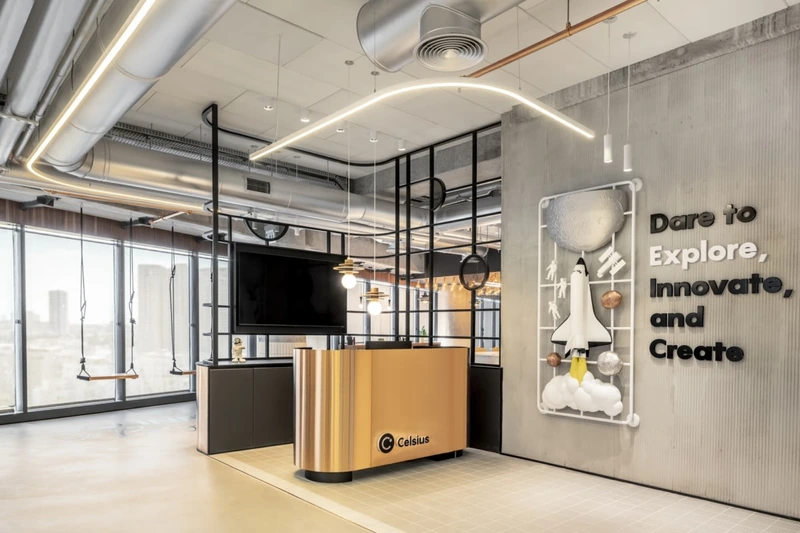
For a long time, matte black was the only metal finish acceptable in serious industrial style decoration. In 2026, that orthodoxy is breaking down. Bright metals are staging a decisive return: Brushed brass, satin bronze, polished copper, and aged nickel are appearing with increasing frequency across the most talked-about industrial interior design ideas coming out of leading studios worldwide.
- A brushed brass pendant hovering above a raw concrete kitchen island.
- Copper plumbing pipes deliberately left visible and lacquered to preserve their warm glow.
- Satin nickel light switch plates set flush into an exposed brick wall.
- Each of these choices introduces a note of warmth and richness that matte black, for all its sophistication, simply cannot provide.
- The evolving neo-industrial trend softens the look with warm earth tones like terracotta and rust, and broad accents like navy, olive, and sage green – materials that carry both weight and elegance.
- In practice, the most successful approaches to bright metal in industrial style decoration treat it as an accent rather than a replacement. Matte black anchors the structure: the window frames, the primary furniture legs, the ceiling track. Bright metal then surfaces in the details – pendant housings, cabinet pulls, stair railings, and decorative pipe joints.
This shift aligns with a broader movement in modern industrial interior design ideas toward what specialists are calling “neo-industrial chic”. The goal is to give it a sense of craftsmanship that goes beyond mere utility.
4. Intelligent Zoning (Broken Plan)
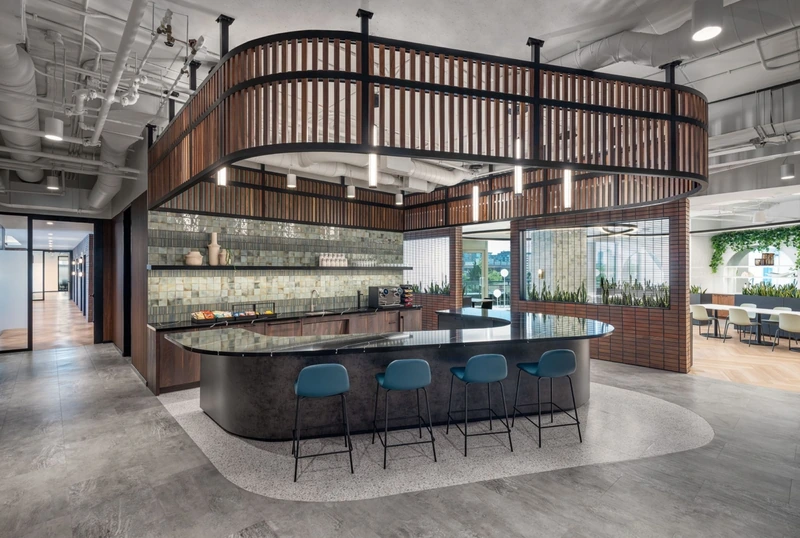
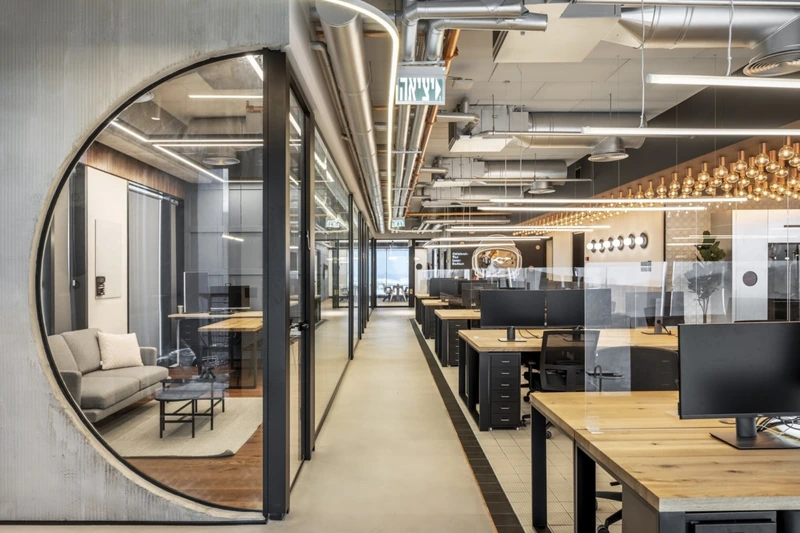
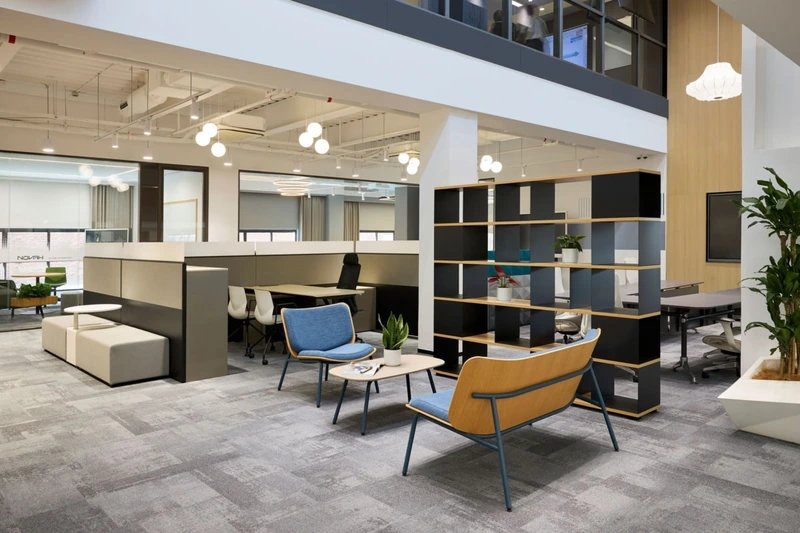
The fully open-plan layouts remain a defining feature of industrial style decoration, but modern interiors are becoming more intentional in how space is organized. The broken plan approach keeps the openness of industrial design while creating clear, functional zones without relying on full-height walls.
Instead, designers use subtle spatial dividers such as the following:
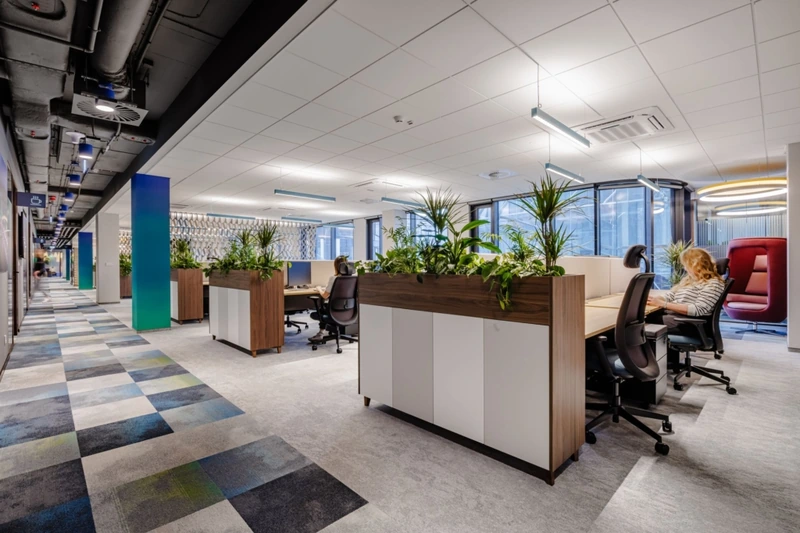
- Material transitions between work and lounge areas
- Steel-framed glass partitions for light and acoustic balance
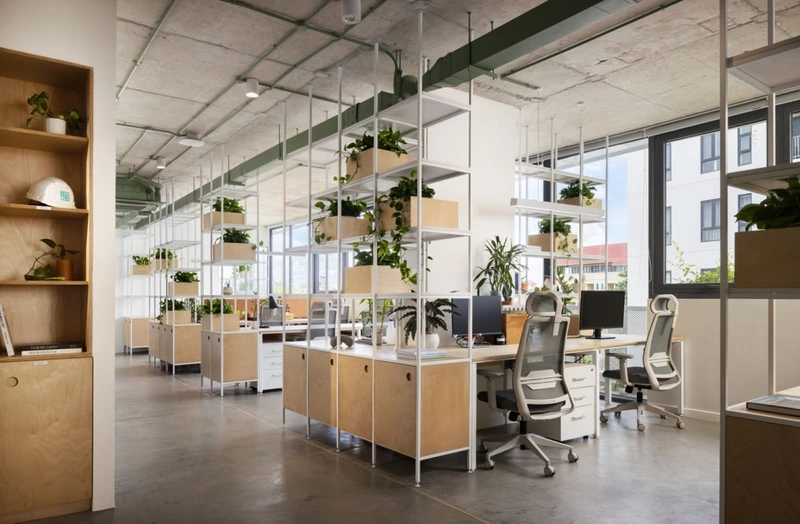
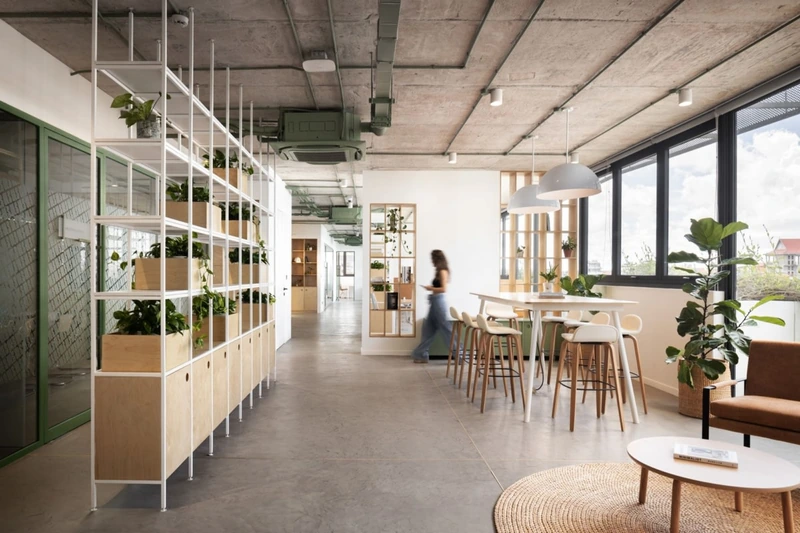
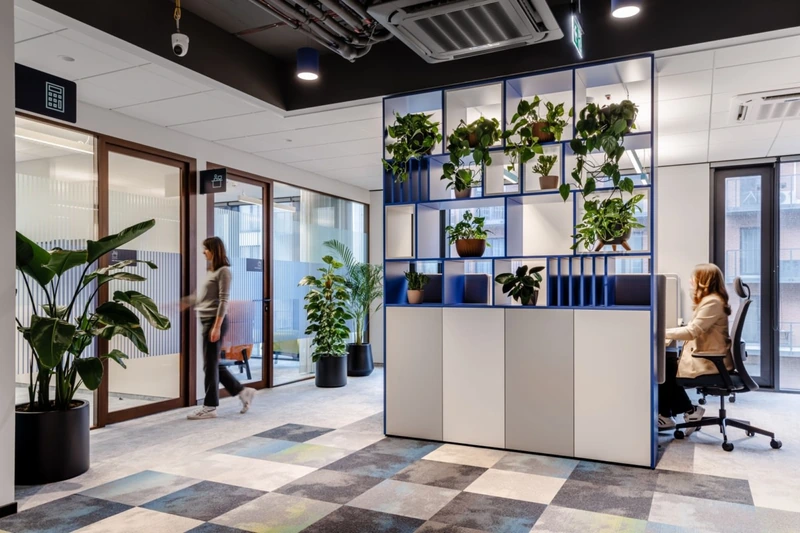
- Sculptural shelving systems that separate spaces naturally
- Lighting arrangements that define different zones
This approach is especially effective in luxury offices and commercial interiors, where collaboration, privacy, and social spaces need to coexist within one cohesive industrial environment. Done well, it allows each zone to feel designed and purposeful while maintaining the sweeping spatial generosity that makes industrial style decoration so compelling in the first place.
5. Bringing Nature Indoors (Biophilic Design)
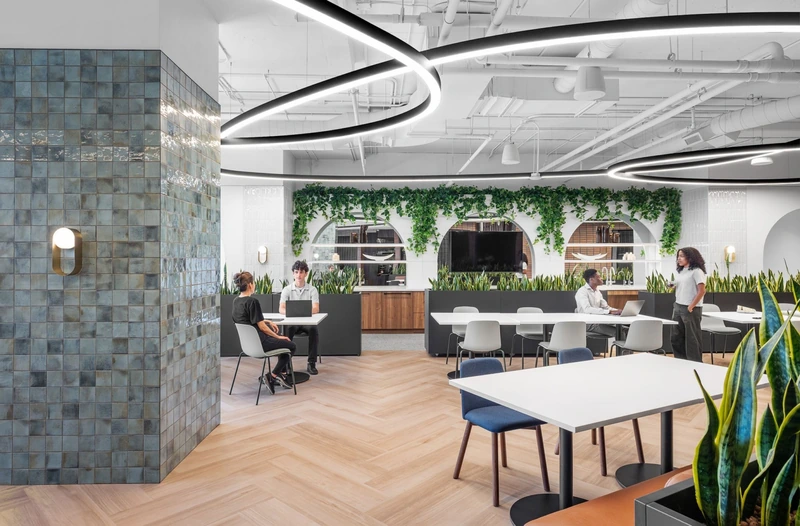
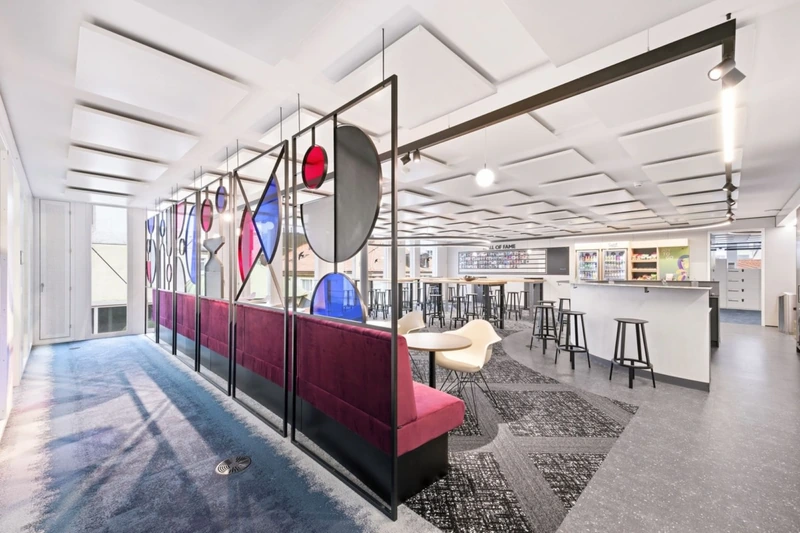
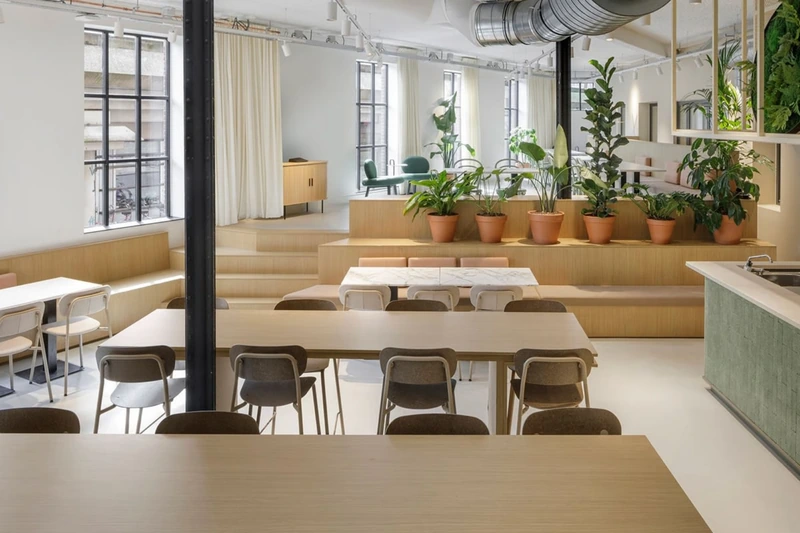
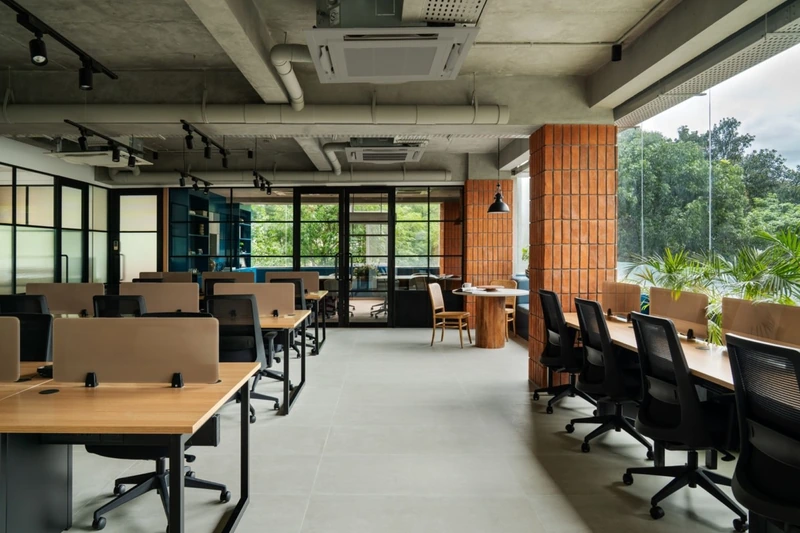
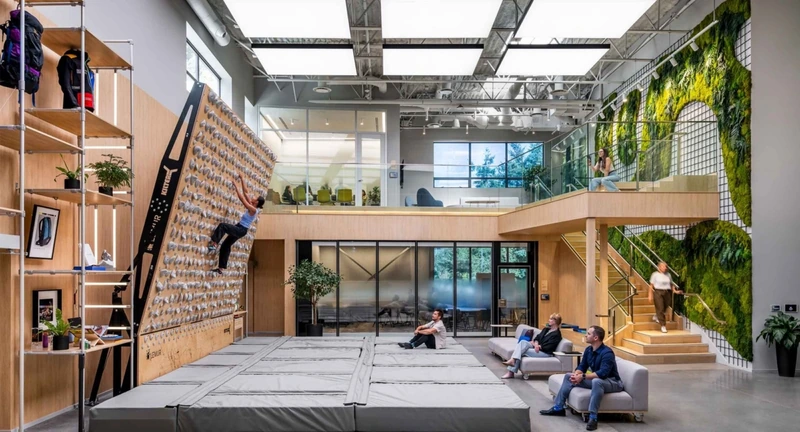
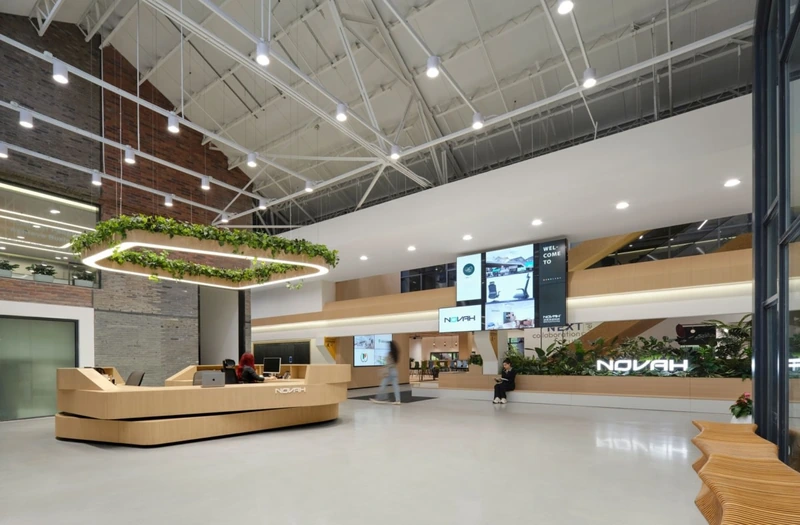
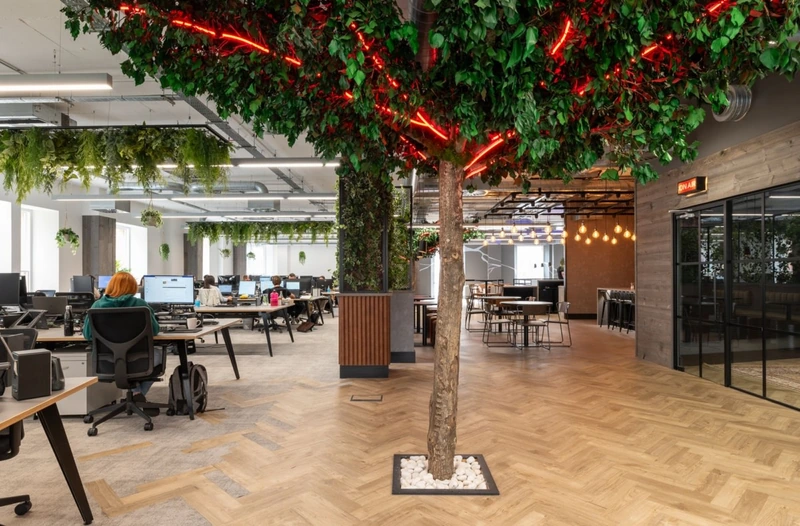
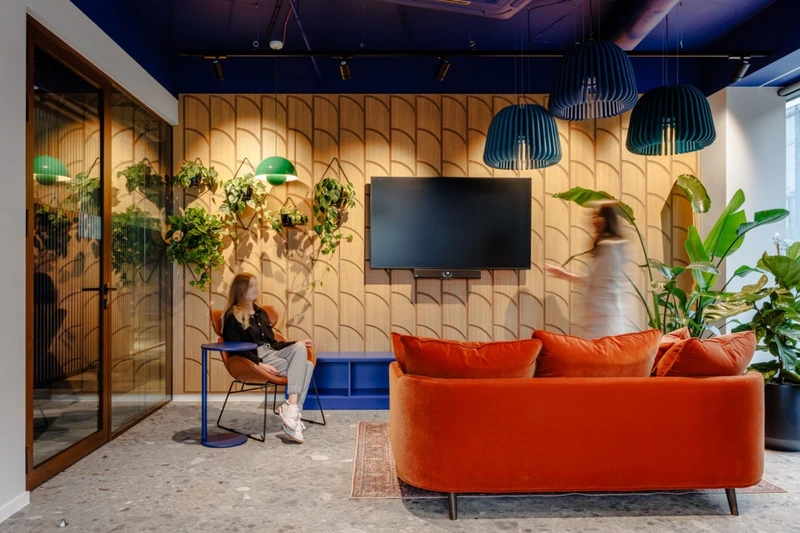
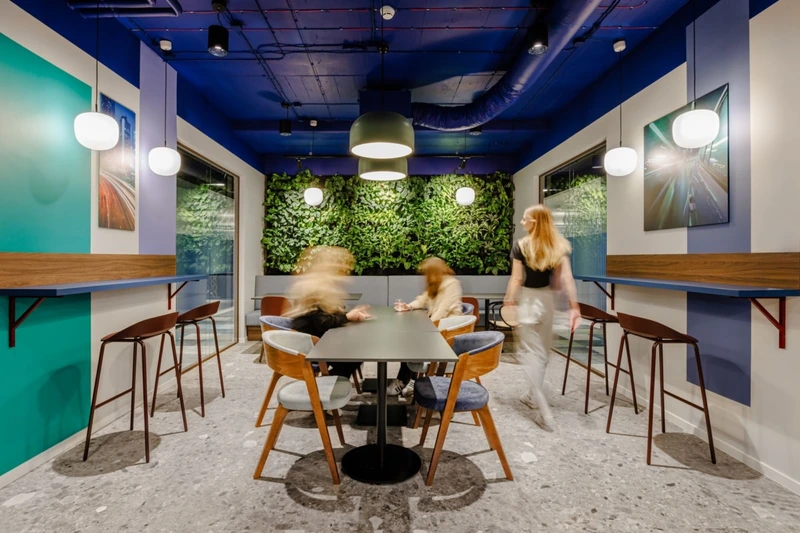
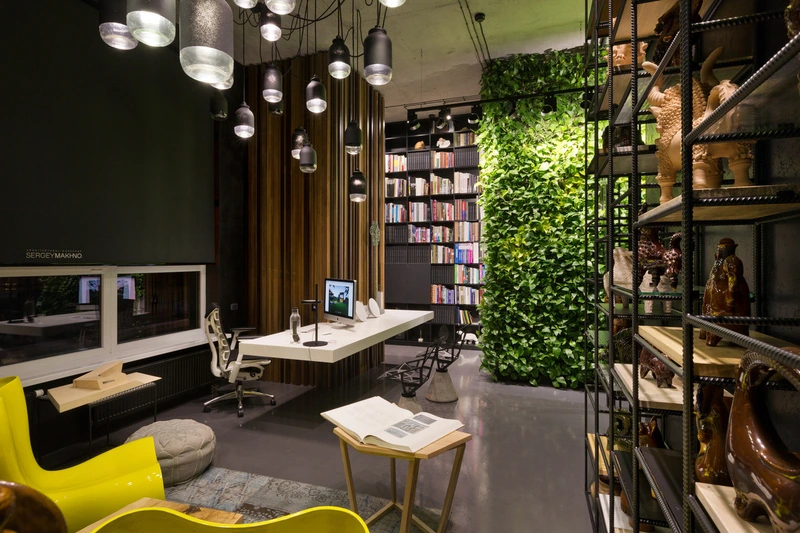
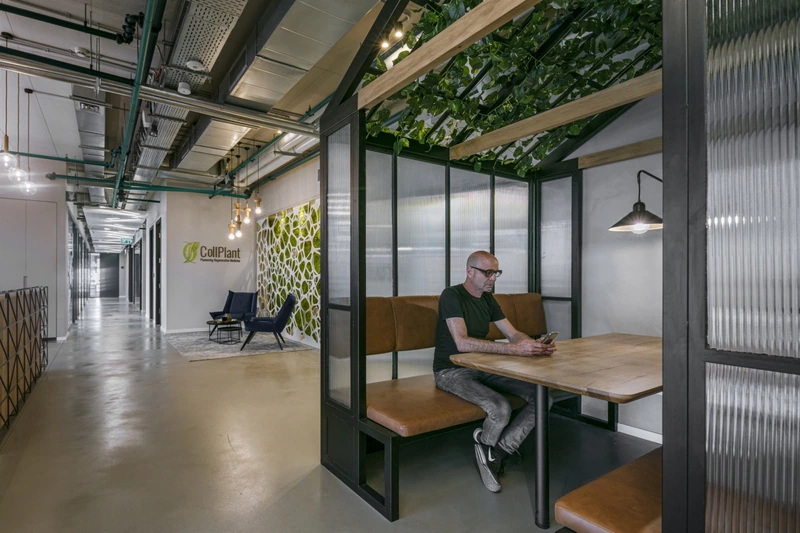
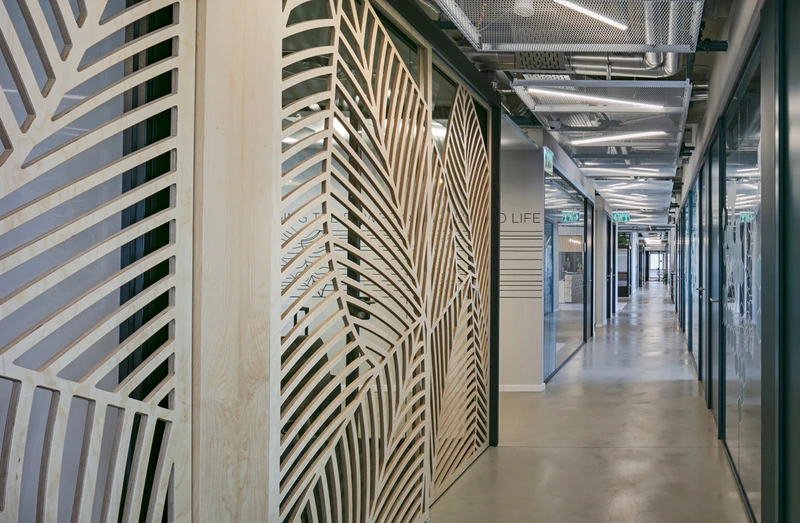
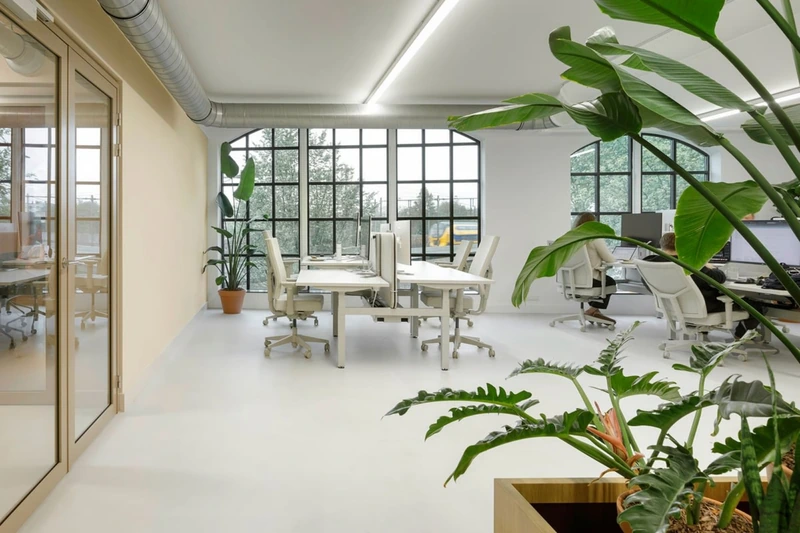
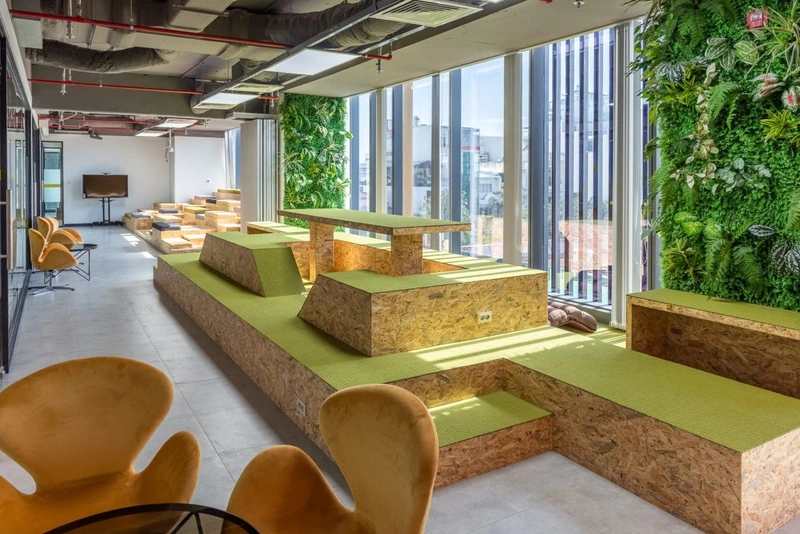
Of all the industrial interior design ideas gaining traction in 2026, biophilic design represents the most fundamental philosophical evolution of the style. While industrial style decoration has traditionally focused on concrete, steel, and exposed architectural elements, modern spaces now balance those raw materials with natural textures and greenery
Instead of relying on simple decorative plants, designers are integrating natu
- Living green walls against concrete or bric
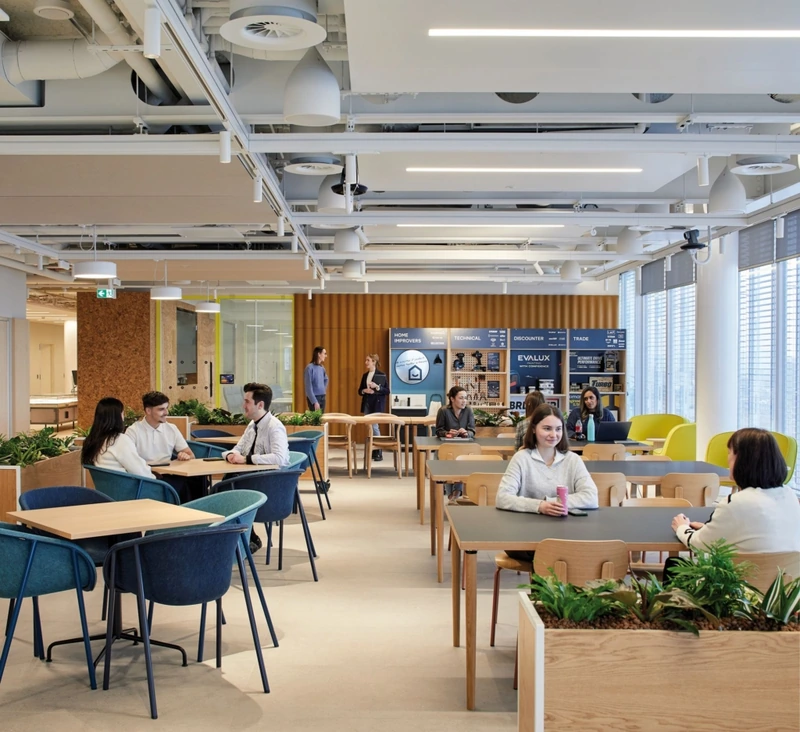
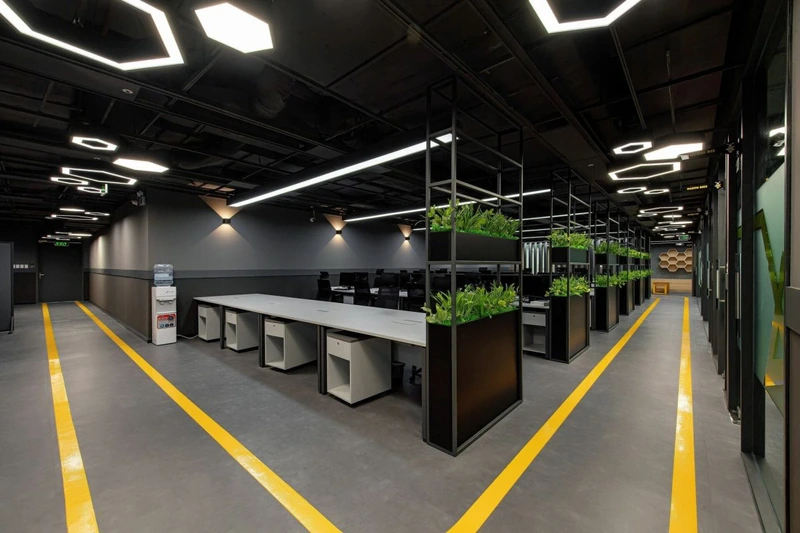
- Modular planters built into workstations and seating
- Natural materials like oak, stone, cork, and bamboo
- Large windows that maximize daylight and openness
The contrast between industrial materials and organic elements creates a more refined and visually balanced interior. In offices and commercial spaces, biophilic design also supports employee well-being by reducing stress, improving focus, and making the environment feel more inviting and productive.
6. Material Palette: Black Steel, Natural Wood, and Tempered Glass
Material contrast remains at the heart of the industrial decoration style, and in 2026, black steel, natural wood, and tempered glass continue to define the look with a more refined and contemporary approach.
- Black steel brings structure and visual depth to industrial interiors. From slim Crittall-style frames to matte-finished shelving systems and exposed ceiling details, it adds a clean architectural edge without overwhelming the space. In many modern industrial interior design ideas, matte black finishes are now preferred for their softer, more sophisticated appearance.
- Natural wood balances the coolness of steel with warmth and texture. Reclaimed timber, live-edge surfaces, and richly grained oak are widely used for tables, shelving, and accent walls, adding character while softening the raw industrial atmosphere.
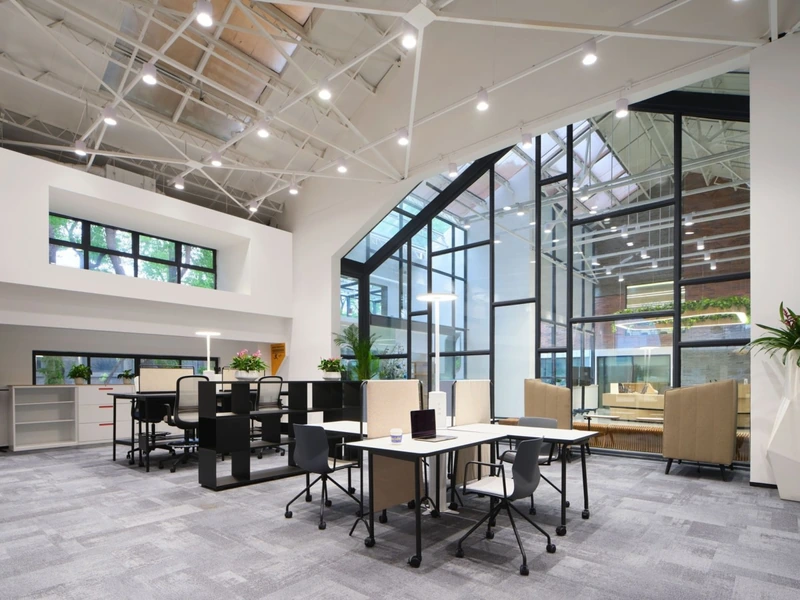
- Tempered glass completes the palette by maintaining openness and natural light. Used in office partitions, stair railings, and steel-framed glazing systems, it helps industrial spaces feel brighter, more spacious, and visually connected without compromising functionality.
|
Material |
Key Application |
Finish Quality to Specify |
|
Black Steel |
Frames, legs, brackets, track systems |
Flat matte powder coat or hot-rolled raw steel |
|
Natural Wood |
Table tops, shelving, wall cladding, flooring |
Oil-penetrating finish, wire-brushed or live-edge |
|
Tempered Glass |
Partitions, balustrades, windows |
Clear or low-iron; frameless or Crittall-profile steel frame |
|
Exposed Concrete |
Walls, columns, floors |
Polished, bush-hammered, or raw board-formed |
|
Brushed Brass/Copper |
Accent hardware, pendant housings, detail fittings |
Unlacquered aged brass or satin brushed finishes |
7. Exposed Structural Elements: Turning Infrastructure Into Architecture
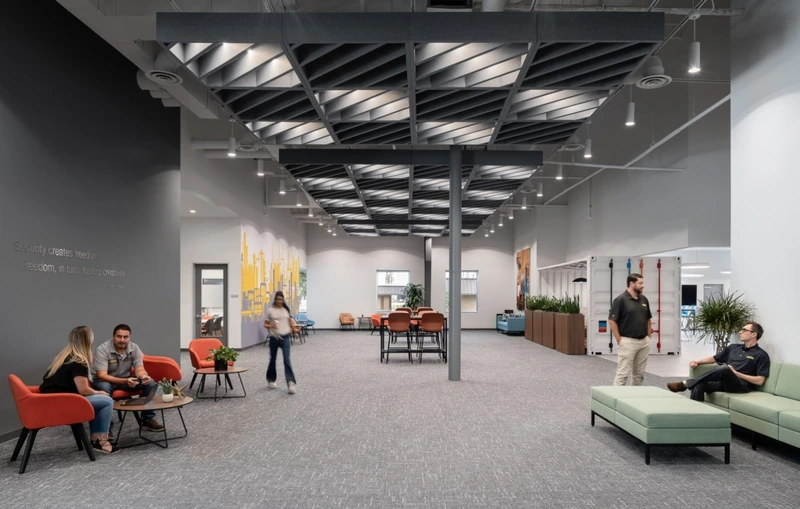
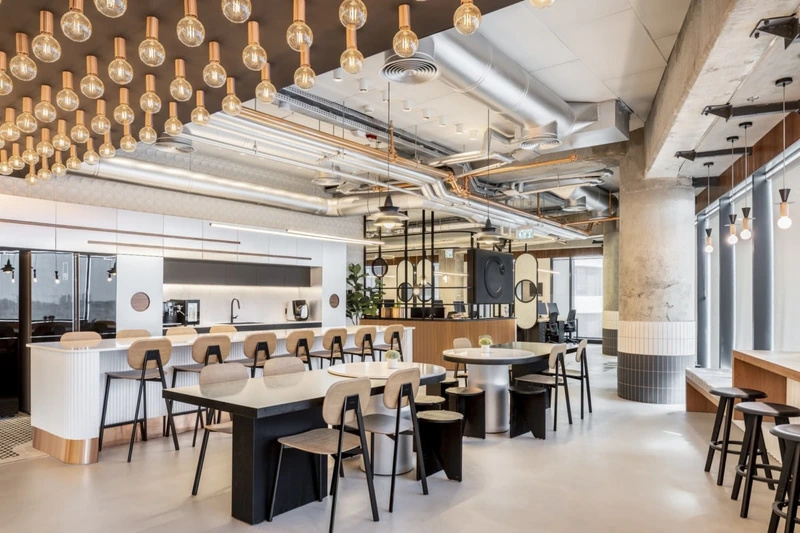
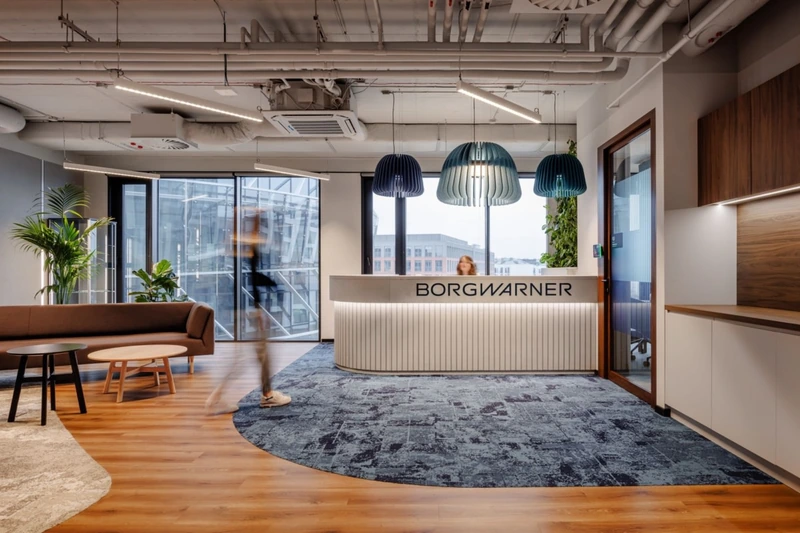
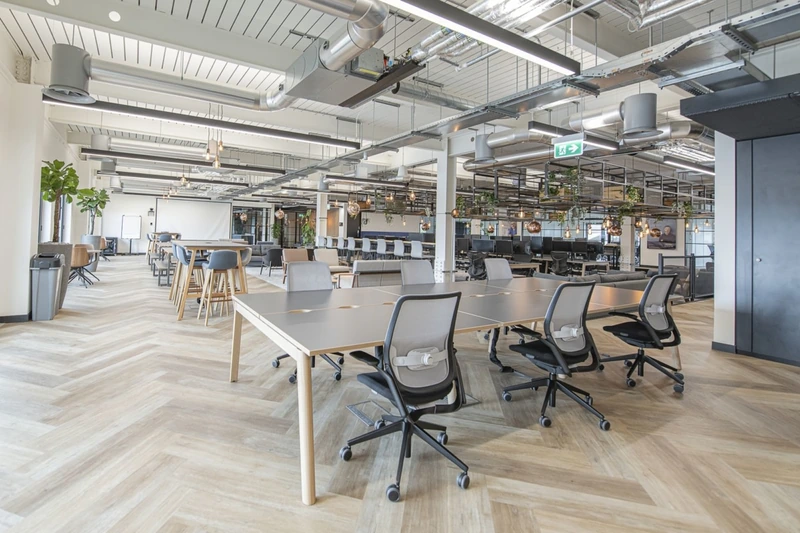
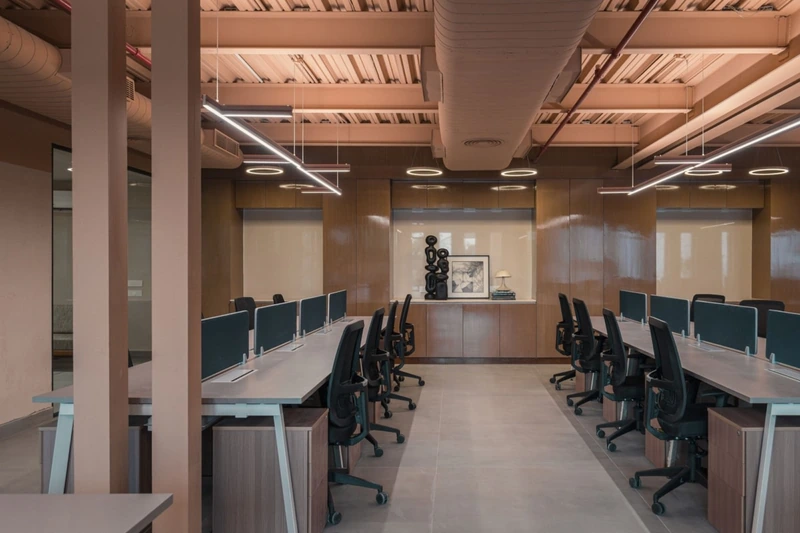
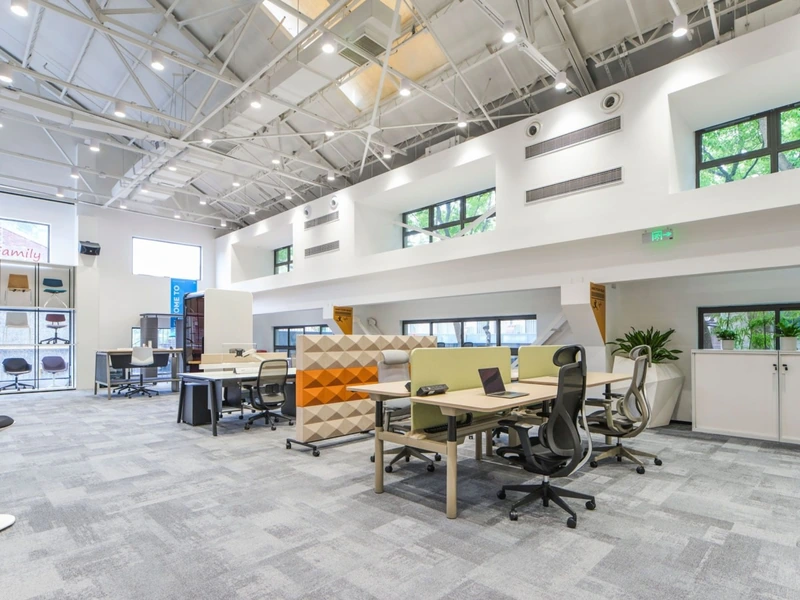
One of the defining characteristics of industrial style decoration is the decision to expose, rather than conceal, the building’s structural and mechanical systems. Steel beams, concrete columns, pipes, and HVAC ductwork become part of the visual language, adding authenticity and architectural depth to the space.
In well-designed industrial interiors, these elements feel intentional rather than unfinished. Matte black steel beams, exposed concrete surfaces, and aligned ductwork create strong geometric lines that guide the eye and reinforce the raw character of the design. High ceilings and open layouts make these structural details even more impactful.
Key elements commonly highlighted in industrial style decoration include:
- Exposed steel or concrete beams with textured finishes
- Raw or polished concrete columns used as visual focal points
- Visible HVAC systems and piping arranged with clean, organized lines
- Matte black or charcoal finishes that create a cohesive industrial palette
The success of this approach depends on precision and coordination. When structural systems are carefully planned and visually integrated, they become architectural features that strengthen the identity of the entire interior.
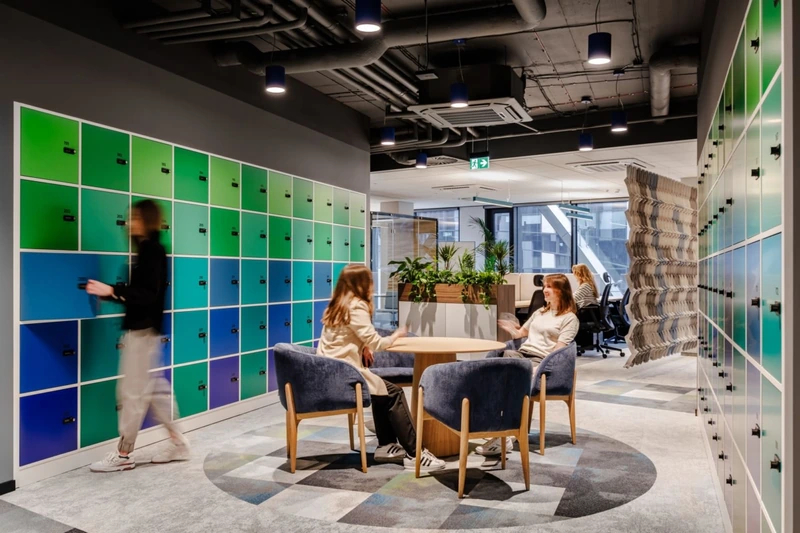
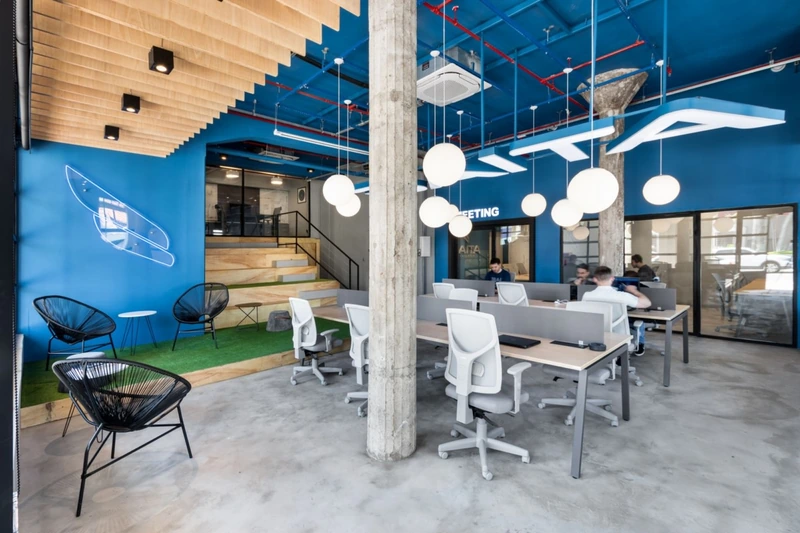
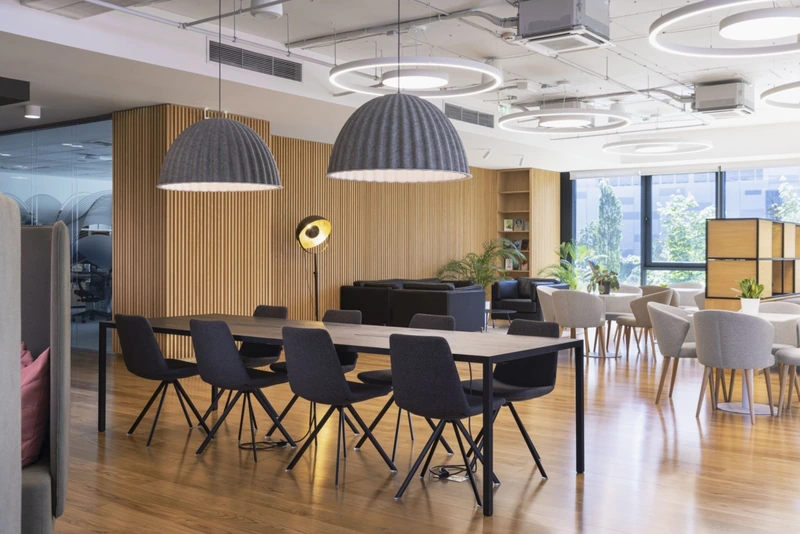
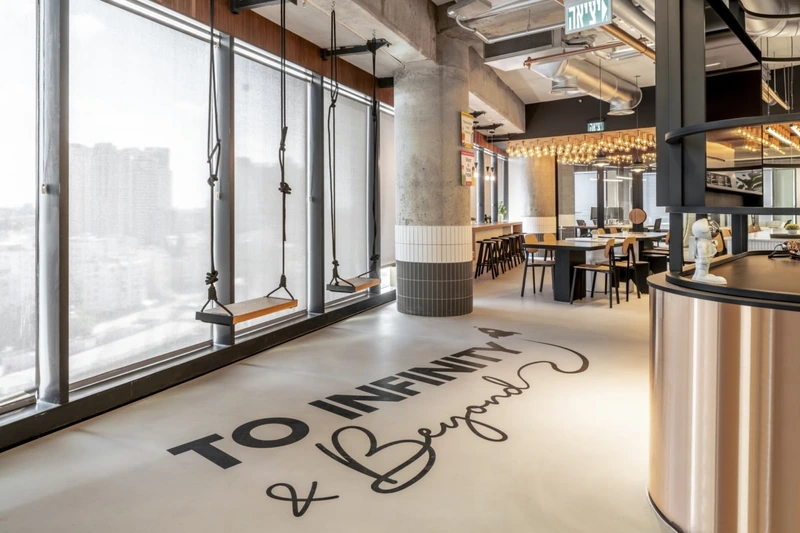
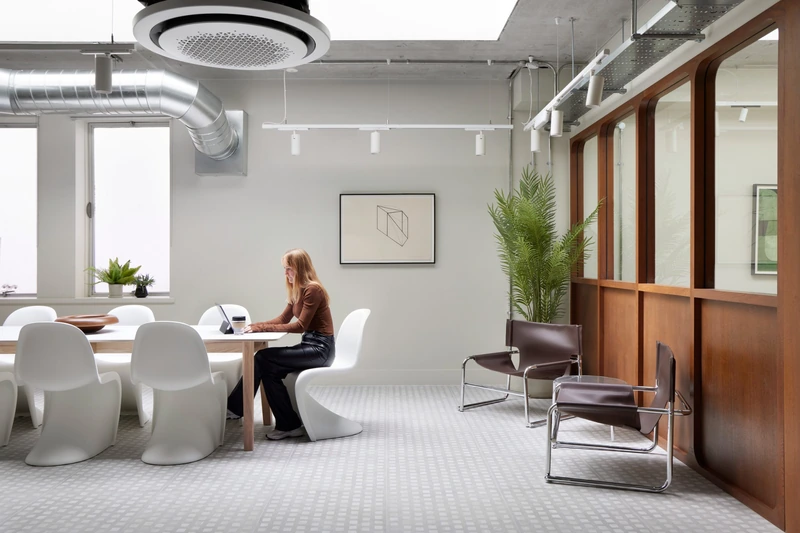
8. Industrial Lighting Art: Edison Pendants, Track Systems, and Custom Fixtures
Lighting is one of the most important layers in industrial style decoration, shaping both atmosphere and visual identity. More than a practical feature, industrial lighting enhances raw materials like concrete, brick, and steel while adding warmth and depth to the space.
Key lighting elements often used in modern industrial interior design ideas include:
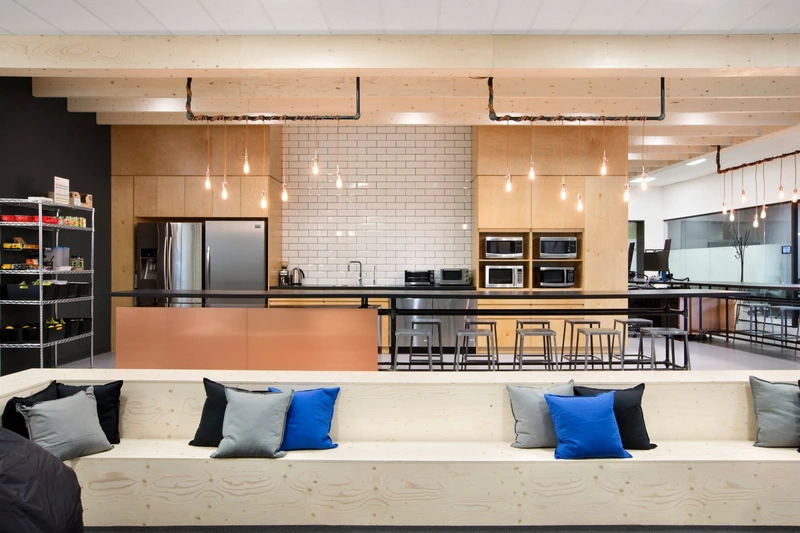
- Edison pendant clusters with warm ambient glow
- Matte black track lighting for focused illumination
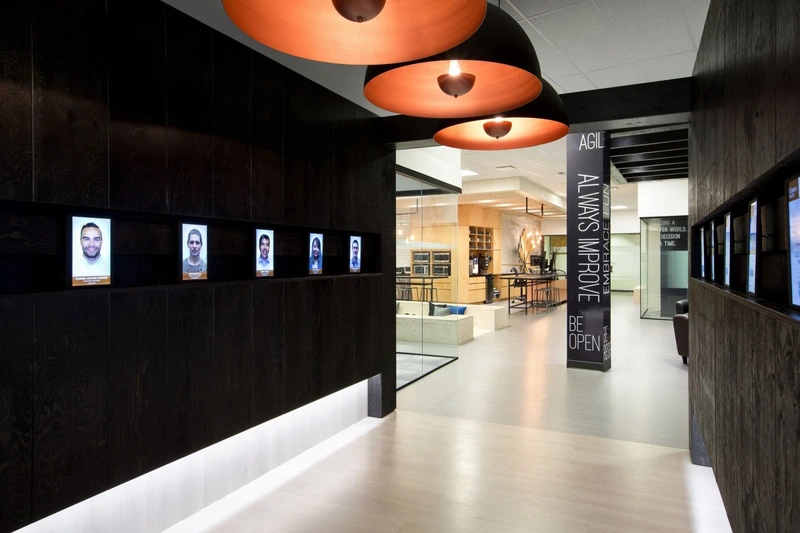
- Oversized metal dome pendants in communal areas
- Workshop-style lamps with exposed mechanical details
Edison bulbs remain a signature feature in industrial style decoration, especially when suspended in layered arrangements above meeting tables, lounges, or reception spaces. Their warm lighting softens the bold architectural character of industrial interiors.
Track systems are equally popular in modern industrial interior design ideas because they combine flexibility with a clean architectural look. Matte black finishes help the fixtures blend seamlessly with exposed ceilings while highlighting workstations, textures, and structural details.
Custom metal lighting fixtures are also becoming increasingly common in luxury industrial interiors, bringing a more refined and tailored feel to the overall design.
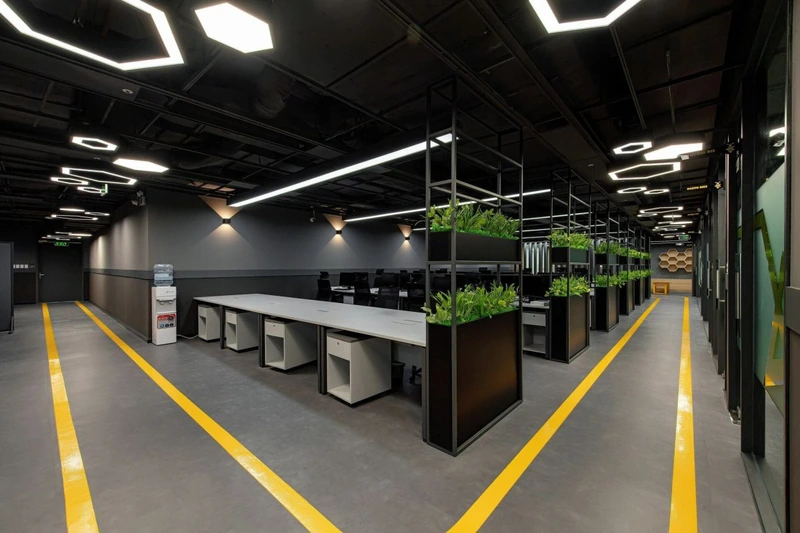
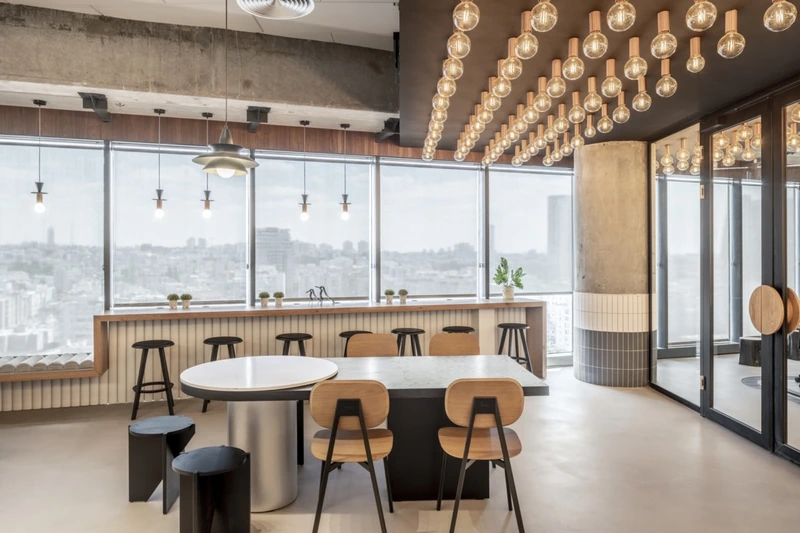
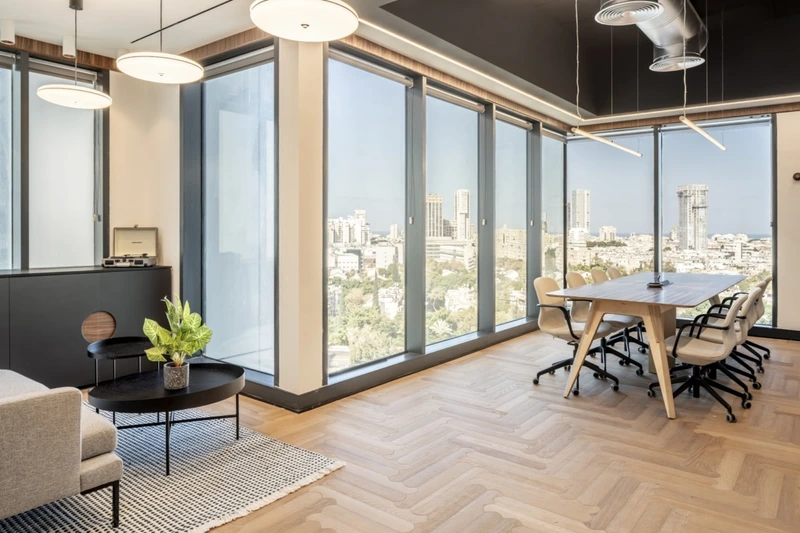
9. Statement Furniture: Solid Wood Desks, Metal-Frame Shelving, and Precision Craft
In industrial style decoration, furniture plays a central role in shaping the identity of the space. The most effective industrial interior design ideas focus on material authenticity, functional design, and strong architectural presence rather than purely decorative pieces.
- Solid wood desks with steel legs: Solid wood desks paired with black steel or iron frames remain a signature feature of industrial interiors. Natural oak, walnut, and reclaimed wood add warmth and texture, while matte black metal bases reinforce the clean, structural character of the design.
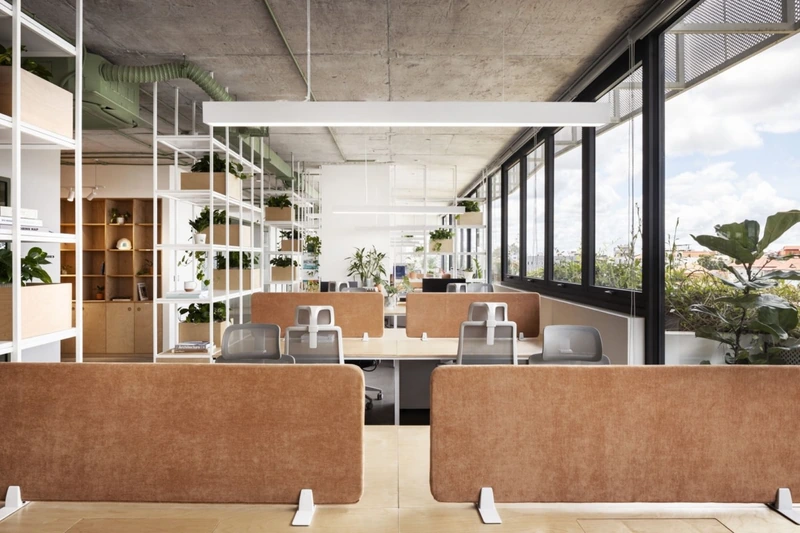
- Floor-to-ceiling metal-framed bookshelves and storage walls: Large metal shelving walls are especially common in modern industrial offices, serving as storage, display, and spatial dividers at the same time. In many industrial interior design ideas, custom-built furniture is preferred because it creates a more cohesive and tailored architectural feel.
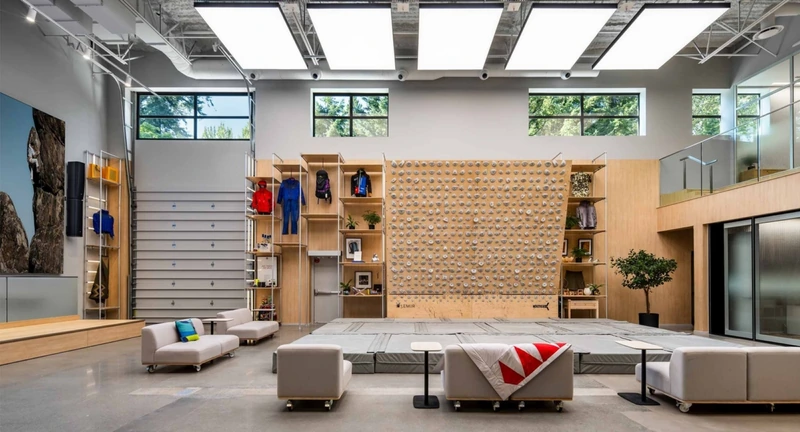
- Mobile furniture and rolling caster systems also support the flexibility of contemporary industrial workspaces, allowing layouts to adapt easily for meetings, collaboration, or social use.
10. Industrial × Minimalism: The Lean, Precise Fusion
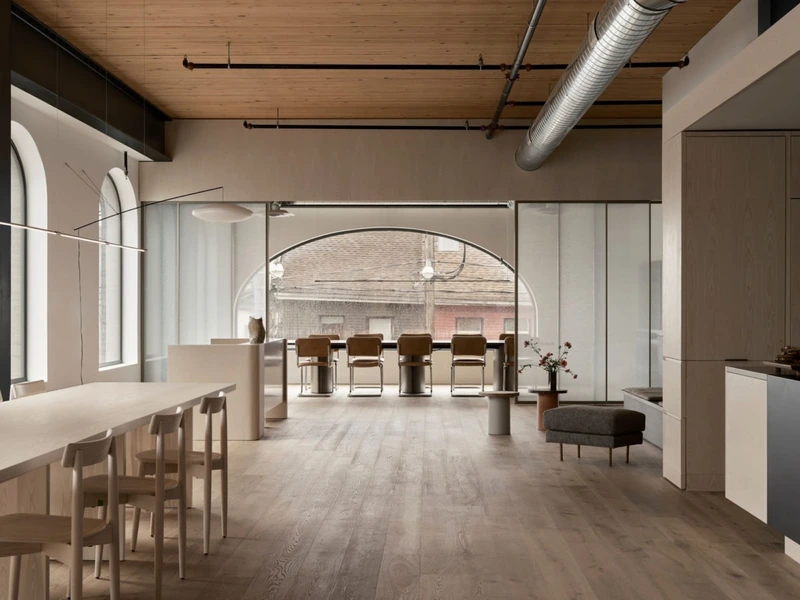
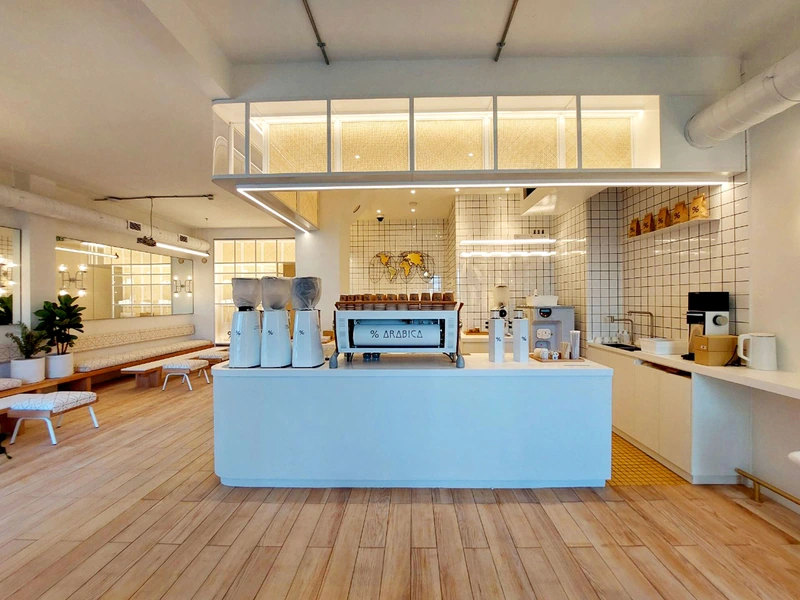
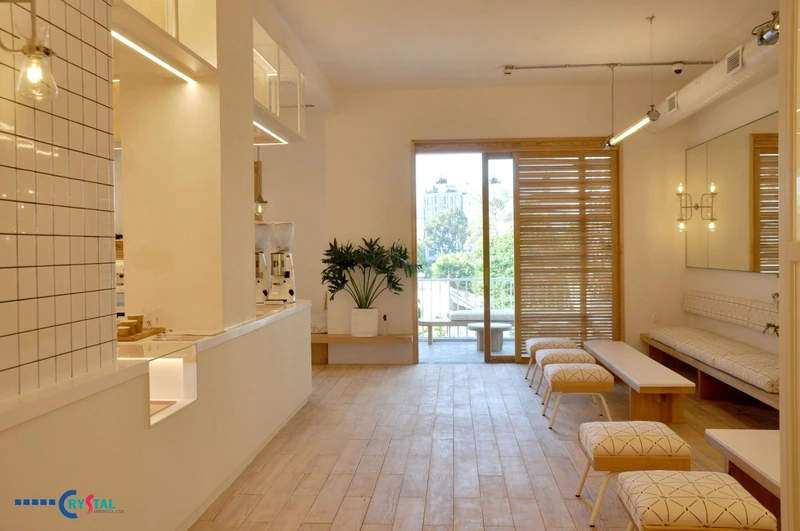
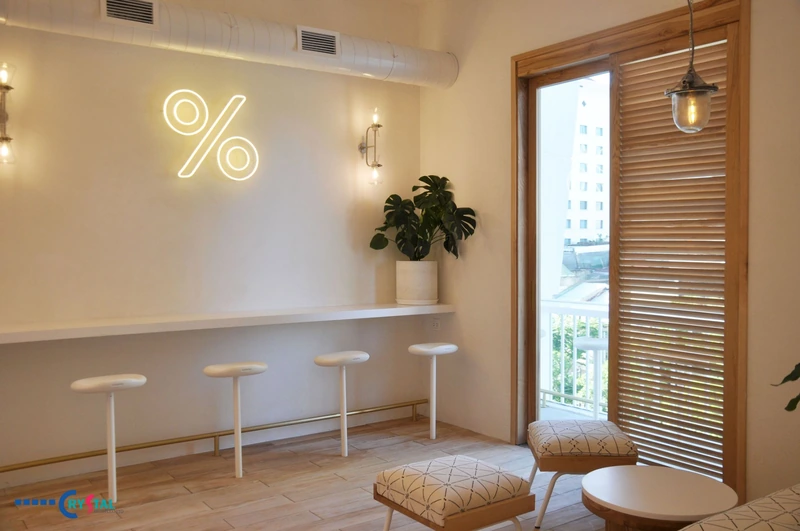
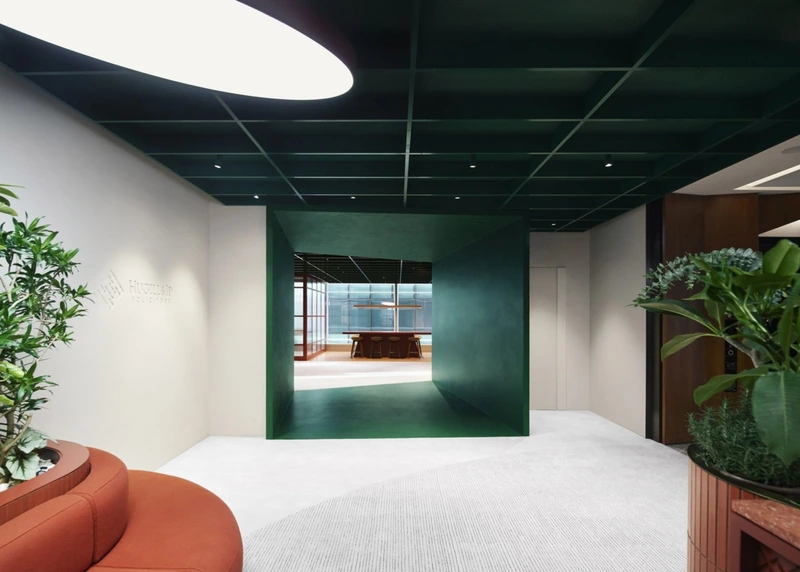
When Industrial style decoration and Minimalism are fused thoughtfully, the result is a style that is simultaneously raw and refined. This combination solves the core problem of pure industrial aesthetics – visual noise – by employing the minimalist principle of editing: stripping back everything that doesn’t earn its visual presence.
Key characteristics for a refined look:
- Precision over roughness: The style demands exceptionally precise detailing, such as perfectly poured concrete walls, steel frames with precisely mitered corners, and single, carefully scaled lighting installations.
- Disciplined palette: It applies the neo-industrial trend’s neutral palette (grays, blacks, browns, and warm earth tones) with strict discipline – one material per surface and one dominant tone per zone.
- Clarity and economy: This aesthetic is the preferred vocabulary for high-end environments like design-forward technology companies, legal practices, and luxury showrooms, where the brand’s intelligence and precision must be visibly integrated into the environment itself.
11. Industrial × Rustic: The Warmth of History
This is among the most emotionally resonant of all industrial interior design ideas, producing spaces that feel not just designed but genuinely inhabited – the combination of Industrial and Rustic. It is highly effective in hospitality environments seeking authentic character, such as boutique hotels and destination restaurants.
Key components:
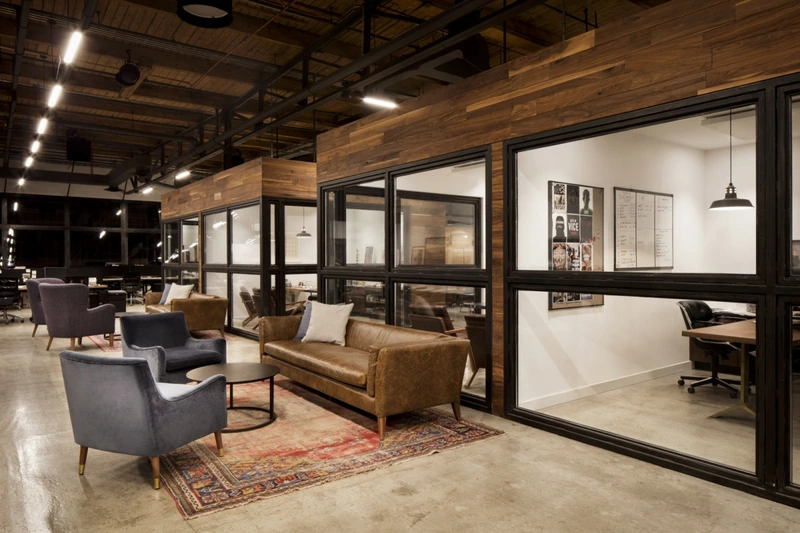
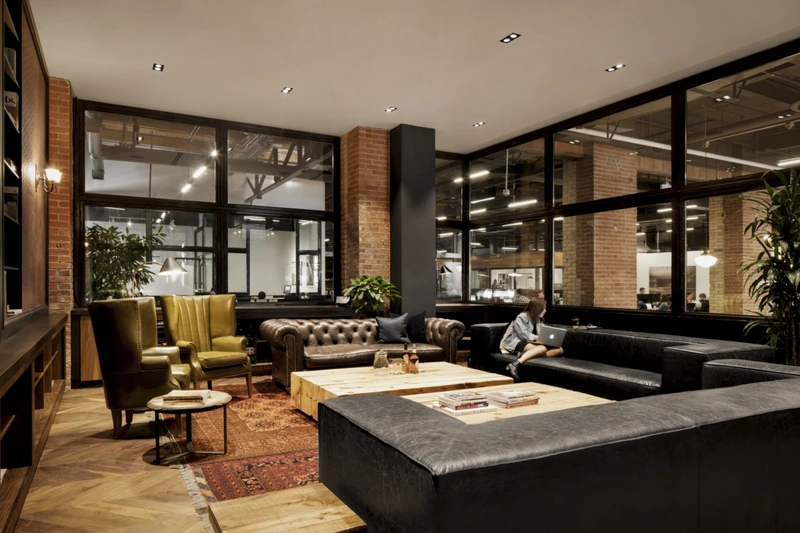
- Rustic narrative: Incorporates patina and history through materials like reclaimed barn timber, distressed leather furniture bearing marks of use, and vintage industrial artifacts (factory signage, repurposed tools).
- Industrial order: The core structure – steel-frame windows, exposed ceiling grids, and polished concrete floors – provides the rational geometry necessary to prevent the rich rustic elements from becoming clutter.
- Layered warmth: The look is amplified by layering warm textures, including plush rugs (often Persian rugs on concrete), leather sofas, soft pillows, stacked vintage books, and hand-thrown ceramics on raw steel shelving.
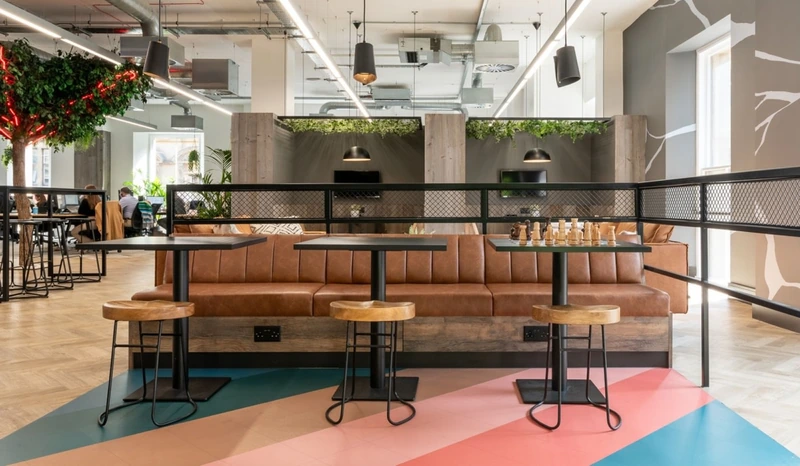
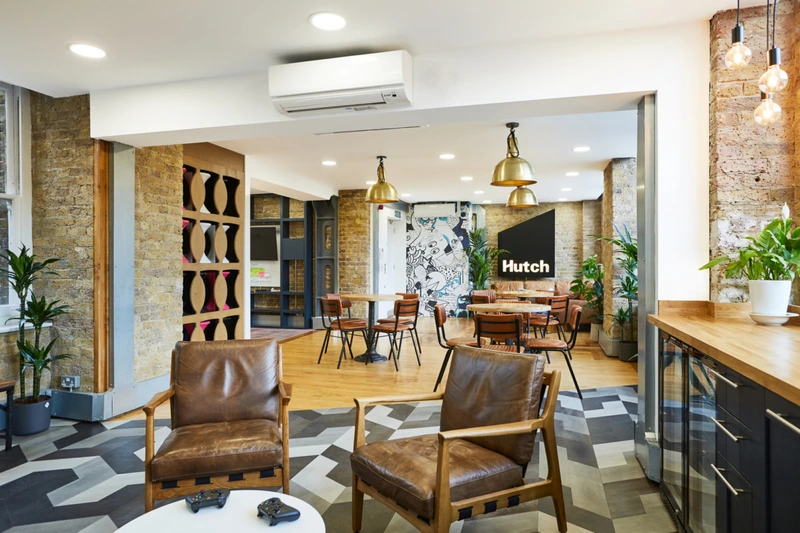
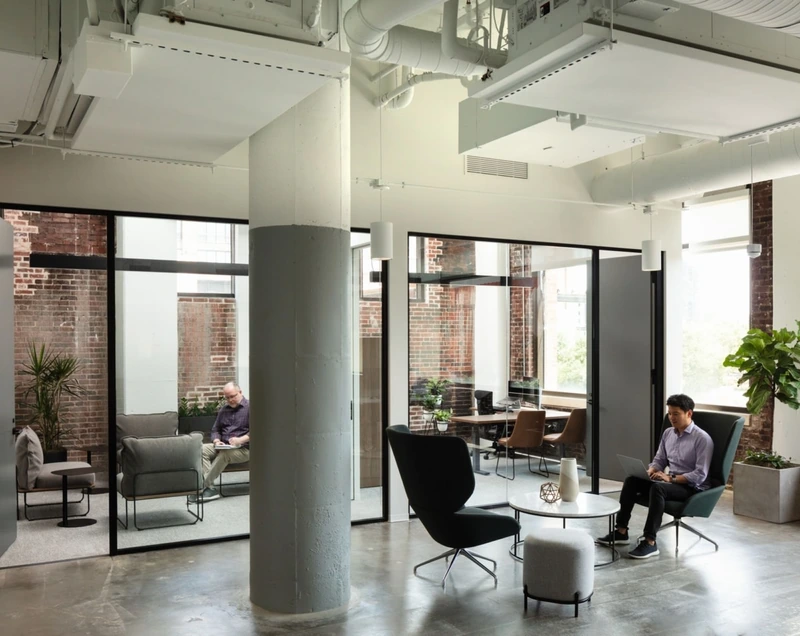
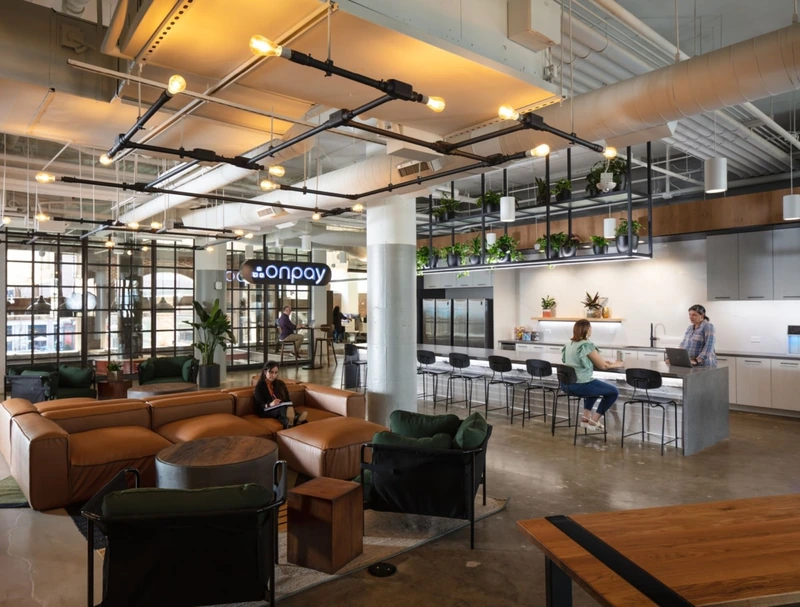
Executing Industrial Style Decoration with Deco Crystal
Understanding industrial style decoration trends is one thing. Translating them into a finished commercial space – on schedule, within budget, and at a standard of quality that will define a brand for years – is an entirely different discipline. This is the domain in which Deco Crystal has built its reputation across million of commercial projects in Vietnam and the region.
Here is why you should choose them:
- Deep Understanding of the Industrial Aesthetic: Deco Crystal stays at the forefront of interior design trends and possesses specific expertise in the Industrial decoration style. They thoroughly understand its unique, raw appeal and distinct beauty that sets it apart from vintage or classic aesthetics, allowing them to capture the authentic industrial vibe perfectly for your space.
- Massive In-House Manufacturing Capabilities: Authentic industrial design relies heavily on highly specific, custom-built furnishings (such as tailored metalwork and raw wood integrations). Deco Crystal operates a 5,000m² factory in Ho Chi Minh City (with 250 workers) and a 1,000m² factory in Hanoi. This allows them to precisely manufacture custom Furniture Systems tailored to the exact dimensions and material requirements of your industrial vision.
- Seamless Turnkey Solutions: Executing an industrial interior requires meticulous coordination, especially when dealing with exposed architectural elements, raw textures, and specialized lighting. Deco Crystal provides end-to-end turnkey projects. This closed-loop process ensures strict quality control and flawless execution.
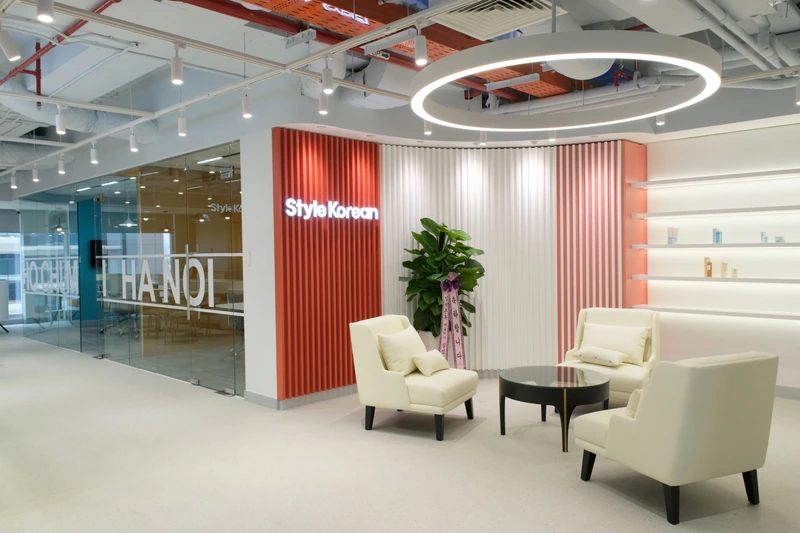
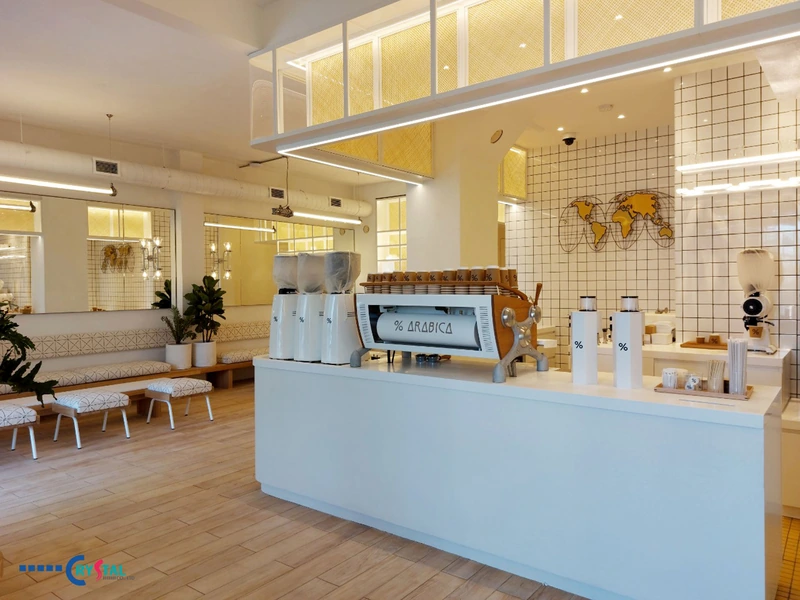
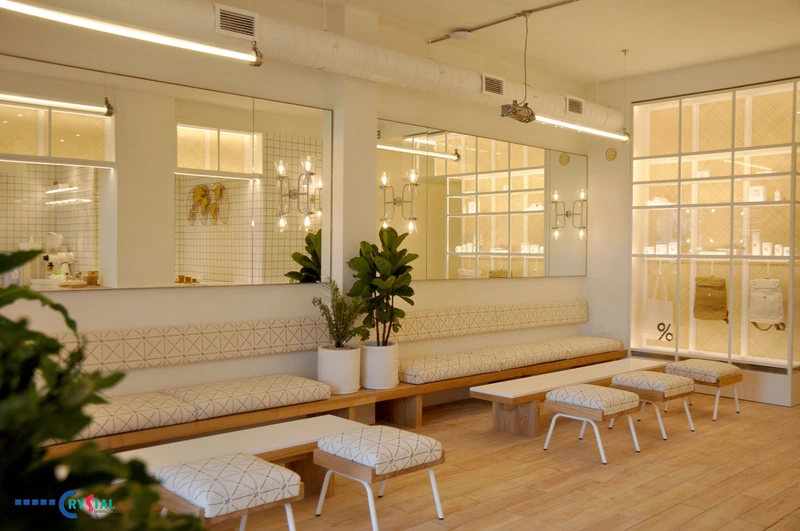
- Rich Portfolio of Creative Spaces: With over 28 years of experience and 1,300 clients, Deco Crystal has a proven track record of building dynamic, modern environments. They have executed highly creative and trendy spaces like the Cheil office (1,100m²), the Bombus studio (690m²), and stylish retail concepts like Arabica Coffee, demonstrating their robust ability to handle open-concept and architecturally bold designs.
- Human-Centric and Functional Design: While the industrial style can sometimes feel cold or overly raw, Deco Crystal applies their unique philosophy of combining modern Korean design aesthetics with Vietnamese wisdom and simplicity. They ensure that your industrial space is not just visually striking, but also highly functional, environmentally friendly, and comfortable for its users
Industrial style decoration continues to evolve without losing the core principles that made it timeless in the first place: honest materials, exposed structure, and functional beauty. In 2026, the style feels more refined, comfortable, and architecturally sophisticated while still preserving its raw industrial identity.
From luxury offices to creative commercial spaces, industrial style decoration is no longer defined solely by rugged minimalism. It has become a more thoughtful and elevated design language – one that combines authenticity, craftsmanship, flexibility, and modern comfort within a cohesive architectural vision.
Contact Crystal Design TPL
|