

Top 10 interior design bank office trends for 2026
Despite the rise of digital banking, physical branches remain a cornerstone of customer engagement, with 86% of global customers having visited a branch in the past year. Today, a successful interior design bank office is no longer just about aesthetics; it is about creating environments that foster trust, provide expert advice, and nurture lasting relationships.
In this article, Deco Crystal discovers the top 2026 trends for bank office interior design. Learn how smart technology, ergonomic layouts, color psychology, and modular spaces are transforming the modern bank office interior into a secure, customer-centric hub.
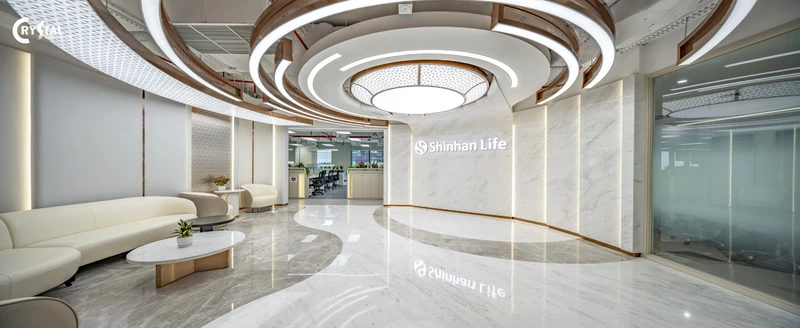
1. From Transaction Counter to Banking Lounge – The Consultation-Centric Revolution
The most significant philosophical change in modern bank office interior design is the movement away from sterile, counter-dominated layouts. This evolution introduces a merged concept – the “Banking Lounge”. This design successfully fuses the advisory purpose of consultation-centric banking with the sensory comfort of hospitality design.
The goal of this design shift is to create an environment that signals to the customer: “You are welcome here”. The implementation involves several key changes:
- Reimagined Transaction Areas: The traditional teller counter is either eliminated or dramatically re-envisioned.
- Hospitality-Inspired Furniture: Spaces are furnished with plush chairs arranged in semi-circles around low tables, accommodating both private one-on-one wealth advisory sessions and small group consultations.
- Warm Aesthetic: The use of warm color palettes, soft pendant lighting, and soft textural layers, including upholstered furniture and natural materials, creates an inviting atmosphere.
- Elevated Client Comfort: Client experience is enhanced with refreshment stations, curated artwork, and ergonomic seating, directly inspired by boutique hotel lobby design.
Note: Acoustic control is a critical element in this open-plan configuration. To maintain conversational privacy and client confidentiality, leading interior design bank office projects in 2026 utilize:
- Sound-dampening fabric panels.
- Acoustic ceiling tiles.
- Strategic spatial separation.
This focus on physical comfort encourages customers to engage in the deep, candid financial conversations that banks need to build loyalty and successfully sell premium products.



2. Smaller Branches, Stronger Strategic Presence
As digital platforms handle most routine transactions, financial institutions are adopting a “go smaller, go smarter” architectural strategy. This shift is not just about cost efficiency; it optimizes the physical bank office interior for a superior customer experience.
- Compact Footprint, Strategic Reach: Smaller branches significantly reduce real estate overhead, enabling capital to be redirected toward opening new, strategically placed locations in high-traffic areas like transit hubs or emerging neighborhoods.
- Design Discipline for Value: A smaller floor area forces every square meter of the bank office interior to be purposefully designed, ensuring it serves a clear, high-value function.
- Enhanced Personal Service: The intimate, less institutional scale of compact branches fosters stronger personal service, helping staff to build trust by knowing customers by name.
- Flexible, Adaptive Spaces: The use of flexible, technology-enabled modular service pods allows the space to adapt fluidly throughout the day. This enables the branch to switch between a self-service digital zone and a consultation-ready advisory lounge without physical reconstruction, directly addressing the modern need for operational flexibility.


3. Open Floor Plans, Teller Pods, and Modular Partitions
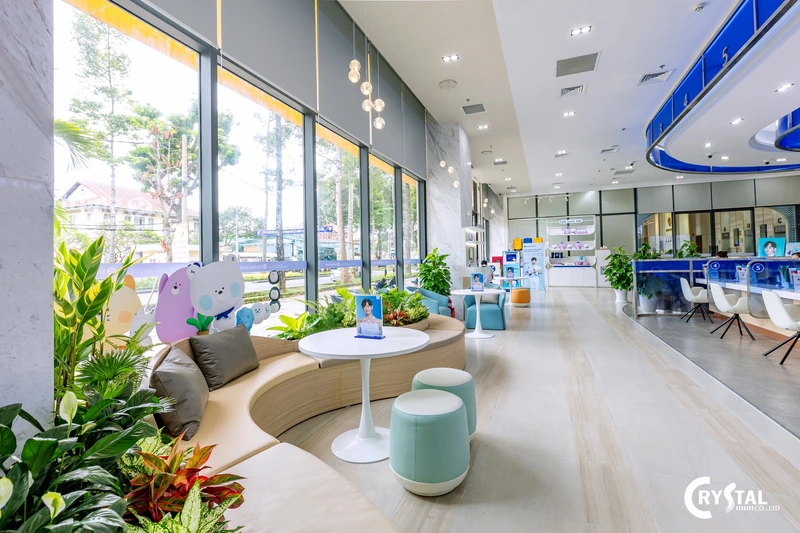
Modern bank office interior design is moving away from the institutional feel, prioritizing transparency and approachability. This shift replaces the fixed, imposing teller counter – a symbol of distance – with open floor configurations featuring individual teller pods.
Key Design Elements for Transparency and Adaptability
- Teller Pods for Personal Interaction:
- Pods are ergonomically designed to position both staff and customers at the same height, allowing interaction while sitting or standing.
- This design fundamentally changes the interaction from a clinical transactional exchange to a personal, side-by-side collaboration.
- Teller pods are strategically positioned to allow customers to receive service wherever they are most comfortable, eliminating intimidating single-file lines.
- Modular Partitions for Zoning and Flexibility:
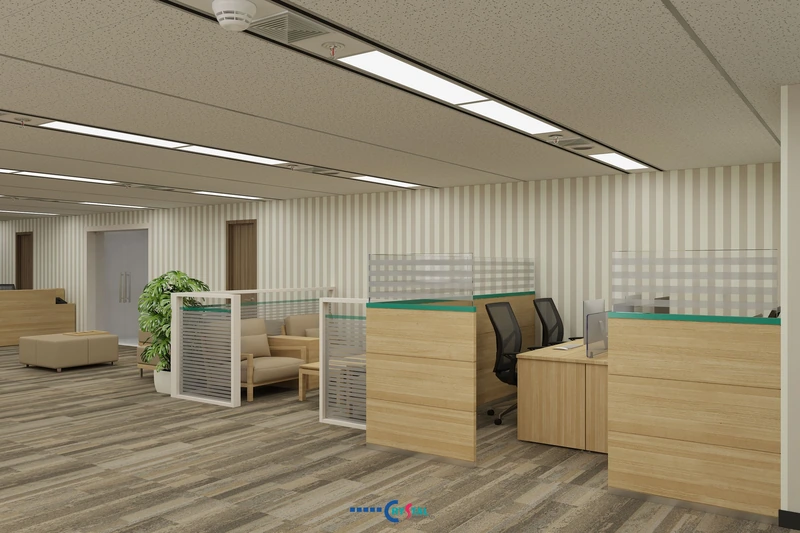
- Banks are widely adopting modular office partition walls – prefabricated systems that divide open floor plans into functional zones without the cost, time, or disruption of traditional construction.
- Acoustic Responsibility: While openness is prioritized, sound-dampening composite panels and specialized systems ensure that adjacent advisory zones maintain crucial acoustic privacy.
- Visual Openness: Full-height glass partitions are utilized to maximize natural light penetration while maintaining the spatial perception of openness.
The combined effect creates a bank office interior that is simultaneously open, adaptable, and acoustically responsible – a triad challenging to achieve with conventional fixed-wall construction.


4. Seamless Fintech Integration and Smart Customer Flow Management
Digital transformation has not replaced the physical branch; it has redefined its purpose. The 2026 bank office interior treats technology as an architectural layer, embedded from the earliest design stage, rather than devices bolted onto an existing layout.
Key Design Strategies for Technology and Flow
- Integrated Self-Service Technologies: Self-service tools like Interactive Teller Machines (ITMs), Smart ATMs with cardless QR-code withdrawals and biometric authentication, and digital check-in kiosks are positioned as natural waypoints in the customer journey.
- Repositioning Staff Roles: These technologies absorb the volume of routine transactions, fundamentally repositioning the role of every employee as a consultant and relationship-builder, rather than a transaction processor.
- Smart Queue Management Systems (SQMS): SQMS transforms the physical experience by issuing digital tickets and supporting mobile queue reservations, thereby eliminating the frustrating, physically static queue line.
- Proactive Experience Design: SQMS allows customers to wait comfortably in the lounge, browse a digital kiosk, or step outside while receiving real-time updates. This shift changes the bank office interior design from reactive congestion management to proactive experience design, planning circulation around movement and exploration.
- Dedicated “Digital Corners”: Forward-thinking branches feature zones with large interactive screens for customers to explore banking apps, update profiles, or apply for services. These areas both empower tech-confident customers and subtly showcase the bank’s commitment to innovation.


5. Multi-Functional Branches as Community Hubs
The most forward-thinking financial institutions in 2026 are redesigning branches not for a single transactional purpose, but as vibrant neighborhood anchors and community gathering points. This strategy aims to encourage the community to gather, regardless of immediate banking needs, fostering deeper emotional anchoring and brand loyalty.
Community-Hub Design Features:
The community-hub model manifests across various design choices that lower the psychological barrier to engagement:
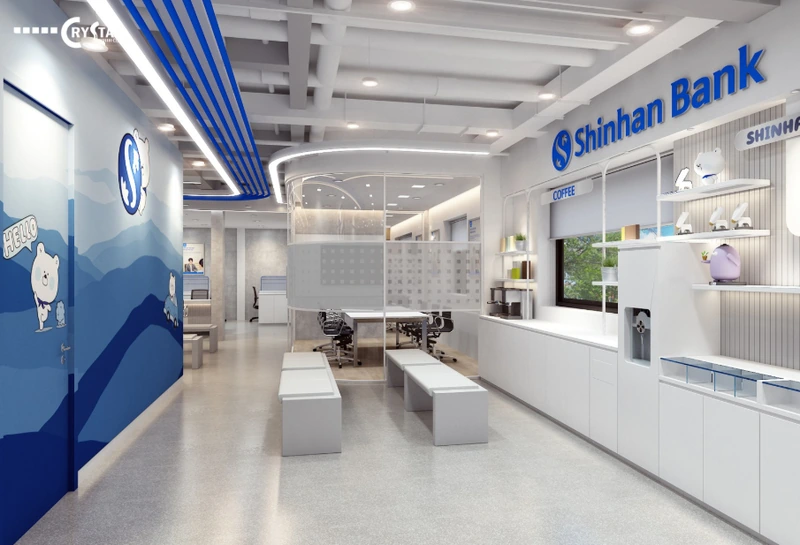
- Integrated Hospitality: Coffee bars invite customers to linger, creating a welcoming atmosphere.
- Flexible Workspaces: Coworking stations equipped with charging ports and high-speed Wi-Fi attract freelancers and remote workers.
- Event Spaces: Conference rooms are designed with dual functionality, serving as event spaces for local business seminars, financial literacy workshops, or community group meetings.
Local Cultural Integration for Retention
The physical design deliberately draws from local cultural identity to ensure the branch feels like it belongs to the community, not just a corporate outpost:
- Artwork and Materials: This integration can include commissioned murals by local artists, architectural materials sourced from regional suppliers, or branded design motifs referencing the neighborhood’s history.
- Exterior Spaces: Landscaped exterior pathways further connect the branch with its surroundings.
This emotional anchoring translates directly into brand loyalty and customer retention that digital platforms cannot replicate.


6. Private Banking and Wealth Management Suites
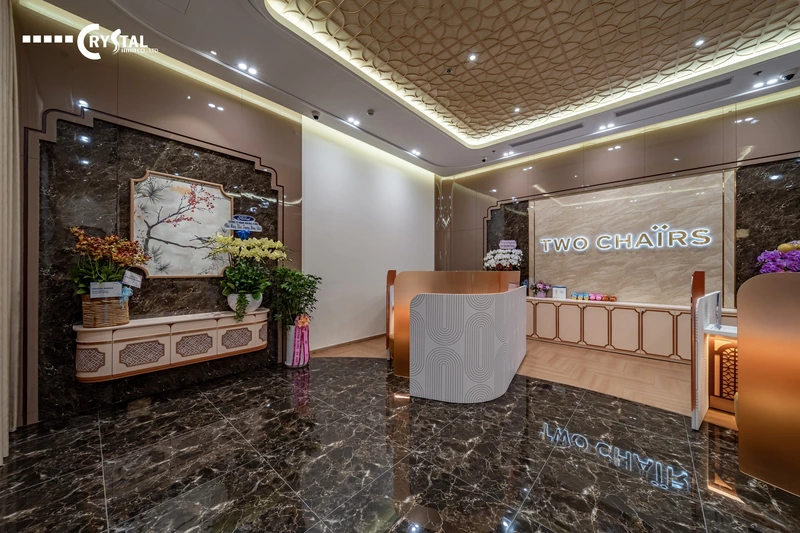
The migration of routine transactions to digital channels liberates premium floor space, allowing the highest-value areas of the bank office interior to be dedicated entirely to elevated, private advisory experiences like wealth management suites and dedicated consultation rooms.
Key Design Elements for High-Net-Worth Clients
- Prioritizing Discretion and Privacy: Unlike the open lounge, the private banking suite design language emphasizes absolute discretion and acoustic privacy.
- Acoustic Engineering: Sound-dampening partition systems are critical to prevent eavesdropping from adjacent areas, ensuring confidentiality for sensitive financial discussions.
- Refined Atmosphere and Lighting:
- The lighting architecture utilizes warm-white, dimmable recessed LEDs and adjustable pendant lighting.
- This system creates an atmosphere of composed authority that is both professional and warm, encouraging candid conversation.
- Premium Material Specification: Material selections reinforce institutional gravitas and client respect. These include:
- Rich wood veneers.
- Tactile stone surfaces.
- Custom millwork.
- Carefully chosen art objects.
- Ergonomics for Extended Sessions: Furniture selection prioritizes ergonomic comfort to support the extended advisory sessions required for meaningful wealth management conversations.
Every element in this zone of the bank office interior design communicates that financial privacy, comfort, and trust are the highest priorities.


7. Biophilic Design and Sustainable Materials
Biophilic design, which integrates natural elements to reduce stress and improve cognitive function, has become standard practice in high-performing commercial interiors. In bank office interior design, this calming power is particularly valuable since customers often arrive with financial anxiety.
Key Biophilic and Material Strategies
- Nature Integration: Elements such as living green walls, indoor specimen plants, water features that generate gentle ambient sound, and views of landscaped exterior spaces are integrated as load-bearing elements of the spatial concept, not mere decoration.
- Natural Materials: This design language is reinforced through material choices like bamboo flooring, reclaimed wood paneling, and stone surfaces with tactile texture. The primary goal is to design a spatial experience that psychologically reconnects people with natural environments.
Sustainability and Operational Benefits
- Brand Alignment: Specifying sustainable materials (FSC-certified timber, recycled carpet tiles, low-VOC paints, and energy-efficient LED lighting) communicates institutional values that resonate with an environmentally conscious client base.
- Measurable Operational Benefits: These choices lead to measurable benefits, including improved indoor air quality, reduced energy costs, and healthier workplaces for staff.
- Productivity Gains: A study of over 7,600 office workers found that those in environments with natural elements reported 15% higher wellbeing and 6% greater productivity, figures critical in a service-intensive industry where staff performance affects customer satisfaction.


8. A Cohesive Visual Language – Aesthetics, Color Psychology, and Intuitive Wayfinding
Modern bank office interior design integrates three disciplines – aesthetic identity, color psychology, and spatial wayfinding – into a single system that defines how customers perceive and navigate the space.
Integrated Design Components for Bank Interiors
- Aesthetic Identity (Hypermodern Design):
- Vocabulary: The design is increasingly hypermodern, featuring angled walls, patterned geometric flooring, and Scandinavian-influenced minimalist desks with clean horizontal lines.
- Lighting as Art: Architectural lighting fixtures double as graphic sculptural elements.
- Communication: This uncluttered, precisely detailed aesthetic conveys innovation and forward-thinking without appearing cold or impersonal.
- Color Psychology for Trust and Stability: Intuitive Wayfinding:
- Dominant Tones: Blue and green tones are prevalent because they trigger neurological associations with calmness, trustworthiness, and stability—essential emotional registers for a financial institution.
- Accent Colors: Warmer accents, such as amber or muted gold, are selectively used to introduce approachability and warmth. Yellow can energize collaborative or brainstorming areas.
- The 60-30-10 Rule: Designers often anchor color choices in this formula: 60% dominant neutral, 30% complementary secondary tone, and 10% vibrant accent, which ensures visual harmony without monotony.
- Intuitive Wayfinding:
- Method: Thoughtfully designed banks replace traditional overhead signage with environmental graphic design.
- Techniques: Instead of posted arrows, banks use flooring texture transitions, color zone changes, ceiling height variations, branded imagery, and material shifts to guide customers intuitively through the space.
- Result: This creates a seamless navigational experience that reinforces brand identity at every step rather than interrupting it with institutional signage.


9. Acoustic Engineering for Privacy, Wellbeing, and Operational Focus
Open, visually welcoming floor plans in a bank office interior present an acoustic challenge where conversations and noise can travel freely, compromising both customer privacy and staff wellbeing. The 2026 approach to banking acoustics is sophisticated and multi-layered, treating acoustic control as a core structural discipline.
Acoustic Strategies for Performance and Privacy
- Multi-Layered Sound Absorption: Acoustic ceiling systems absorb sound energy from above, effectively reducing reverberation in large open areas.
- Strategic Sound Control: Sound-dampening partitions—including fabric-wrapped panels, perforated composite walls, or specialized glass systems—are strategically deployed to control lateral sound transmission between different zones.
- Confidentiality in Consultation Areas: Private consultation areas receive an additional layer of acoustic treatment, such as door seals and wall insulation, to ensure that sensitive financial discussions remain absolutely confidential.
Operational Benefits for Staff Wellbeing
- Acoustic Comfort as Performance Requirement: For staff, acoustic comfort is viewed as a performance requirement, not a luxury.
- Mitigating Operational Risk: Chronic exposure to background noise elevates cortisol levels, reduces concentration, and increases error rates. By investing in acoustic engineering, banks mitigate these outcomes, which have serious operational consequences where numerical precision is vital.
- Investment Return: Banks invest in both the quality of client confidentiality and the long-term cognitive health of their employees.


10. Precision Lighting Architecture
Lighting design in a modern bank office interior is not just functional; it is a primary instrument of spatial hierarchy, emotional tone, and operational accuracy. The best 2026 designs specify unique lighting solutions for each distinct zone within the branch.
Zone-Specific Lighting Strategies
- Entrance and Lobby: High-output flush-mount LED panels and architectural pendant fixtures create a bright, welcoming first impression, communicating professionalism and institutional stability.
- Transaction and Teller Areas: Precisely directed grille lights are specified to eliminate shadows, ensuring absolute visual clarity when handling cash, documents, or screens. This accuracy is both a security and operational imperative.
- Private Advisory Suites (Wealth Management): These spaces utilize warm-white, dimmable recessed LED systems, often supplemented by adjustable statement pendants. This creates an atmosphere of calm sophistication appropriate for extended financial consultations.
- Communal Lounge Areas: Layered ambient lighting – combining recessed downlights, wall-washing uplights, and low-level task lighting – produces the residential warmth that supports the hospitality-driven design philosophy.
Operational and Wellbeing Innovation
- Circadian-Responsive Systems: Circadian-responsive lighting systems are rapidly becoming a standard specification in progressive bank office interior design projects. These systems automatically adjust color temperature throughout the day to support staff alertness and customer comfort.


Critical Design Considerations for a High-Performing Bank Office Interior
Functional Zoning and Customer Flow Optimization
The operational success of a modern bank branch relies entirely on the quality of its spatial zoning strategy. A well-designed bank office interior design must resolve the branch into distinct, yet fluidly connected, functional zones:
- Digital Self-Service Zone: Designated for routine transactions.
- Open Advisory Lounge: A welcoming space for consultations.
- Private Suite: A discreet area dedicated to wealth management.
- Staff Operations Area: The dedicated workspace for employees.
- Secure Restricted Zones: For critical operations like cash handling and infrastructure.
Each zone must be meticulously sized, positioned, and equipped according to its specific traffic volume and required interaction type.
Effective customer flow depends on strategic circulation. Radial or dispersed pathways are essential, as they prevent the bottlenecks caused by traditional linear corridors. When this spatial logic is coupled with Smart Queue Management Systems (SQMS) and digital navigational aids, the result is a dramatically reduced perceived wait time and significantly increased customer satisfaction. Every zone must be meticulously sized and equipped to handle its specific traffic volume and interaction style, driving superior operational efficiency.


Multi-Layered Security Architecture
A credible bank office interior must achieve the architecturally complex goal of being simultaneously welcoming to customers and impenetrable to threats. This is accomplished using the industry-standard “protection in-depth” framework, which layers physical and electronic measures based on five complementary principles: Deter, Detect, Delay, Deny, and Response.
Implementation of Layered Security Measures:
- Perimeter Control (Deter/Delay): Security begins at the exterior with minimized entry points, tempered or shatter-resistant glass facades, and security gate systems placed at threat-assessed locations.
- Interior Access (Delay/Deny): Access is managed through role-based zoning. This separates publicly accessible areas from limited-access staff zones and highly restricted operational areas, such as vault rooms and server infrastructure, each governed by appropriate access controls.
- High-Security Requirements:
- Highly restricted zones require advanced, two-factor authentication systems, typically combining PIN-based or biometric scanners.
- Vault construction must meet internationally accepted minimum standards, incorporating burglary-resistant doors with dual-mechanism locking.
- Comprehensive Detection: CCTV coverage must be comprehensive across all access points, ATM vestibules, lobbies, and secure rooms, operating on redundant communication channels with backup power.
The ultimate architectural achievement of sophisticated bank office interior design is making this robust security infrastructure invisible to the customer while remaining unambiguous to a potential threat.
Why Deco Crystal Is the Trusted Partner for Banking Interior Design Projects
The company culture is shaped by over 28 years of industry experience and 1,300+ corporate clients. With an impressive portfolio of major financial institutions – including multiple branches and headquarters for Woori Bank (Starlake, Phu My Hung, Lotte Mall), Shinhan Financial Group (Shinhan Finance, Shinhan Life, Shinhan Bank, Shinhan PWM), Hanwha, and NH Securities – Deco Crystal brings a depth of sector-specific experience.
Turnkey Delivery Model for Punctuality: Deco Crystal rigorously controls the entire project schedule to ensure branches open on time. This commitment is backed by a turnkey delivery model that maintains in-house control over:
- Design Consultation and Space Planning
- Furniture System production
- Interior Construction
- This eliminates the coordination gaps and quality inconsistencies that frequently arise when disciplines are split across multiple vendors.
Manufacturing depth: The firm operates a 5,000m² factory in Ho Chi Minh City and a 1,000m² facility in Hanoi. This capacity allows the custom-building of specialized banking furniture precisely to technical specifications.
The 10 trends reshaping interior design bank office in 2026 share a common thread: it is a place where trust is built, relationships are deepened, and institutional identity is communicated through every material choice, every lighting decision, and every square meter of spatial planning.
Whether you are planning a flagship headquarters, a network of compact neighborhood branches, or a premium private banking suite, Deco Crystal brings the experience, the infrastructure, and the proven track record to deliver a bank office interior that performs at the highest level – on time, on budget, and to a standard that your institution and your clients deserve.
|
Contact Crystal Design TPL
|