

Modern Boss Office Cabin Design: Styles, Interior Ideas & 2026 Trends for Executives
The executive office is more than a room; it is a definitive statement of authority and vision. In 2026, leaders demand high-performance workspaces that excel both in form and function: supporting deep focus, projecting confidence, and seamlessly integrating modern technology. This guide unpacks the leading trends, core design elements, and critical errors to avoid when planning your modern boss office cabin design.
1. Top Executive Office Design Concepts for 2026 Trends
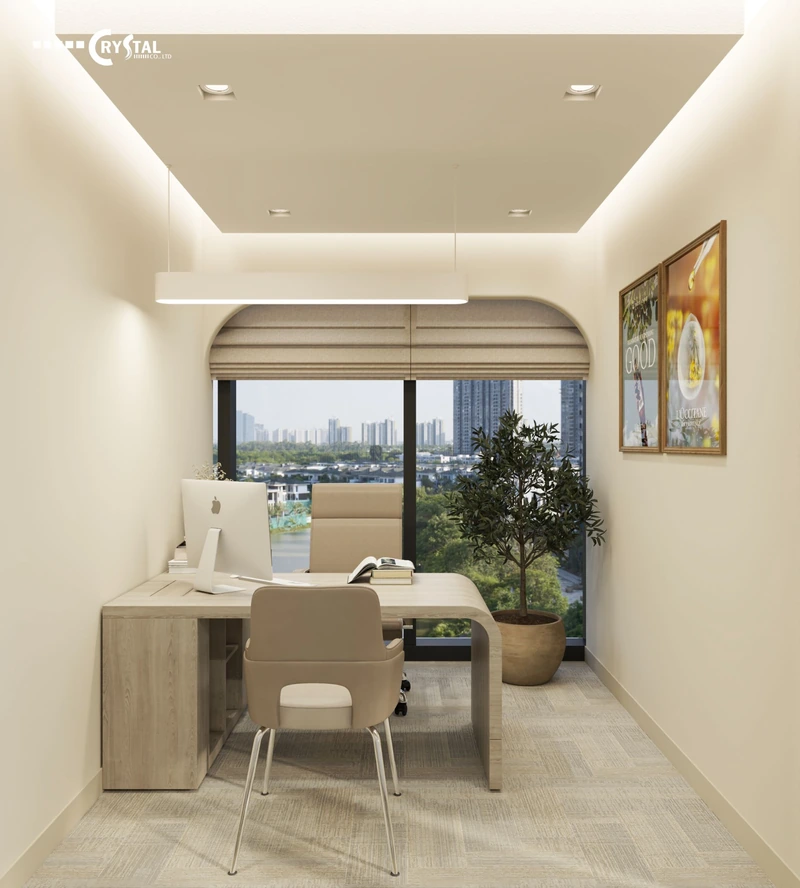
1.1. Minimalist Style – Minimalist Boss Room Interior Design
The minimalist executive office has moved well beyond the white-walls-and-bare-desk cliché. In 2026, the best boss office interior design is defined by refined material choices – honed stone, brushed metal, warm-toned timber – and a spatial discipline that eliminates visual noise without feeling sterile. The room is anchored by the desk, while all other elements are deliberately designed to recede. Essential storage is concealed behind flush cabinetry, and all cables are carefully managed to disappear entirely.
The result is a workspace that communicates control and precision without a single unnecessary gesture. The modern boss office room design for executives who meet clients regularly, this environment sends a powerful non-verbal signal: clarity of thought begins here.
Key characteristics of the minimalist executive office:
- A single statement desk in natural stone, walnut, or lacquered wood
- Hidden storage integrated into wall panels or cabinetry
- A restrained palette of two to three tones – typically warm white, charcoal, and a natural accent
- Pendant or recessed lighting with no exposed hardware
- Carefully chosen art or a single sculptural object as the sole decorative anchor




1.2. Luxury and Powerful Style – Luxury Executive Cabin
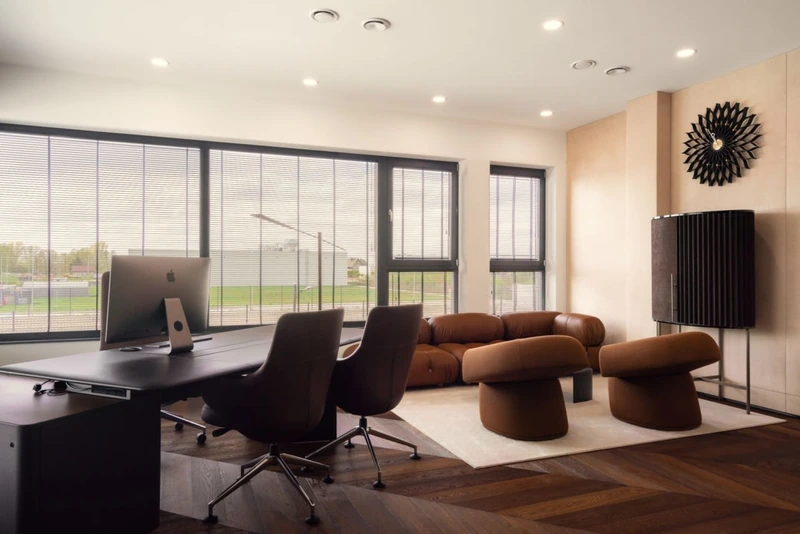
Luxury in the executive office context is not about excess; it is about depth. The most authoritative boss cabin interior design of 2026 use layered materials: a desk surface in aged brass or hand-polished marble, a wall treatment in textured plaster or bookmatched veneer, upholstery in full-grain leather or bespoke wool. These choices communicate longevity and investment. The spatial layout reinforces hierarchy through positioning: the principal’s desk faces the room, a conversation seating group occupies a secondary zone, and the view – where available – is treated as a design element in its own right.
Achieving an authoritative interior boss office cabin design relies on these layered details:
- Bookmatched veneer or stone feature walls behind the principal desk
- Custom millwork with integrated lighting reveals
- A dedicated meeting or lounge zone with premium upholstery
- Statement pendant fixtures or architectural cove lighting
- Art curation as a deliberate design layer, not an afterthought


1.3. Optimization for Small Spaces – Small Office Boss Cabin Interior Design
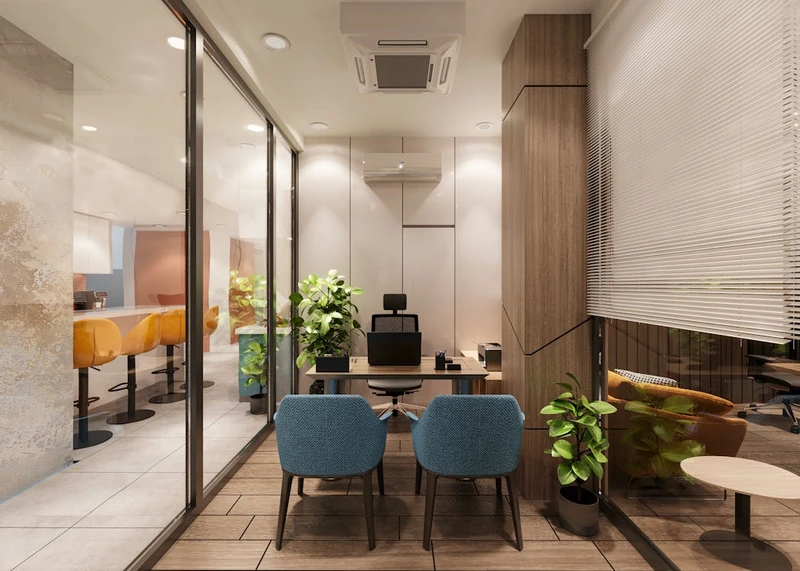
Designing a compact office boss room design is a challenge worth solving well. In compact footprints – typically under 20 square meters – the priority is vertical thinking and multi-functional furniture. A wall-to-ceiling built-in unit combines storage, display, and acoustic buffering. The desk is scaled to the room, not imported from a larger typology. Glass partitions borrow light from adjacent spaces. Carefully chosen mirrors and reflective surfaces create a sense of depth. When executed with discipline, a small office boss cabin interior design can feel more considered and purposeful than a poorly planned larger space.
Practical strategies for a small office boss cabin interior design:
- Scale furniture proportionally – avoid a desk that dominates 40% of the floor area
- Use floor-to-ceiling joinery to maximize vertical storage, a key element of effective small office boss cabin interior design.
- Apply a consistent, light-reflective palette to visually expand the room
- Select glass or open-frame partitions to preserve sight lines and natural light
- Eliminate surplus seating – one guest chair is often more appropriate than three


1.4. Application of Modern Partitions – Cabin Partitions
Partitions are no longer purely functional dividers. In contemporary executive office design, they are architectural tools… The most effective partition systems for executive cabins in 2026 combine frameless or slim-frame glazing with opaque panels in natural materials. This defines the modern boss office room design. The partition line, where the executive space meets the general office, deserves as much design consideration as any interior wall.
Leading partition types for executive offices in 2026:
- Slim-profile aluminum-framed glazing – minimal visual footprint, maximum light transfer
- Smart/switchable glass – opaque on command for sensitive meetings
- Solid panels in natural veneer or plaster finish – warmth and acoustic performance combined
- Half-height partitions with a glazed upper section – balances openness and privacy
- Integrated door systems that disappear into the partition line


2. 5+ Core Elements for an Outstanding Modern Boss Office Cabin Design
2.1. Smart Layout and Zoning
The layout of an executive office is a power map. It determines how authority is communicated, how meetings flow, and how the occupant moves through their day. Best practice in 2026 calls for a clear 3-zone structure: the primary work zone centered on the principal desk, a meeting or conversation zone with a secondary table or lounge seating, and a personal or transition zone near the entrance – a credenza, a coat area, or a casual landing space.
Smart layout and zoning are fundamental to a successful modern boss office cabin design. These zones should feel distinct but connected, separated by furniture positioning or subtle flooring changes rather than hard partitions.
Zoning principles for the executive office:
- Position the principal desk to face the room’s entry point – establishes visual authority
- Keep the meeting zone at a comfortable distance from the desk – separate, but in view
- Use a consistent flooring material throughout, with a rug to define the meeting zone
- Allow clear circulation paths between all three zones – aim for a minimum 90 cm clearance
- Avoid placing the desk against the wall in a forward-facing position – it isolates rather than leads


2.2. Ergonomic Furniture
The executive chair and desk are the two pieces of furniture that most directly affect performance. In 2026, ergonomics in the senior office is non-negotiable – not because of wellness trends, but because a leader who is physically uncomfortable during a six-hour workday is less effective.
Ergonomic furniture priorities for the executive office:
- Principal chair: full lumbar adjustment, breathable mesh or genuine leather upholstery, five-point base
- Desk: height adjustable with motorized lift – stored height memory for multiple users is a worthwhile upgrade
- Monitor arms: frees desk surface, positions screens at correct eye height
- Guest chairs: mid-height, upright support – dignified and comfortable for meetings of 30 to 60 minutes
- Side table for devices: keeps the principal desk surface clear during conversations


2.3. The Art of Using Lighting and Color
A poorly lit room with excellent furniture still fails. The best boss cabin interior design projects in 2026 layer three types of light: ambient (general fill), task (focused work surface illumination), and accent (highlighting materials, art, or architectural features).
Lighting and color guidelines for executive offices:
- Natural light is always the priority; when it is limited, high-CRI (90+) artificial sources closely approximate daylight quality.
- Install a dimmable ambient layer – a single fixed brightness creates fatigue over a full workday
- Add a dedicated desk task light even in well-lit rooms – localizes focus and reduces eye strain
- Use warm-white LED sources (3000K–3500K) throughout; cool white at 5000K+ creates clinical discomfort
- The use of warm charcoal and deep greens can create an intimate, sophisticated atmosphere, which is essential even in a smaller small office boss cabin interior design.
- Avoid pure white or bright yellow walls – they create glare, wash out faces on video calls, and age poorly


2.4. Smart Technology Integration
Technology in the executive office should be invisible until it is needed. Screens should mount flush or retract into cabinetry. Cable routes should be planned during the build phase, not resolved with cable trays after the fact. In 2026, the well-equipped executive office includes an integrated video conferencing setup with professional-grade acoustics, smart lighting control (adjustable by scene or voice command), automated blinds or curtains tied to ambient light conditions, and a charging infrastructure embedded in desk surfaces and side tables. The goal of integrated tech in a modern boss room interior design is a workspace that responds to the leader – not one that the leader must manage.
Technology integration priorities for 2026 executive offices:
- Flush-mount or motorized retractable display screens – eliminate visual clutter when not in use
- Dedicated video conferencing camera, microphone, and speaker system – not a laptop camera
- Smart lighting scenes programmable for focus work, meetings, and presentations
- Wireless charging surfaces embedded in the desk and side table
- Integrated speaker system concealed in ceiling or joinery – not visible desktop units


2.5. Biophilic Design – Incorporating Nature
Biophilic design has moved from trend to standard practice in high-performance workspace design. The evidence is well established: access to natural materials, plants, and views of outdoor environments measurably reduces cortisol levels, improves sustained concentration, and increases reported satisfaction with a workspace. For an executive whose cognitive load is consistently high, these benefits are directly relevant to performance outcomes. In the executive office, biophilic elements should feel deliberate and curated – a single large-scale planting rather than scattered small pots, a stone or timber wall treatment instead of a printed nature mural, and maximum preservation of any available exterior view.
Biophilic design applications for the executive cabin:
- A single large specimen plant – a fiddle-leaf fig, olive tree, or bird of paradise – positioned away from the desk as a visual anchor
- A timber or stone feature wall as a natural material reference point
- Unobstructed window lines with low-profile sill furniture – never block natural light with shelving
- Natural material accents in accessories: stone pen holders, timber trays, ceramic vessels
- A living moss panel on an accent wall – requires no watering, provides strong tactile and visual texture


3. Common Mistakes to Avoid When Designing a Modern Boss Office Cabin Design
3.1. Using Oversized Furniture in Small Spaces
Proper furniture scaling is critical to achieving a premium modern boss office cabin design. A large traditional executive desk – often exceeding 200 cm in length – placed in a room under 15 square meters does not create an impression of authority. It creates a sense of constriction: Visitors cannot move comfortably, the occupant feels hemmed in, the room visually dominates rather than serves. Conversely, A 160 cm desk in a well-proportioned room reads as more commanding than a 220 cm desk that crowds every other element out of the space.
Rules for furniture scaling in the executive office:
- Desk length should not exceed 45% of the room’s shortest wall dimension
- Allow a minimum of 90 cm between the back of the executive chair and any wall or furniture behind it
- Limit guest seating to two chairs in rooms under 18 square meters
- Avoid combining a full-size desk with a large L-return – choose one or the other
- Test any furniture layout on paper before ordering – a scaled floor plan takes 30 minutes and avoids costly mistakes

3.2. Lack of Storage Solutions
Insufficient storage produces a visible problem that no amount of premium furniture can overcome: a cluttered desk. Effective storage is a requirement for a high-performance boss cabin interior design. The brief for any executive office should include a thorough storage audit…
Storage should be distributed across multiple types to perfect the interior boss office cabin design:
- A minimum of two lockable drawer pedestals within or beside the principal desk
- A full-height cabinet wall for archive and supply storage – concealed behind uniform doors
- A credenza positioned within arm’s reach for active files and devices
- Open shelving limited to curated display only – books, awards, meaningful objects – not working storage
- Digital-first document approach to reduce physical storage demand wherever possible
3.3. Poor Soundproofing and Acoustics
A senior leader’s office hosts sensitive discussions on a daily basis: performance reviews, strategic planning, financial conversations, and difficult decisions. Acoustic performance is vital for a serious boss office interior design. Acoustic treatment must be addressed at the construction phase through wall mass and sealing, not resolved afterward with soft furnishings alone.
This guarantees the professionalism of the office boss room design:
- Specify minimum STC (Sound Transmission Class) 45 for all perimeter walls – higher for sensitive roles
- Seal all penetrations: cable entries, light fittings, and HVAC ducts are the most common sound leak points
- Install acoustic ceiling tiles or a cloud panel to absorb internal reverberation
- Use upholstered wall panels on at least one surface – they improve both aesthetics and sound absorption
- Consider a sound masking system in the adjacent space – it raises the ambient noise floor and makes conversations inside the office harder to discern from outside
3.4. Relying Only on Ceiling Lighting
A well-designed boss room interior design treats lighting as a layered system, not a single switch. It also provides no flexibility: when the quality of work changes throughout the day, the lighting cannot respond.
Lighting layers every executive office requires:
- Ambient layer: dimmable recessed downlights or a cove system for general fill
- Task layer: a high-quality desk lamp with adjustable arm and color temperature control
- Accent layer: directional spotlights highlighting artwork, a feature wall, or shelving
- Vertical lighting: a floor lamp or wall sconce positioned to eliminate shadow on the face during calls
- Scene control: all layers connected to a single panel or app-controlled system with preset scenes

4. Deco Crystal: Turning Your Executive Office Vision into Reality
When designing a modern boss office cabin design or executive cabin, you need a space that exudes authority, reflects the brand’s prestige, and offers utmost functionality. Crystal Design TPL (Deco Crystal) is the premier choice for bringing your executive office vision to life.
Here is why you should choose Deco Crystal for your modern boss office cabin design:
- Bespoke, High-End Design: Deco Crystal treats every project as a “unique masterpiece”. By combining modern Korean design aesthetics with Vietnamese wisdom and simplicity, their expert designers excel in bespoke boss office interior design. They craft sophisticated and luxurious executive cabins that elevate your brand’s professional image.
- Custom Premium Furniture Systems: An executive office requires highly specific, premium furnishings… Deco Crystal custom-build high-quality furniture systems tailored specifically for executive needs, ensuring perfect finishes and optimized production times for a refined interior boss office cabin design.
- Comprehensive Turnkey Solutions: Deco Crystal specializes in seamless turnkey projects, covering everything from initial design consultation and space planning to final interior construction for a complete office boss cabin design package. This closed-loop process ensures strict quality control at every stage, allowing them to absolutely commit to flawless quality and strictly adhere to your project timeline.
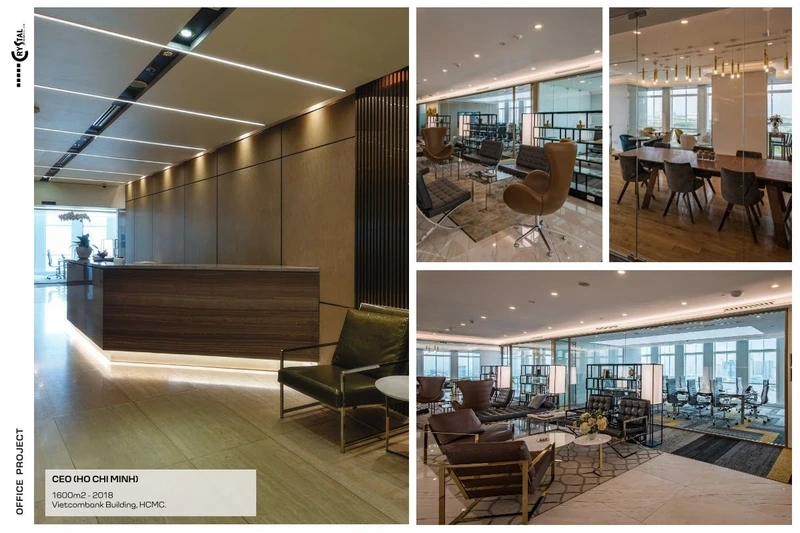
- Proven Expertise in Executive Spaces: Deco Crystal has a demonstrated track record of building top-tier corporate offices and executive environments, providing exceptional boss office room design solutions. A notable example is their successful delivery of the 1,600m2 “CEO (HO CHI MINH)” project at the Vietcombank Building in 2018. They have also designed premium, professional workspaces for global corporations and financial institutions like Shinhan Finance, Woori Bank, and Cheil.
- Human-Centric and Sustainable Approach: A modern boss cabin must be a hub for strategic thinking. Deco Crystal’s design philosophy places humans at the center, ensuring the space not only satisfies the highest aesthetic standards but also optimizes functionality, which is central to any effective boss room interior design.




The modern boss office cabin design is not a passive backdrop for work. It is an active, designed environment that shapes concentration, signals authority, facilitates trusted conversations, and reflects the professional standards of its occupant. In 2026, the strongest executive offices share a set of defining qualities: disciplined spatial planning, furniture scaled to the room, layered lighting, purposeful material selection, integrated technology, and at least one meaningful gesture toward the natural world.
|
Contact Crystal Design TPL
|