

TOP 99+ Office Design Interior Trends for 2026: Boost Productivity
In 2026, a workspace must be more than merely attractive; it needs to inspire creativity, optimize functionality, and drive maximum productivity through smarter office interior design decisions. Below are the most essential office design interior trends for 2026, especially for companies seeking long-term flexibility, stronger branding, and better workplace performance.
1. The Hybrid-First Workspace: Embracing Total Flexibility
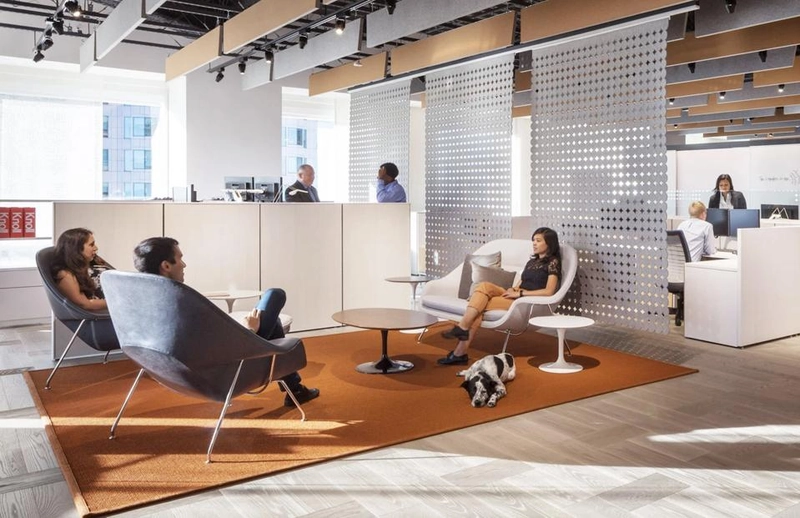
The 2026 workplace prioritizes absolute flexibility to truly support the hybrid model. This shift is now a defining principle of modern office interior design, where adaptability matters as much as visual appeal. Office design is finally moving past rigid, fixed desk layouts, shifting instead to a diverse ecosystem that seamlessly blends open collaborative zones with quiet, focused individual retreats.
In practice, modern interior design for office environments must support both collaboration and privacy without making the workspace feel fragmented. Spatial flexibility is the core metric, allowing businesses to easily reconfigure the office based on project needs while maximizing employee comfort and output.
The modern hybrid office design demands total flexibility, a key requirement in today’s office modern interior design strategies. We are officially moving past rigid, fixed desk layouts and into a dynamic ecosystem that supports both high-energy collaboration and quiet, focused individual retreats.
This shift is driven by Activity-Based Working (ABW), meaning spaces are designed around what employees are doing, not where they sit. Absolute spatial flexibility is the core metric, enabling rapid reconfiguration to meet project needs while maximizing comfort and output.
What we are seeing here is not just a layout change, but a broader evolution in design thinking. Many businesses are aligning their workspace strategies with contemporary interior designs, where adaptability, user experience, and long-term scalability become core priorities rather than secondary considerations.
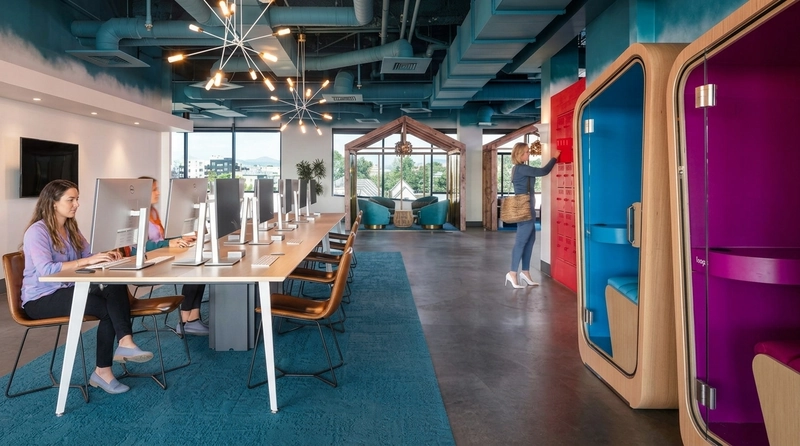
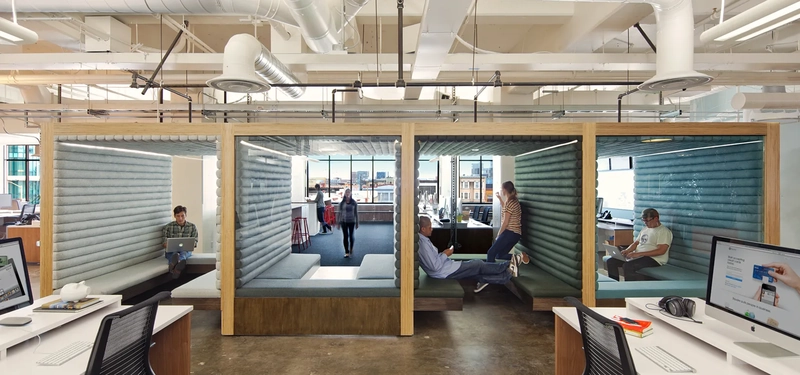
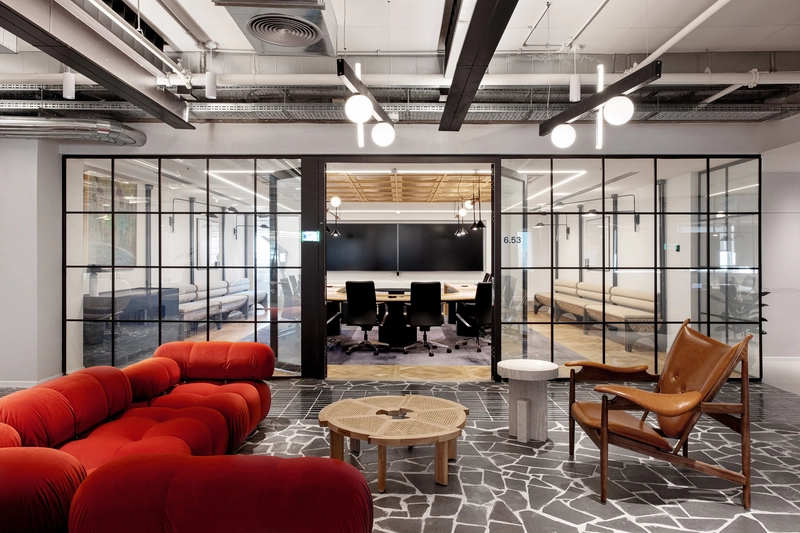
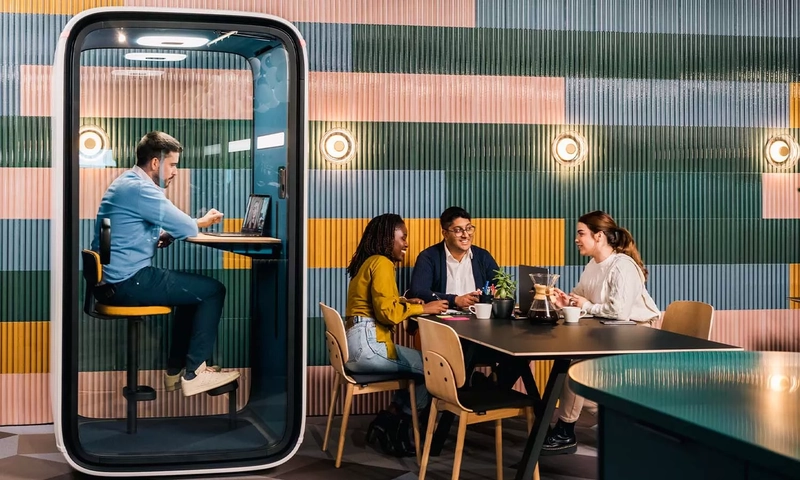
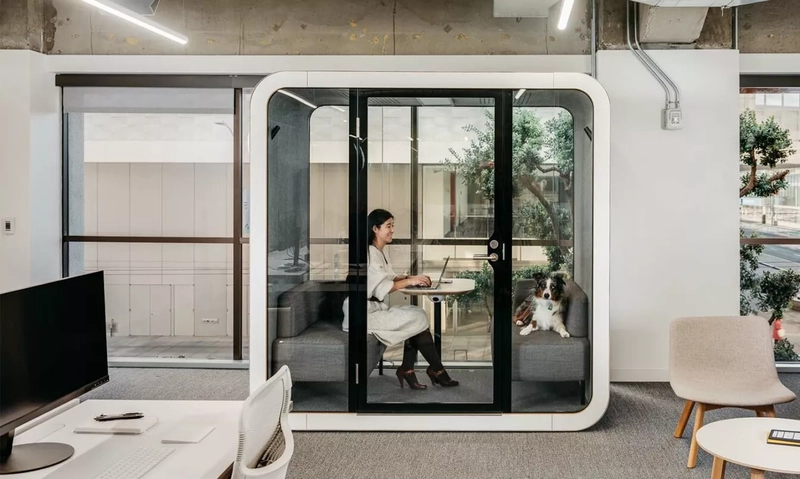
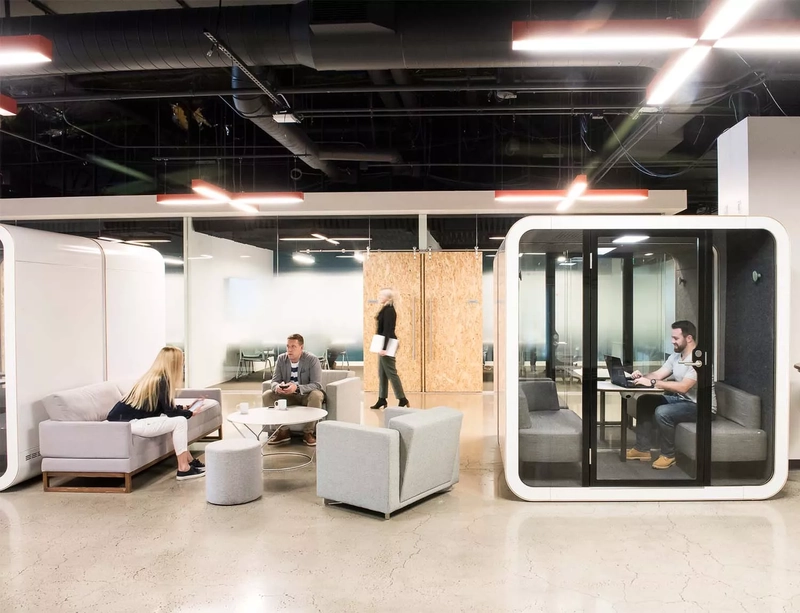
Idea 1 – Acoustic Pods. Install glass acoustic pods for high-focus tasks or private video calls:
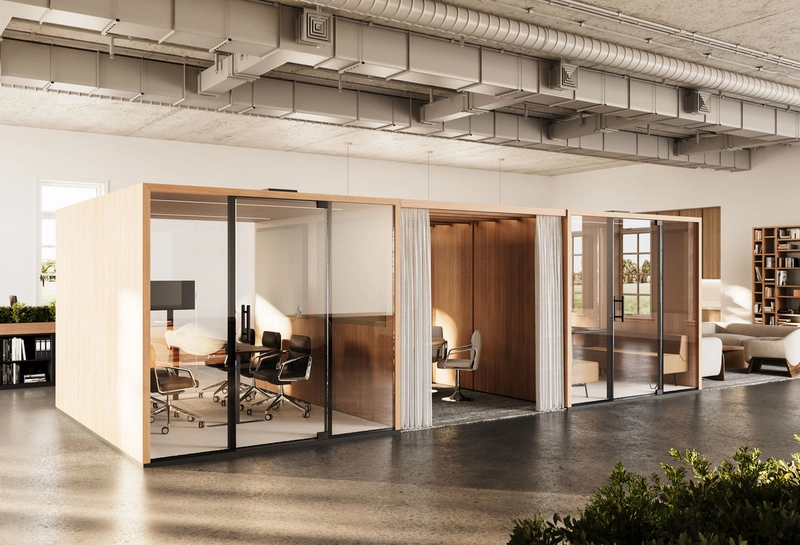
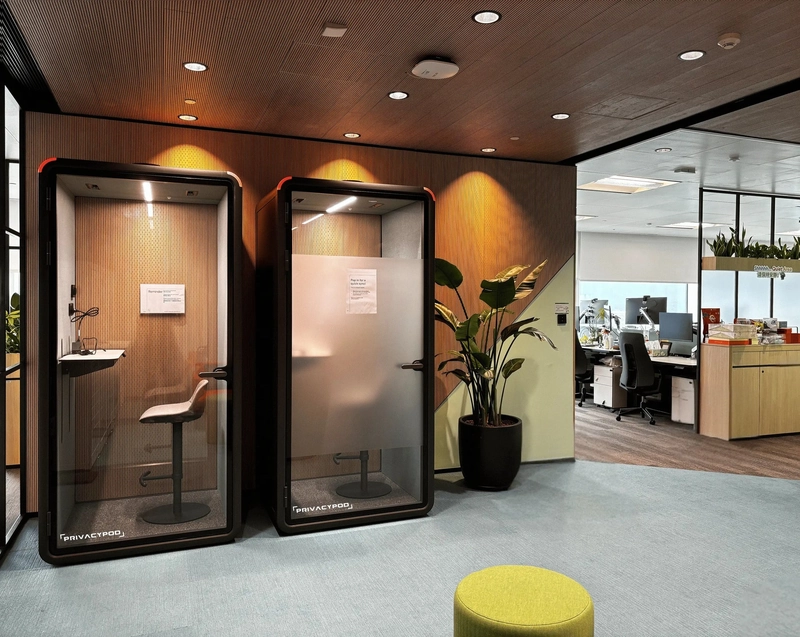
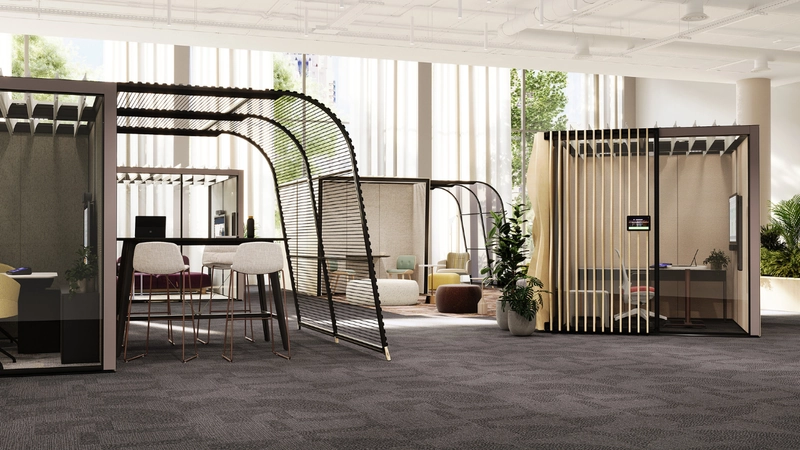
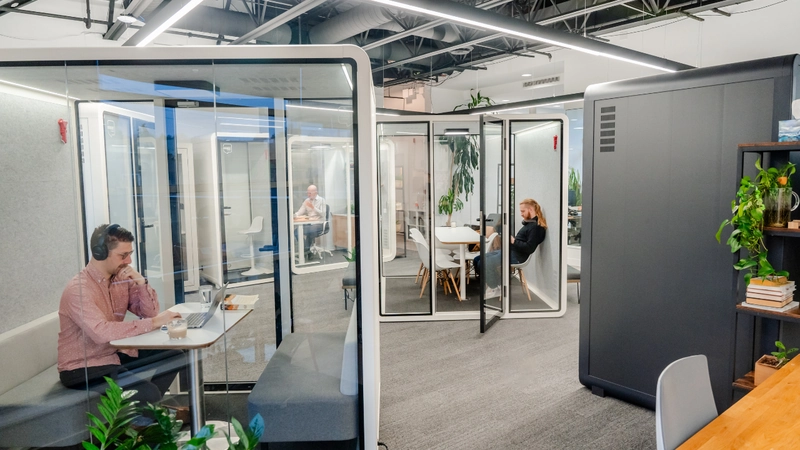
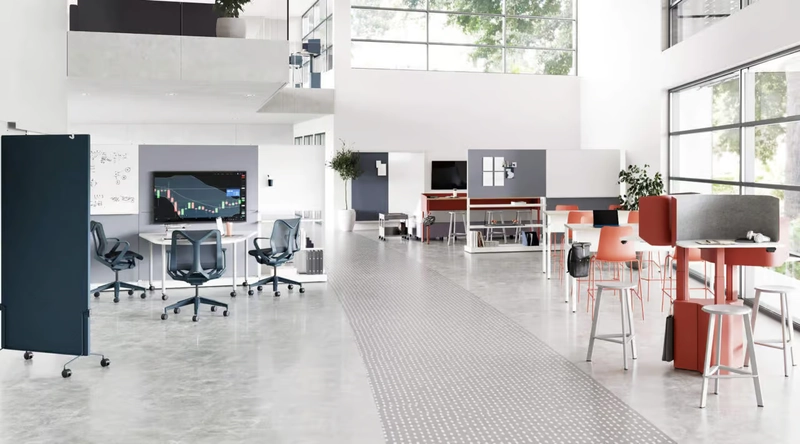
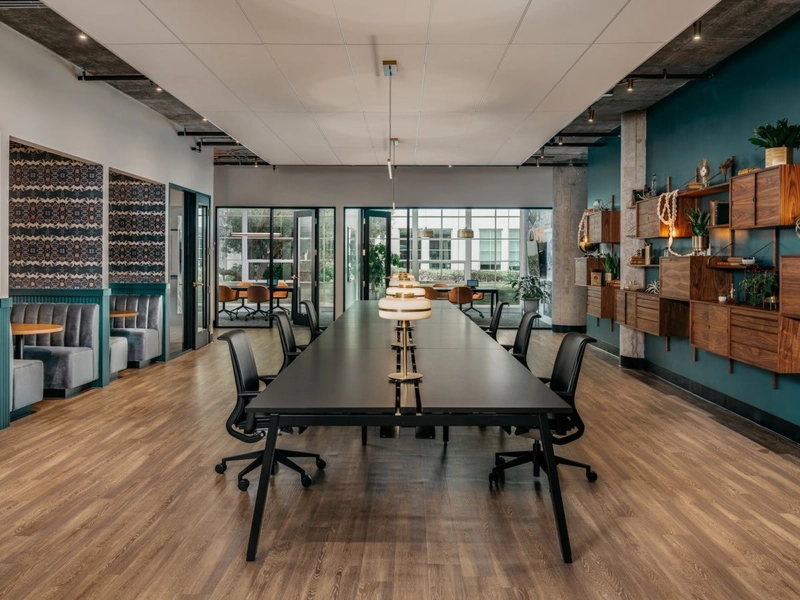
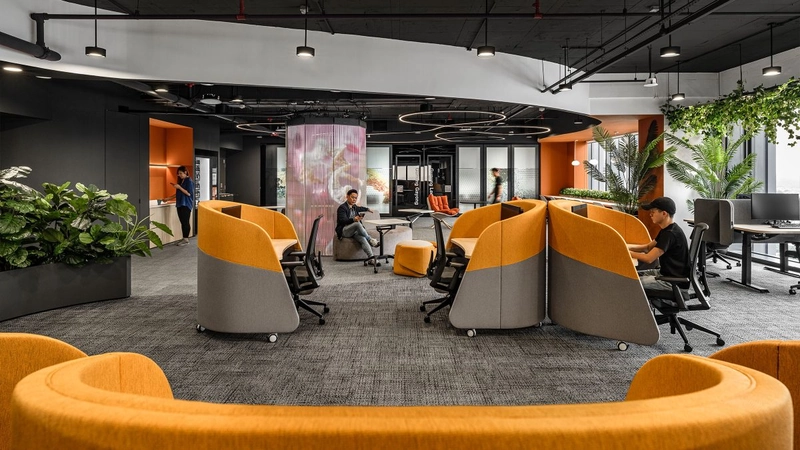
Idea 2 – Modular Layouts. Use movable freestanding furniture to easily adjust meeting space sizes or movable walls integrated with whiteboards, enabling spontaneous brainstorming anywhere:
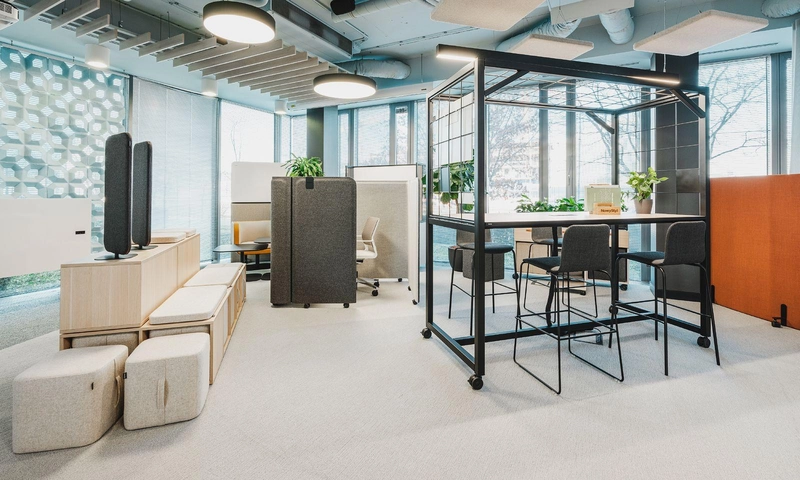
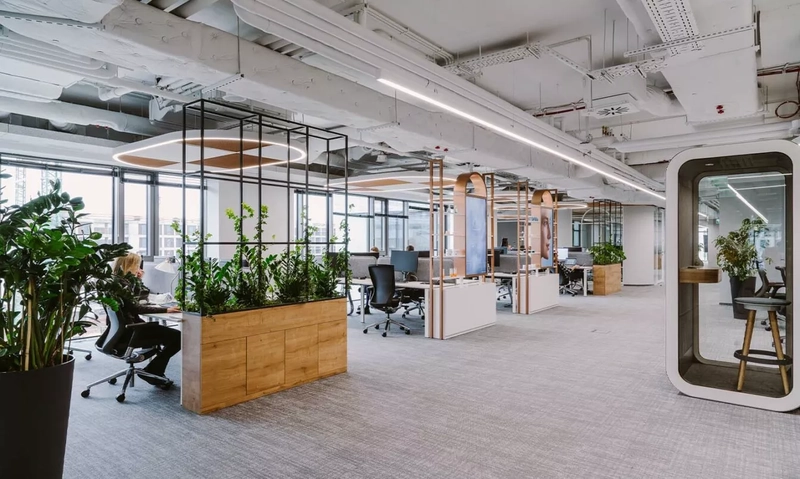
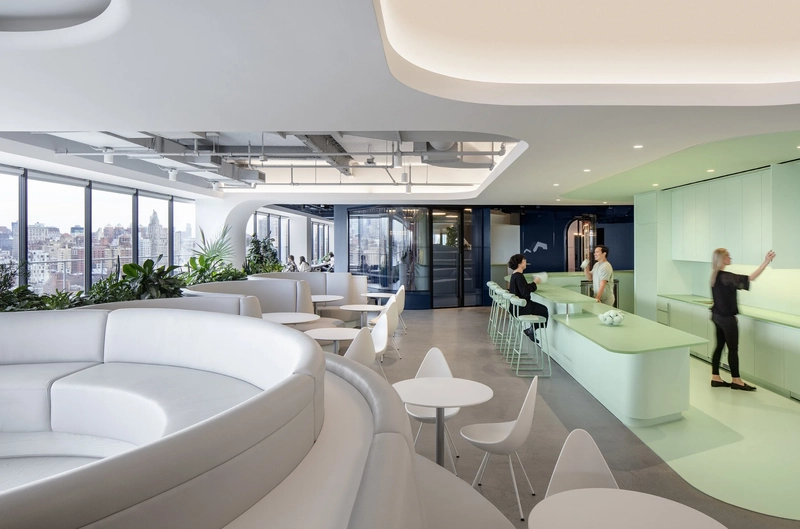
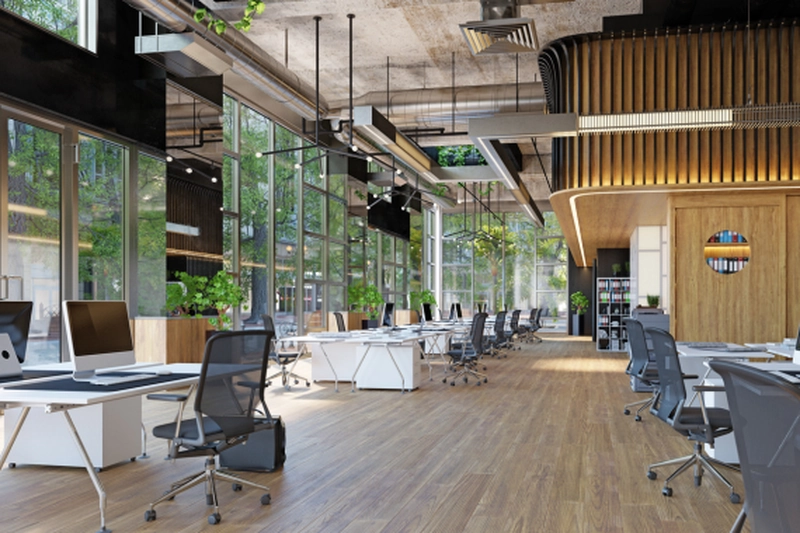
Many of the most compelling modern office interior design pictures today highlight natural light as a primary design feature.
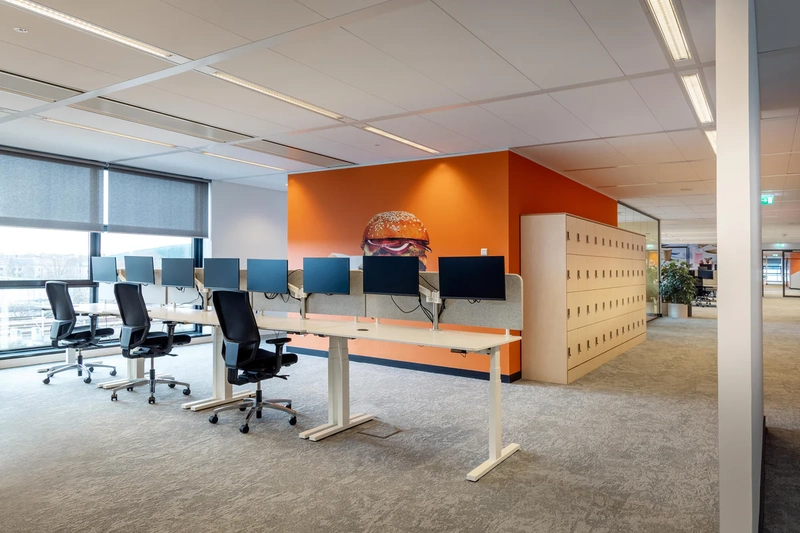
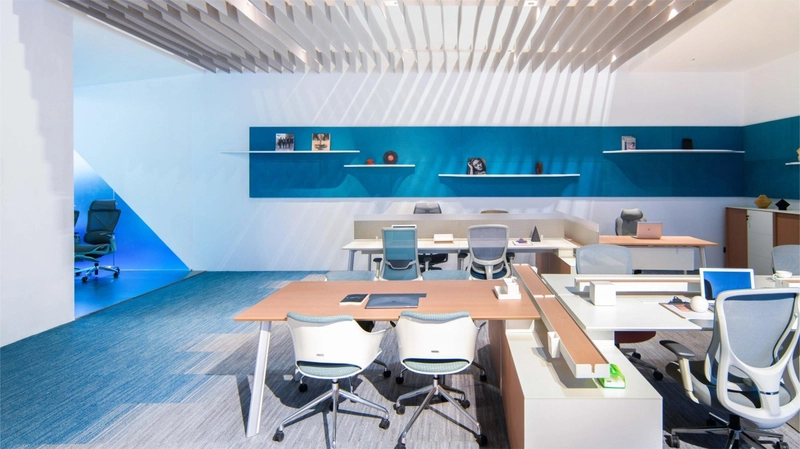
Idea 3 – Ergonomics. Choose convertible, height-adjustable desks paired with ergonomic seating:
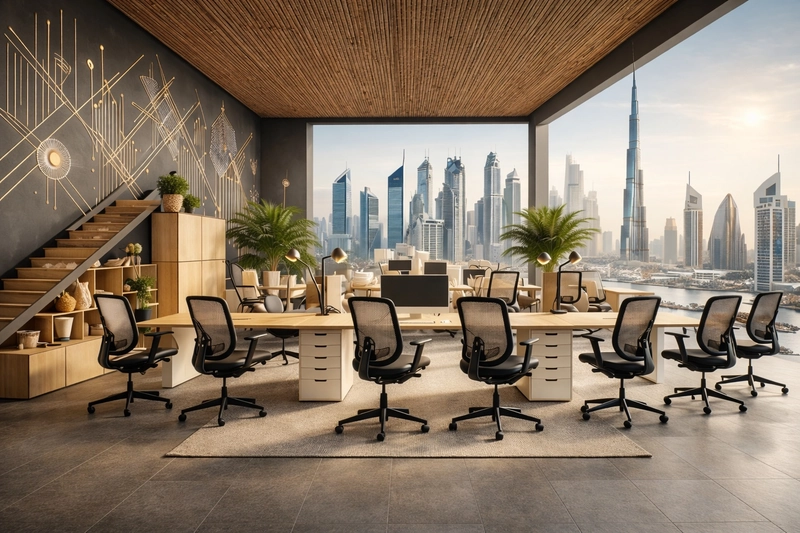
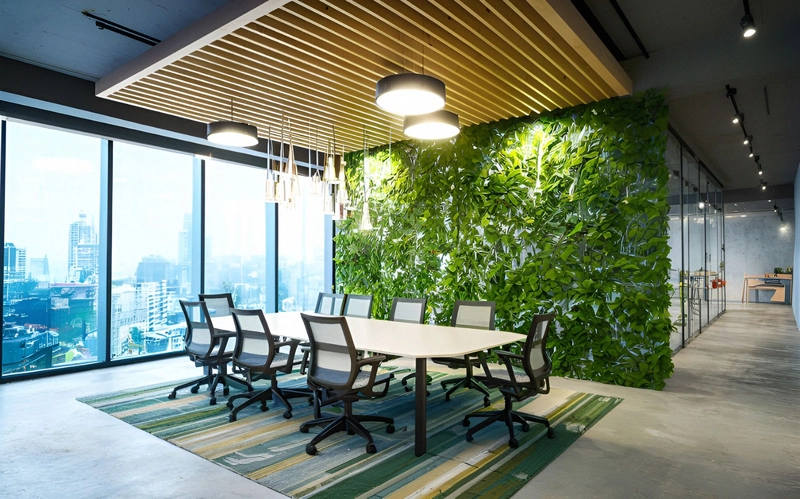
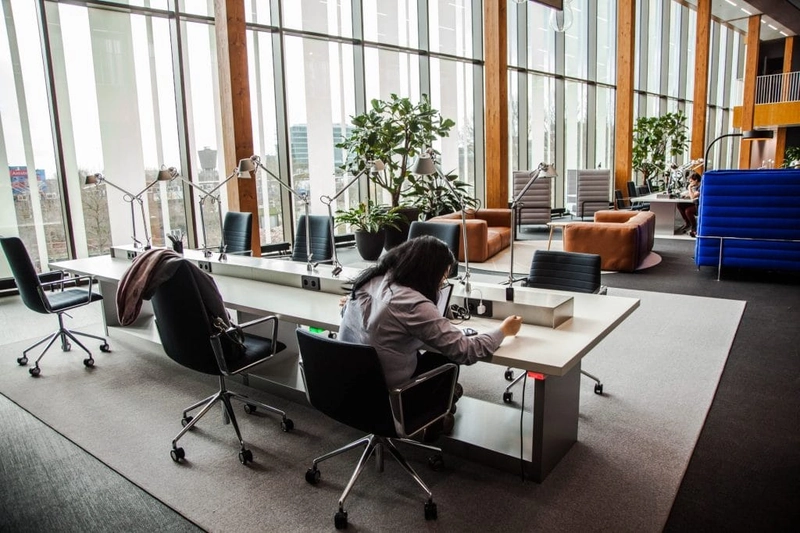
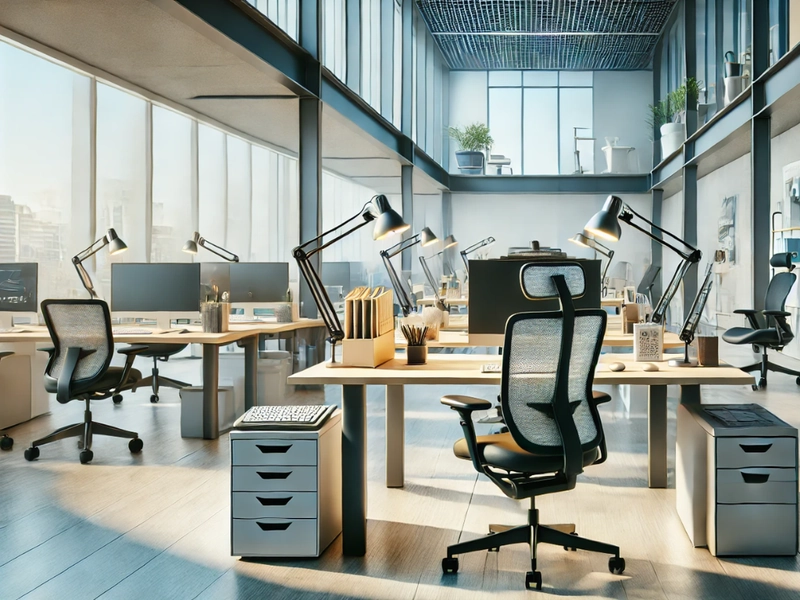
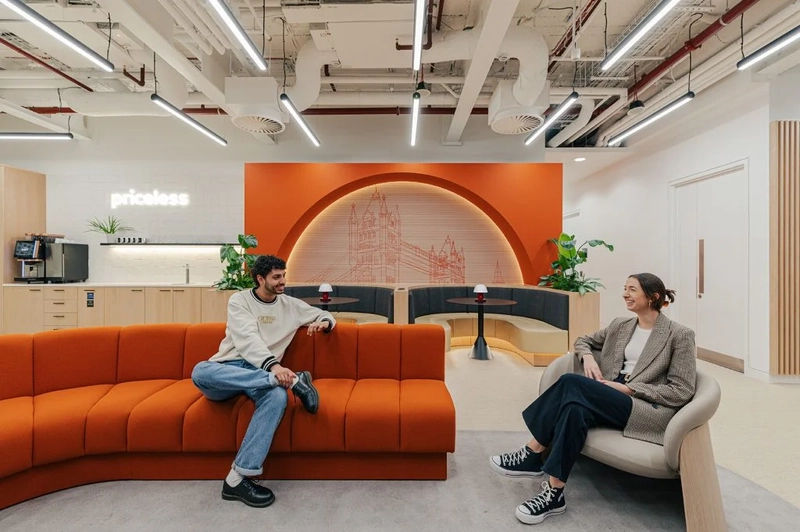
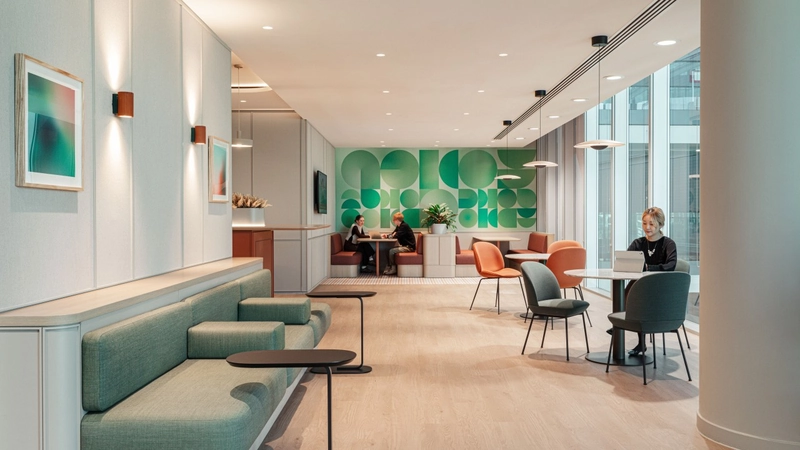
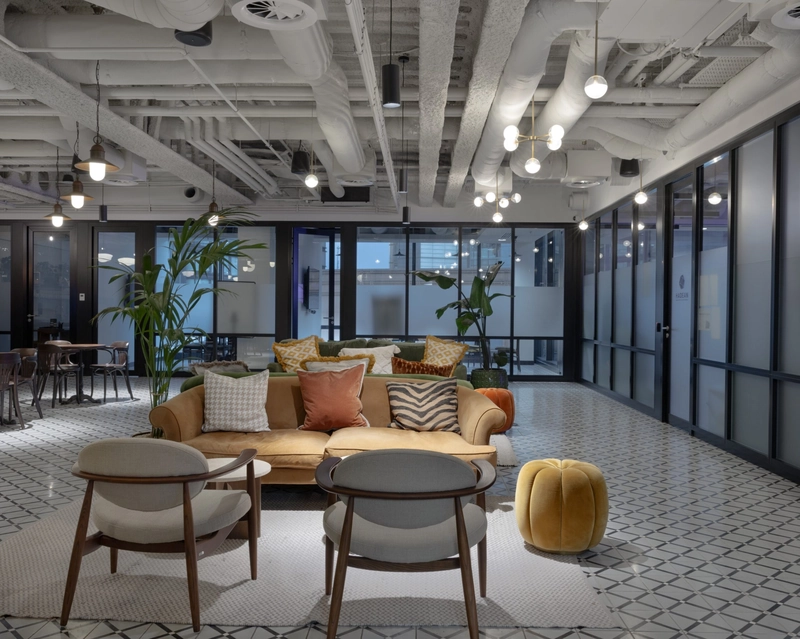
Idea 4 – Hot-Desking. Create “Lounge” zones that support hot-desking with comfortable sofa seating:
2. Deep Biophilic Integration: Bringing Nature Indoors
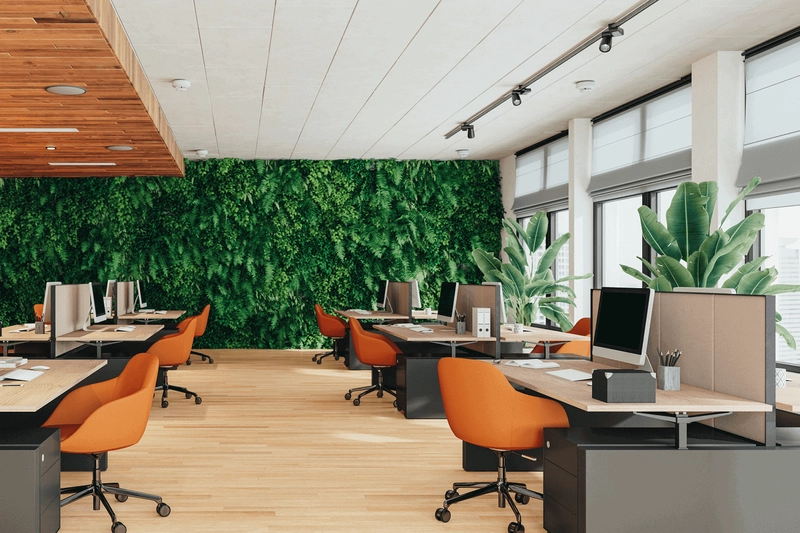
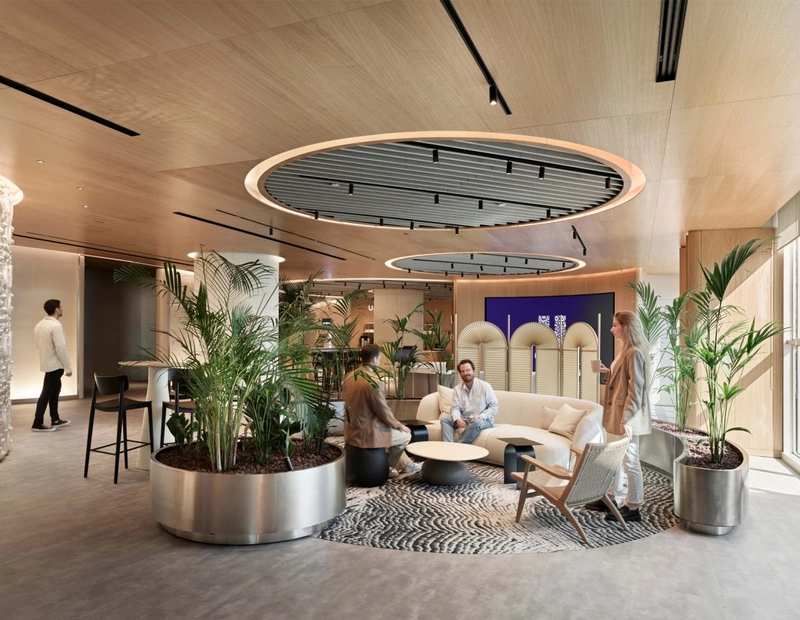
Biophilic design is no longer just a few potted plants; it’s a foundational trend for the modern workspace. The focus is on connecting people to nature through maximizing sunlight, organic materials, and even water elements. Scientific studies confirm that Biophilic design actively reduces stress, improves concentration, and boosts mental well-being. By nurturing this indoor connection to nature, the office transforms into a space that regenerates energy and sparks creativity.
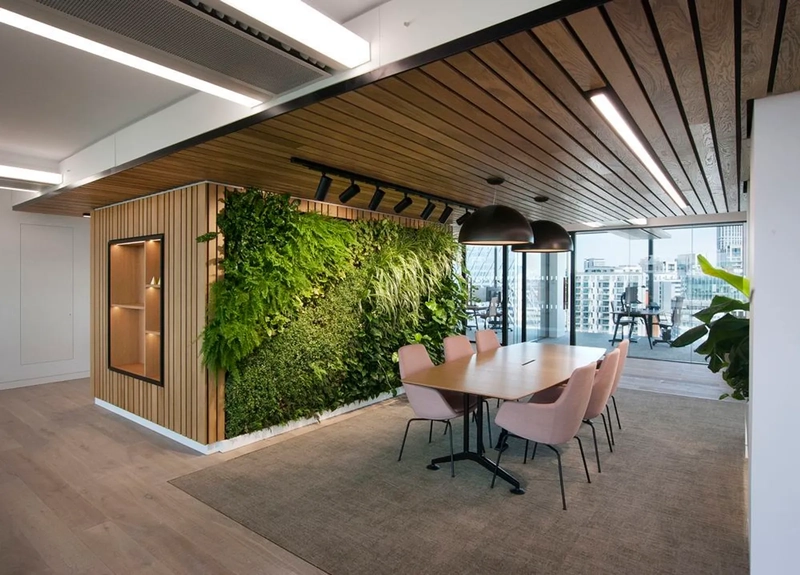
Idea 1 – Living Wall. Design large, dramatic living walls as a central focal point
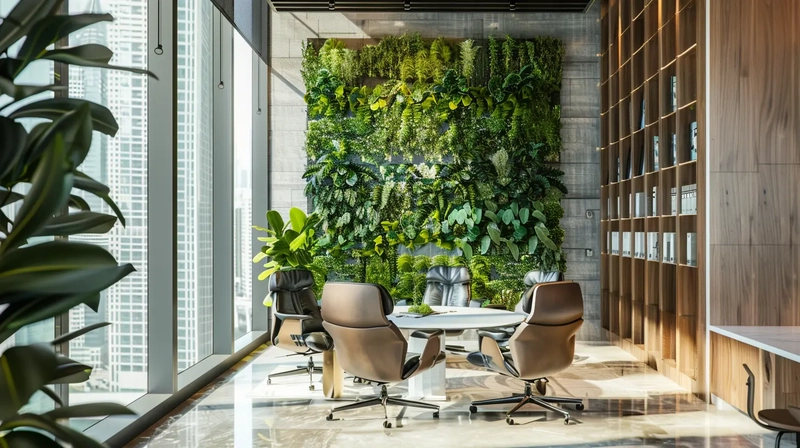
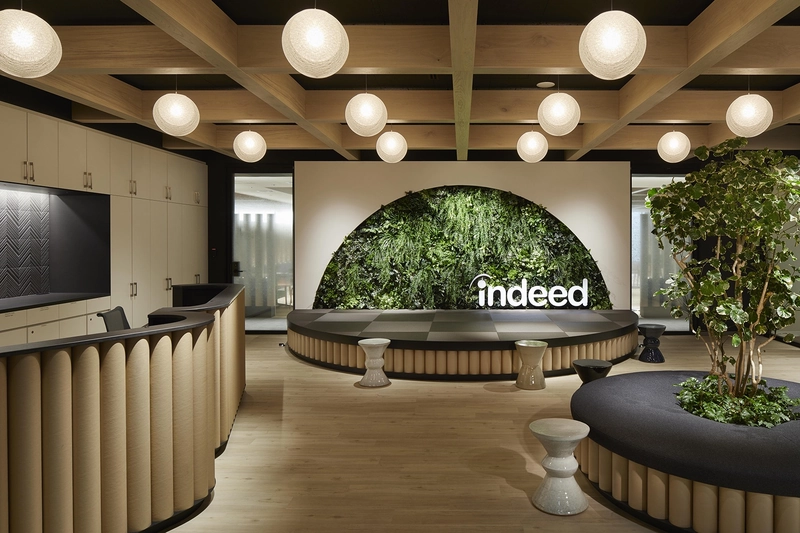
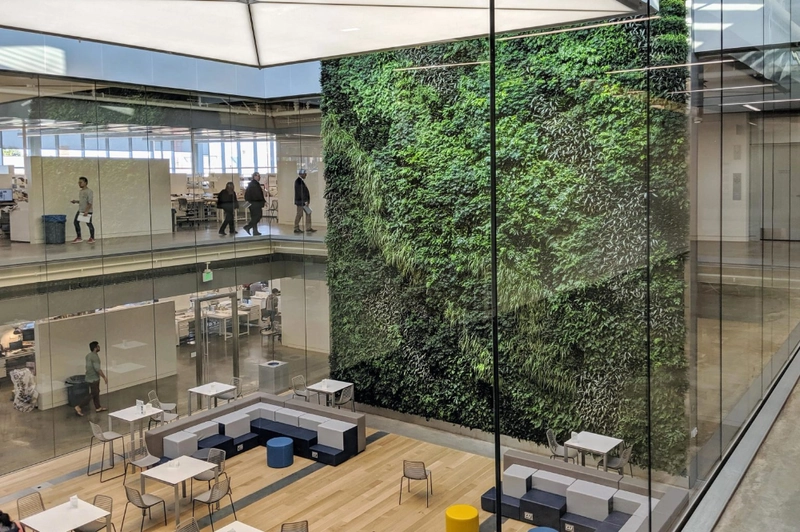
Idea 2 – Natural Light. Maximize natural light using floor-to-ceiling glass walls and sheer diffusing curtains.
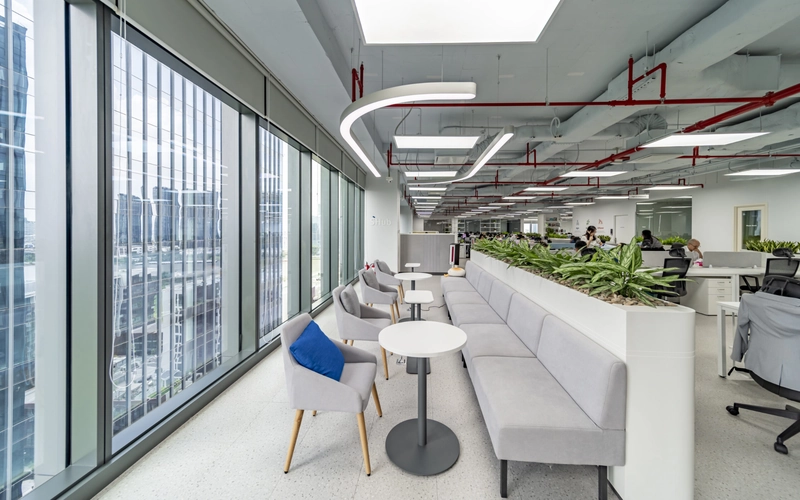
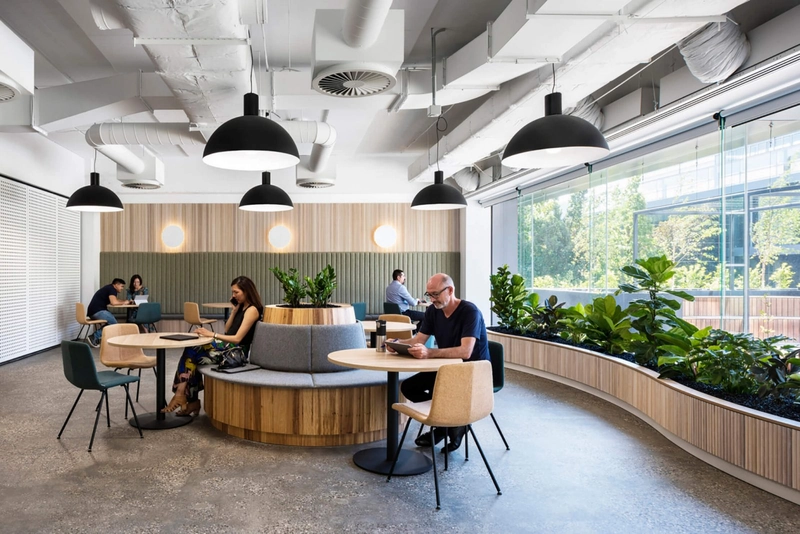
It is also one of the details most frequently seen in premium modern office interior design photos, because it instantly improves comfort and spatial quality.
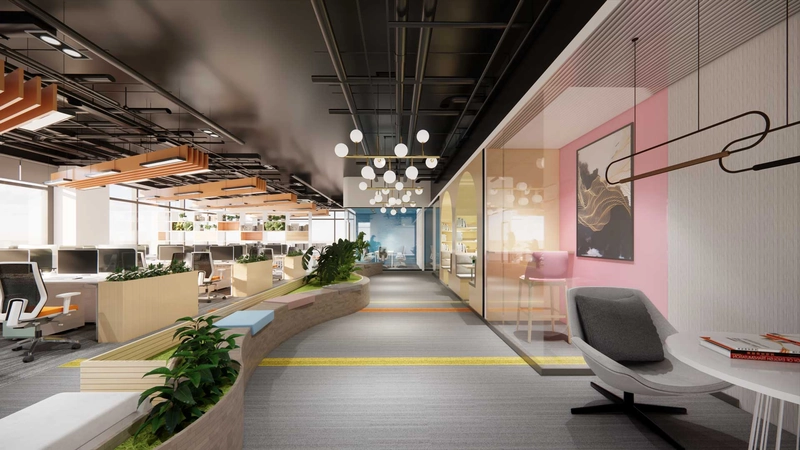
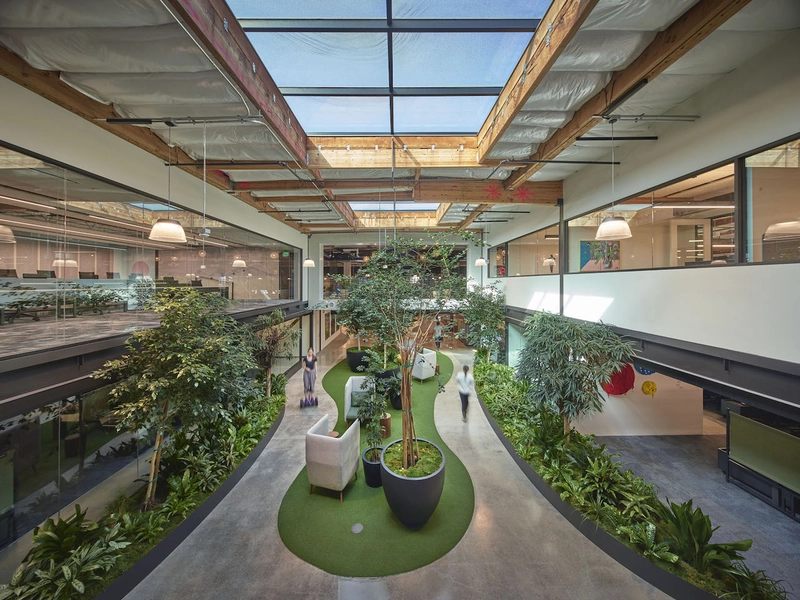
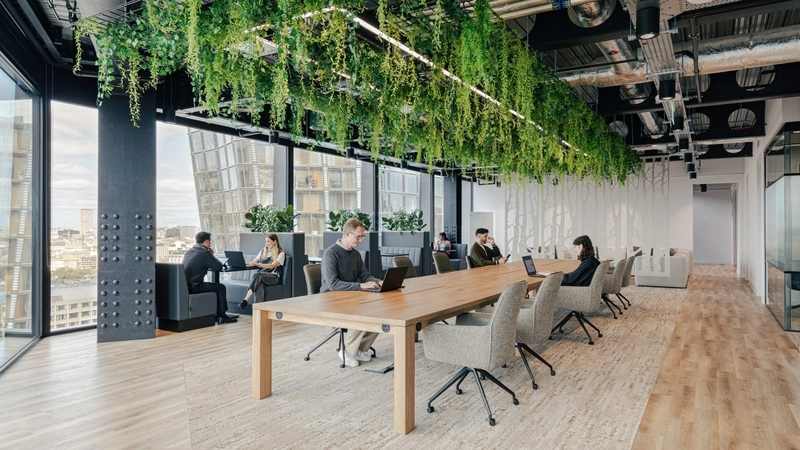
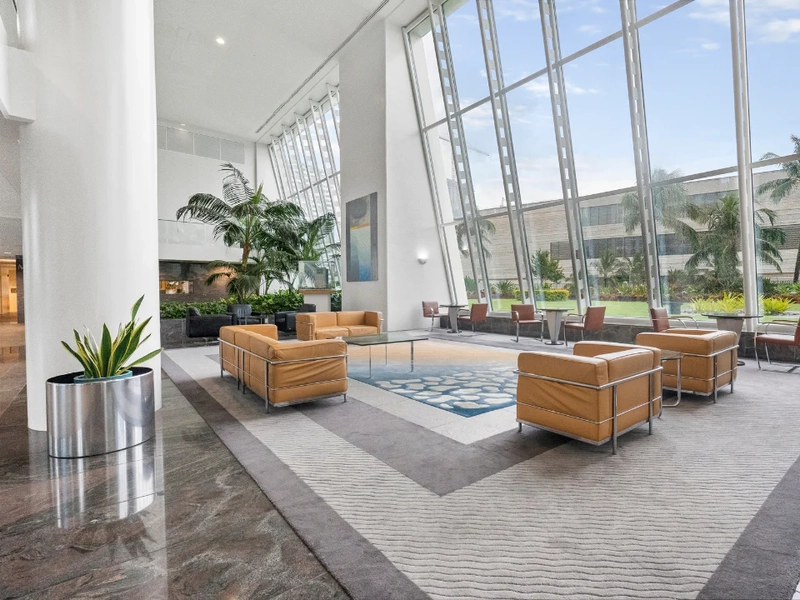
Idea 4: Apply natural finishes like wood, stone, rattan, and woven textures to office furniture and fixtures.
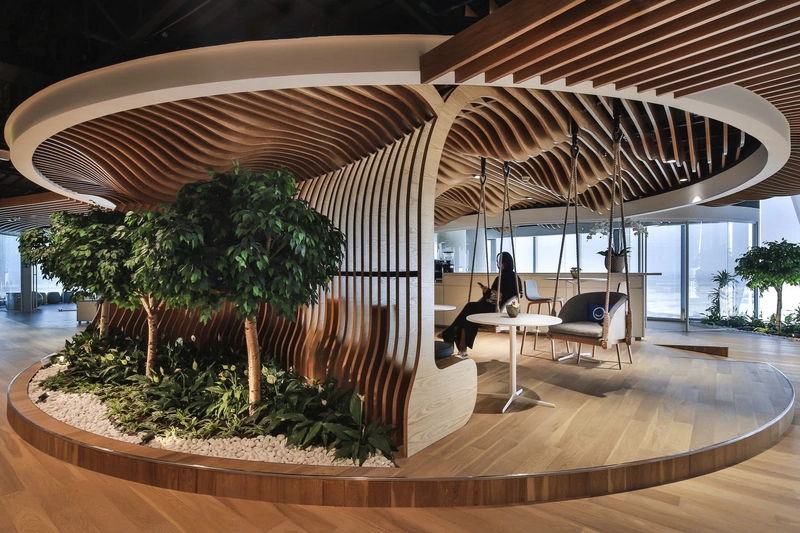
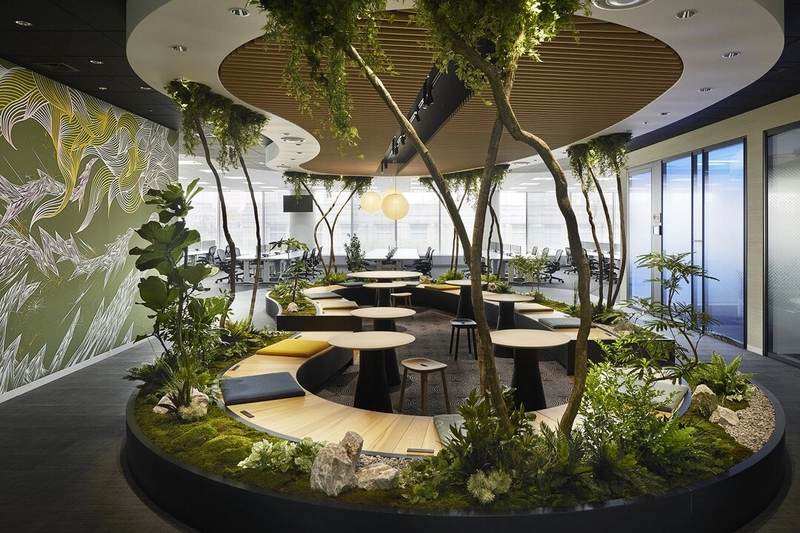
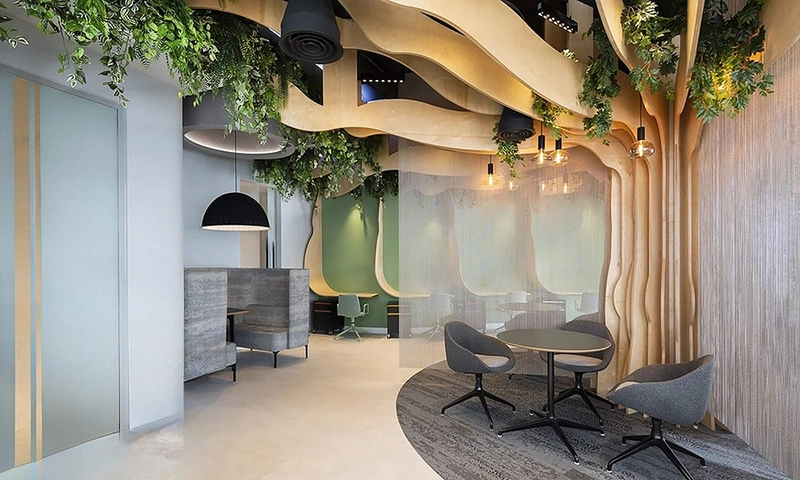
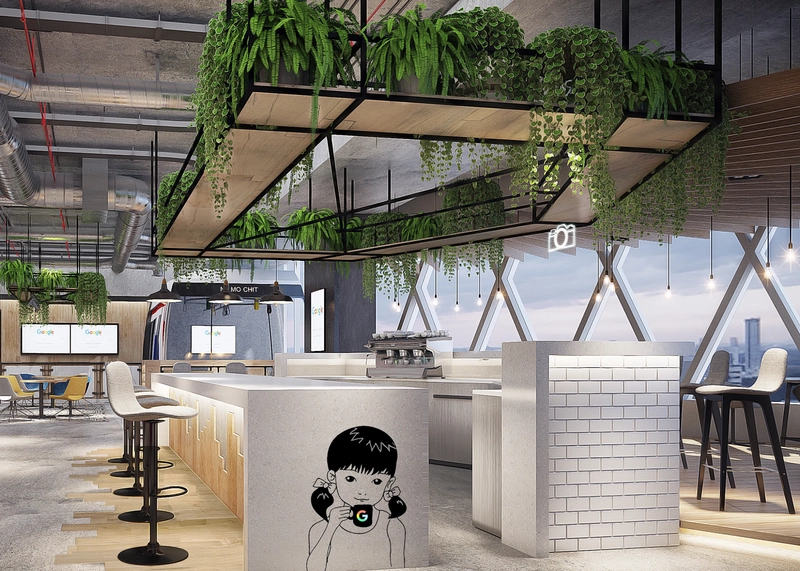
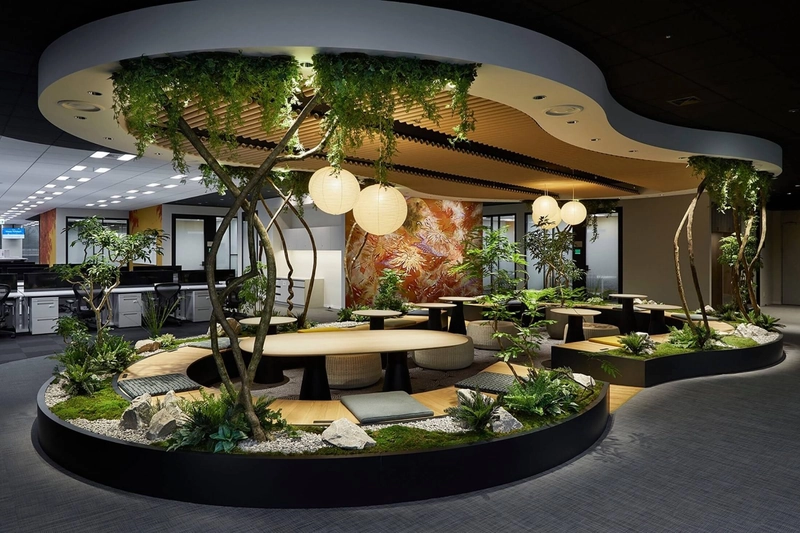
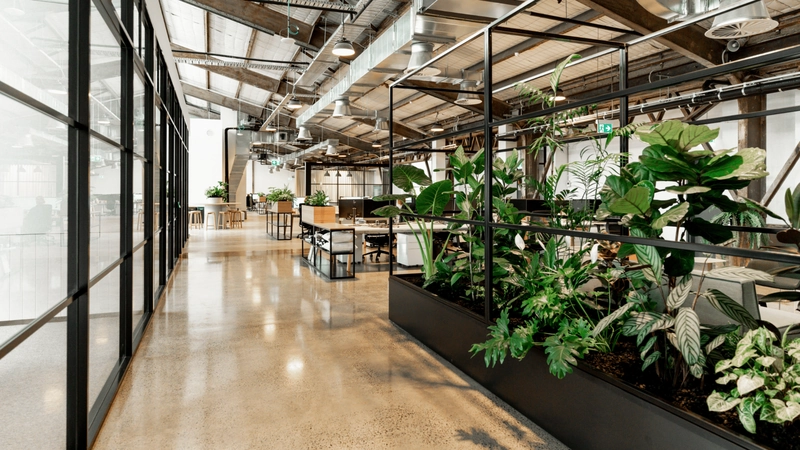
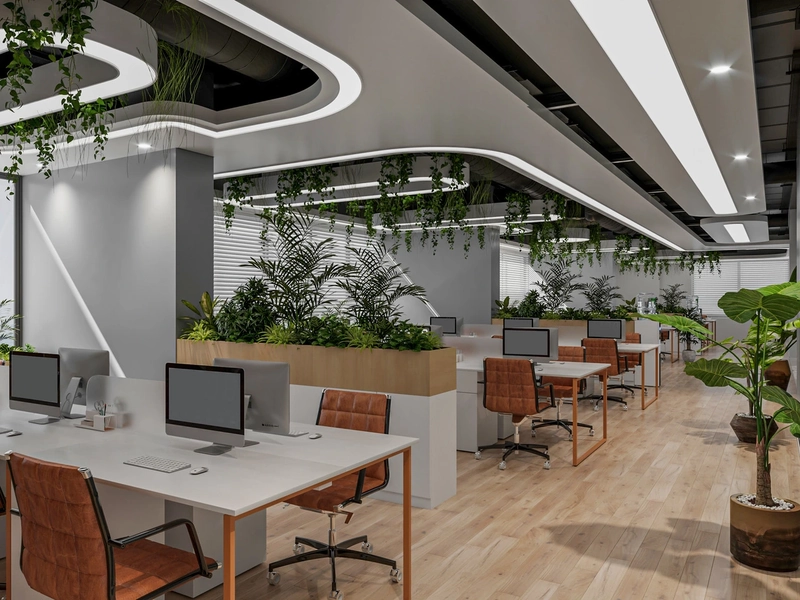
Idea 5: Strategically place large ornamental plants to serve as soft, natural dividers between work zones.
3. Smart Office & Invisible IoT Integration
For 2026, office technology should be felt, not seen; it is integrated “invisibly” to maintain aesthetic integrity. Smart offices leverage IoT systems to manage the environment, from microclimate to lighting and security. This invisible approach is becoming a signature of modern contemporary office interior design, where technology supports the space without visually overwhelming it.
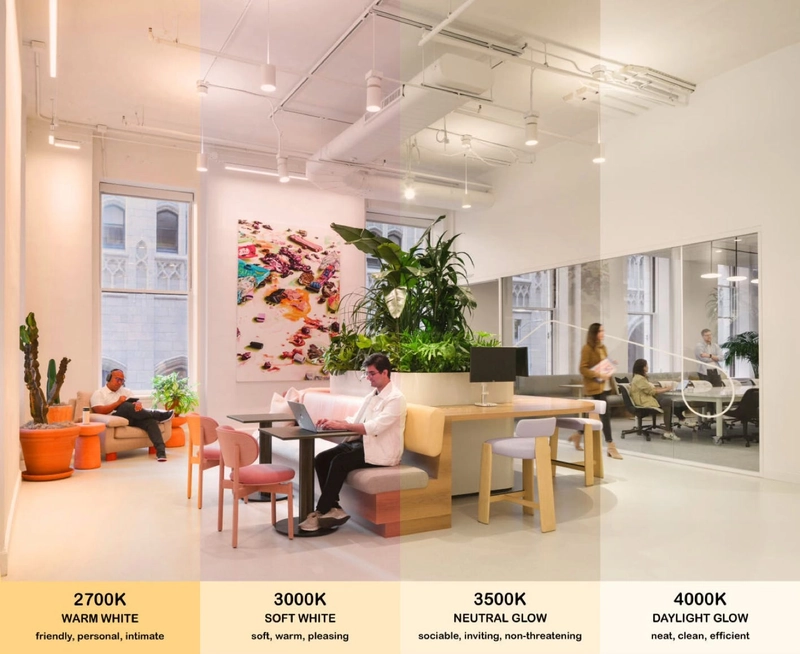
Automation, from air quality control to circadian lighting that changes based on the time of day, delivers a seamless experience, allowing employees to focus entirely on their work. These tech-driven upgrades are among the most forward-looking modern office interior design ideas for businesses preparing for the next decade.
Idea 1 – Human Centric Lighting. Install circadian lighting systems that automatically adjust color temperature (from crisp white to warm yellow) in real-time.
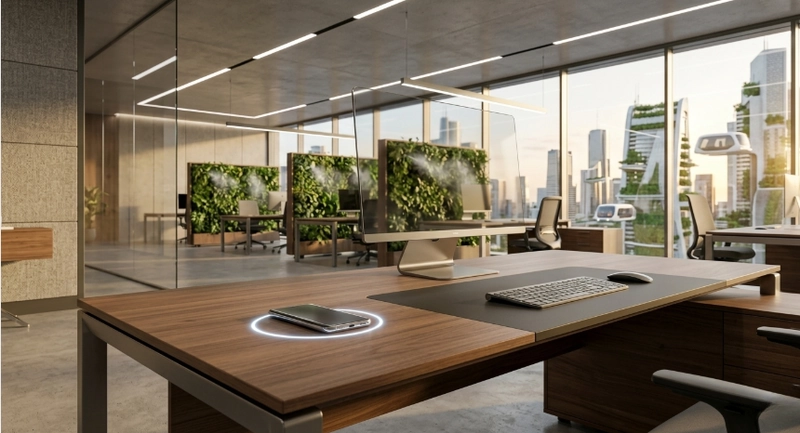
Idea 2 – Clutter-Free. Integrate hidden wireless charging pads into desks to eliminate cable clutter.
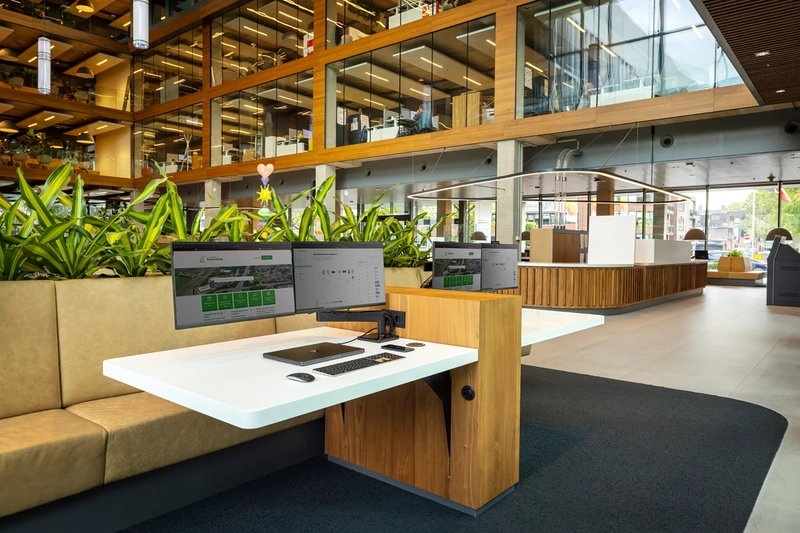
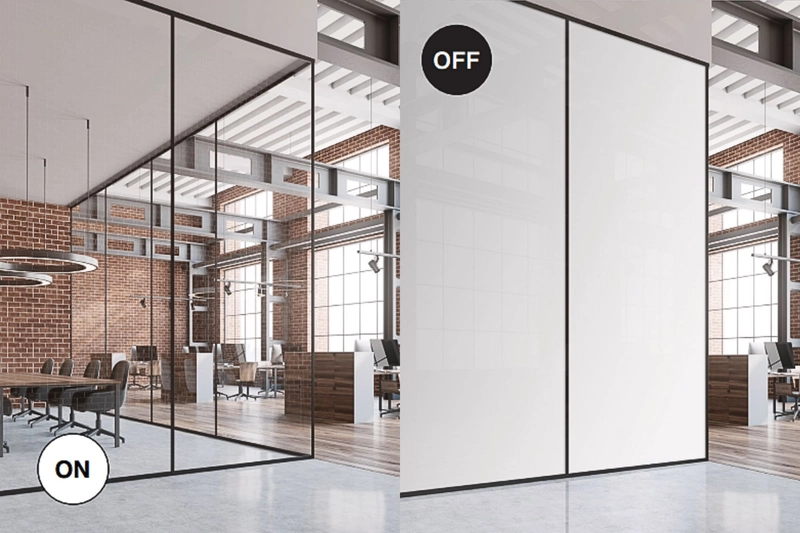
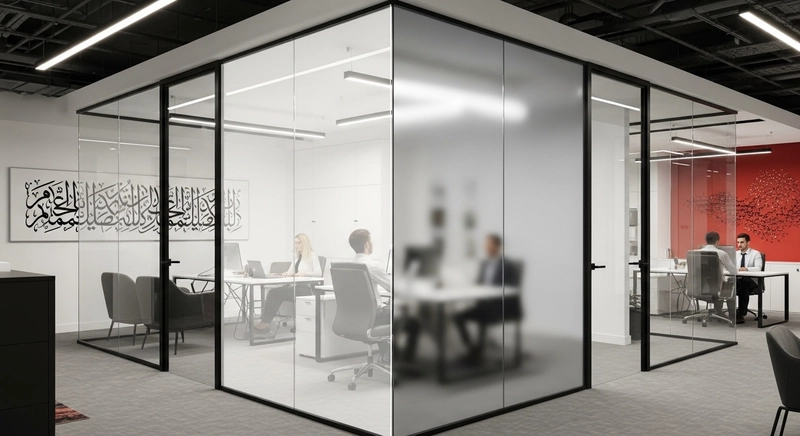
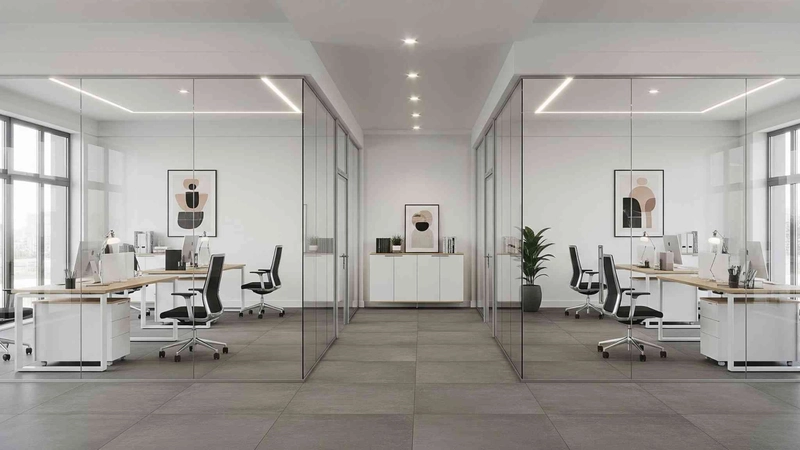
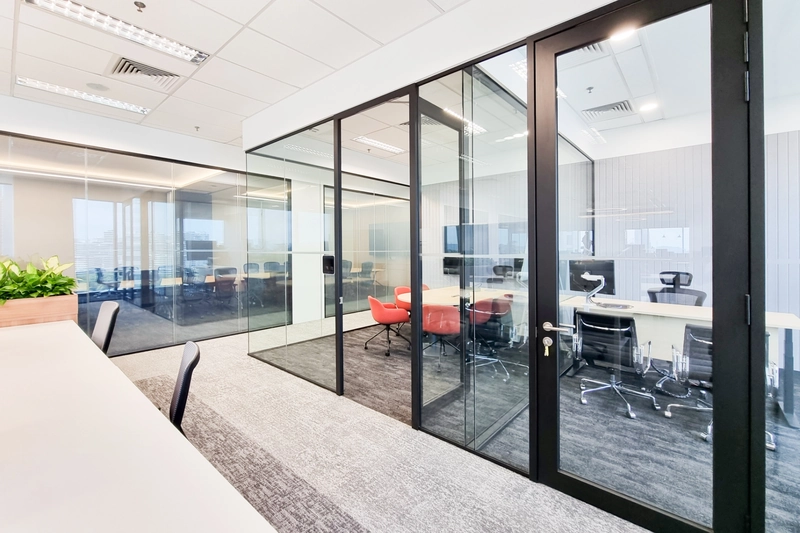
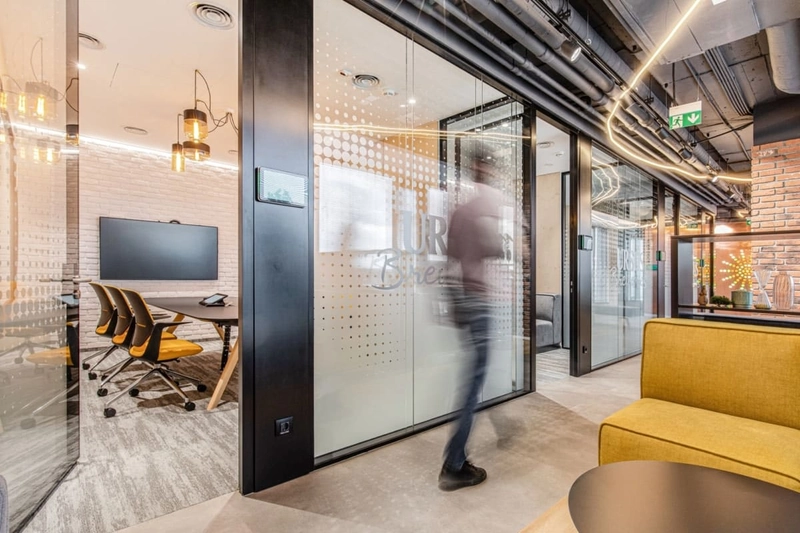
Idea 3 – Instant Privacy. Use smart glass partitions in meeting rooms that can instantly switch from clear to opaque for privacy with a single button press.
Idea 4 – Efficiency. Implement presence sensors that automatically turn off/on lights and air conditioning to save energy when rooms are vacated.
4. Industrial Contemporary: Raw Meets Refined
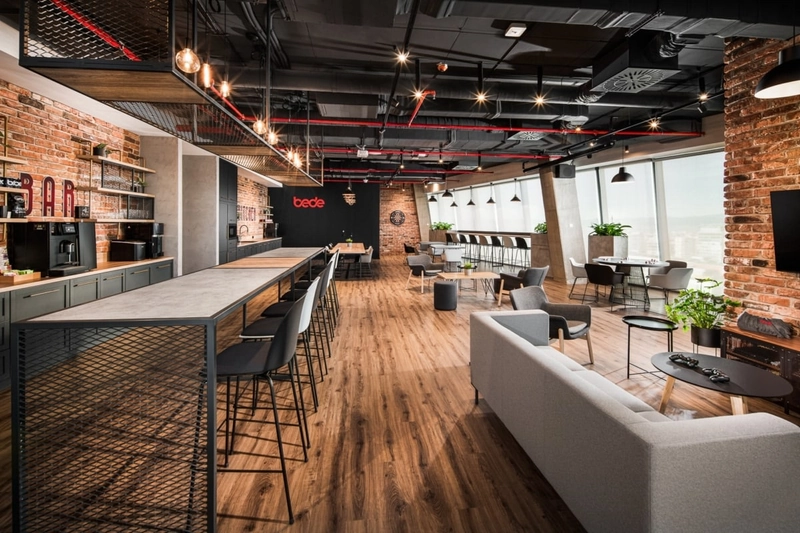
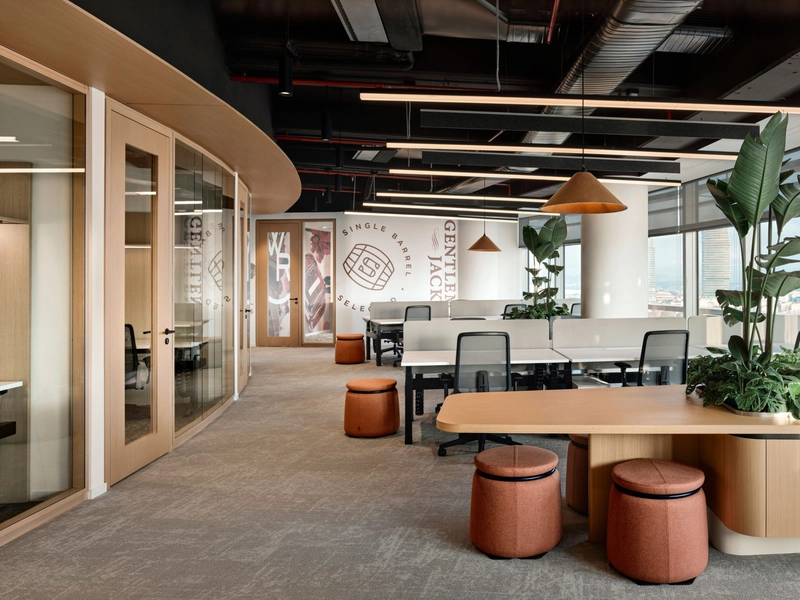
This style marries the raw, tactile beauty of Industrial design with the sleek sophistication of Contemporary aesthetics, resulting in distinctive and professional office spaces. The result is a bold yet balanced version of modern contemporary office interior design that feels both professional and distinctive.
In practice, this approach is often refined further through industrial interior design, where exposed structures and raw materials are intentionally highlighted. When executed correctly, this creates a strong visual identity while still maintaining a professional and highly functional workspace environment.
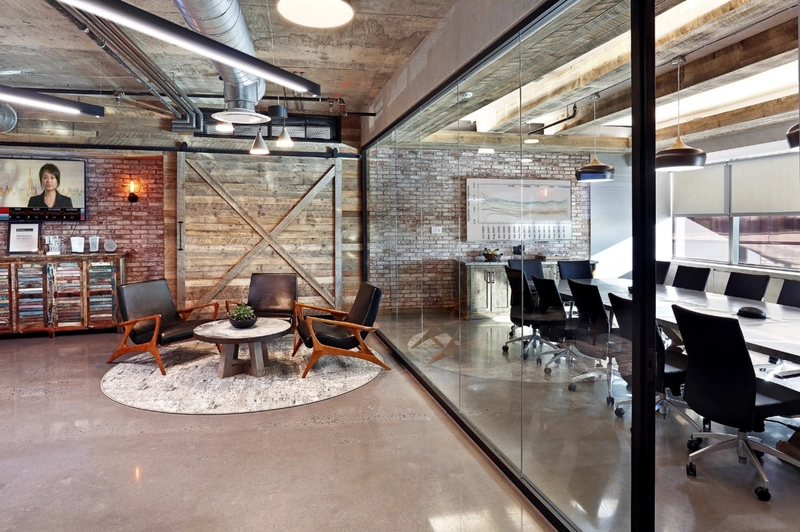
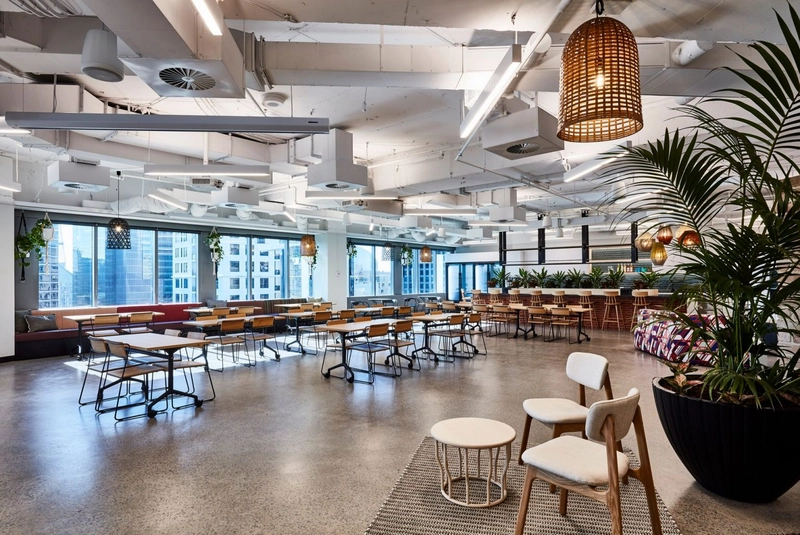
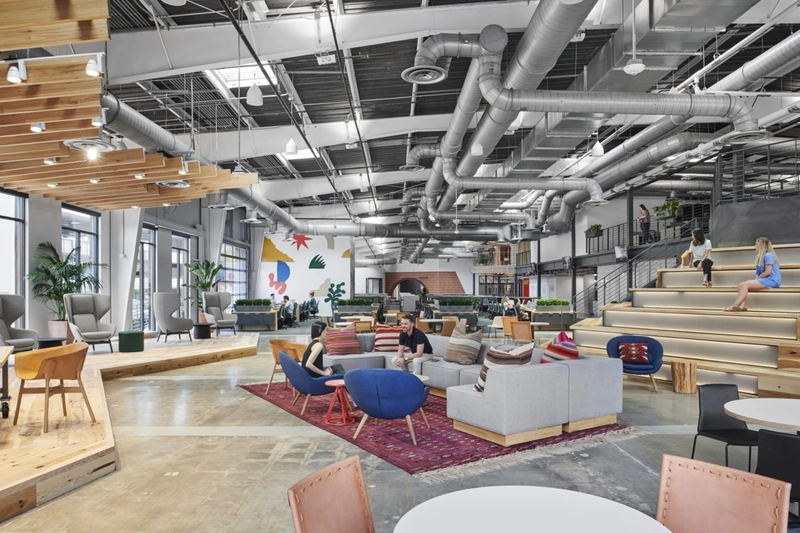
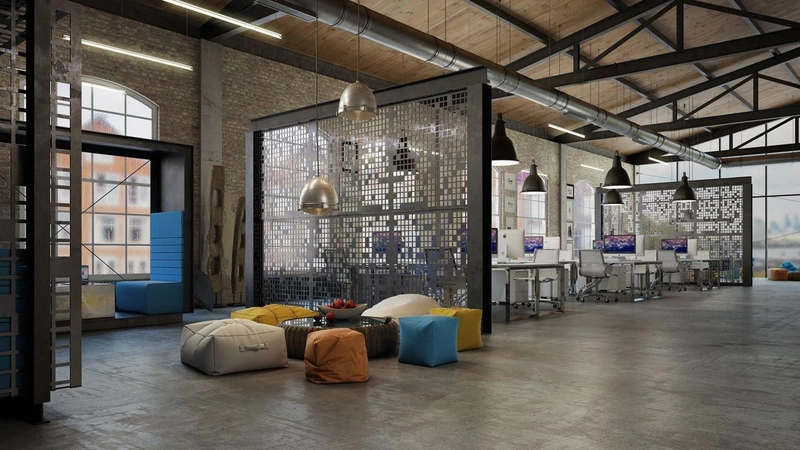
The trend celebrates the building’s original structure – exposing wooden beams, concrete ceilings, or metal ductwork – but softens it with clean-lined contemporary furniture. This visual contrast between industrial grit and modern material warmth adds compelling visual depth.
Idea 1 – Ceilings. Pair exposed concrete ceilings with a network of matte black metal pendant lights.
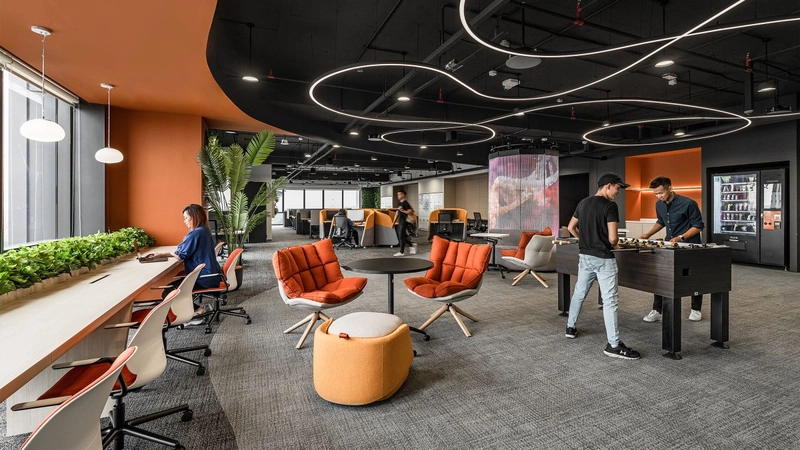
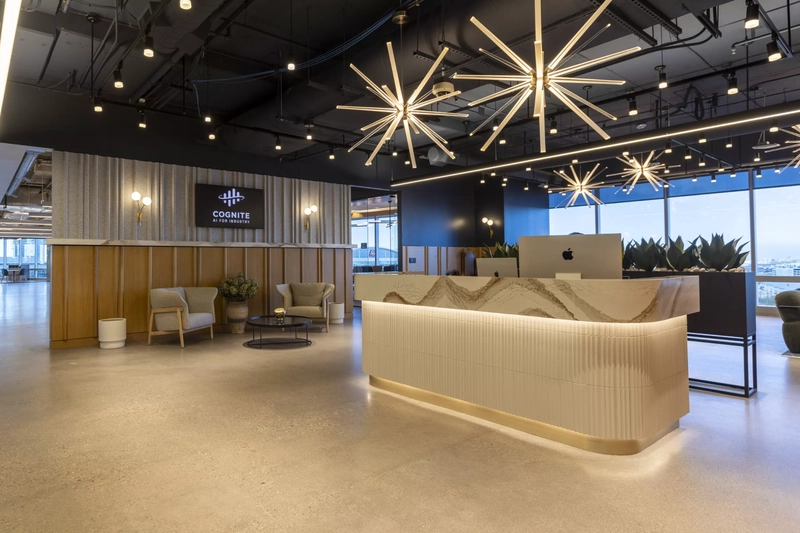
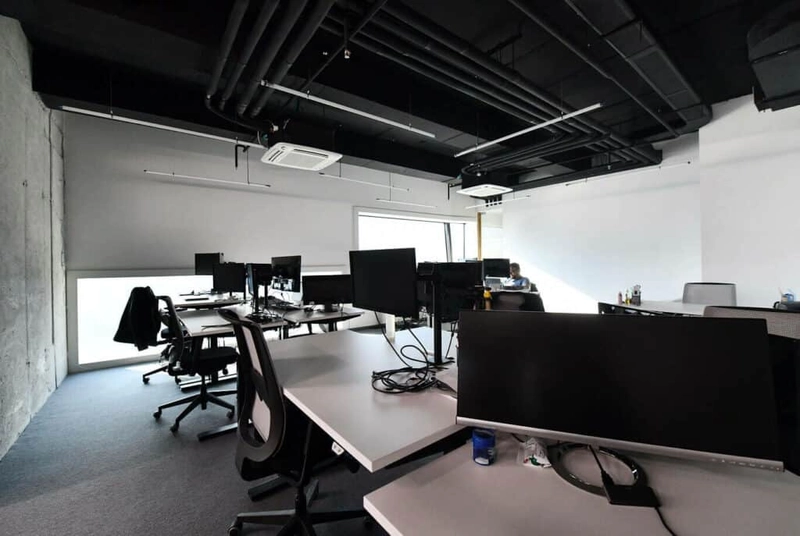
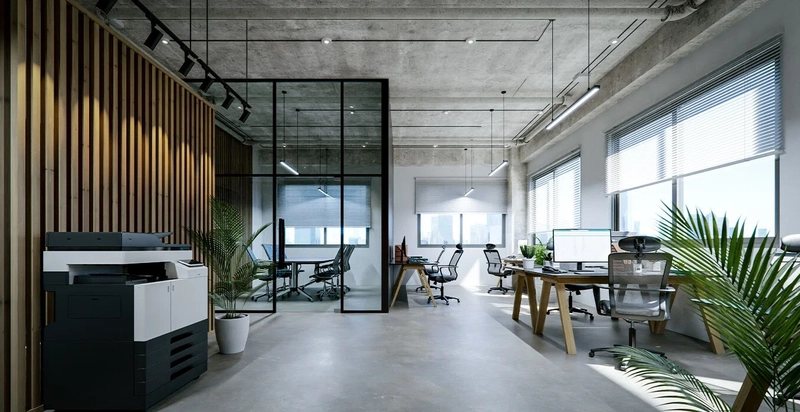
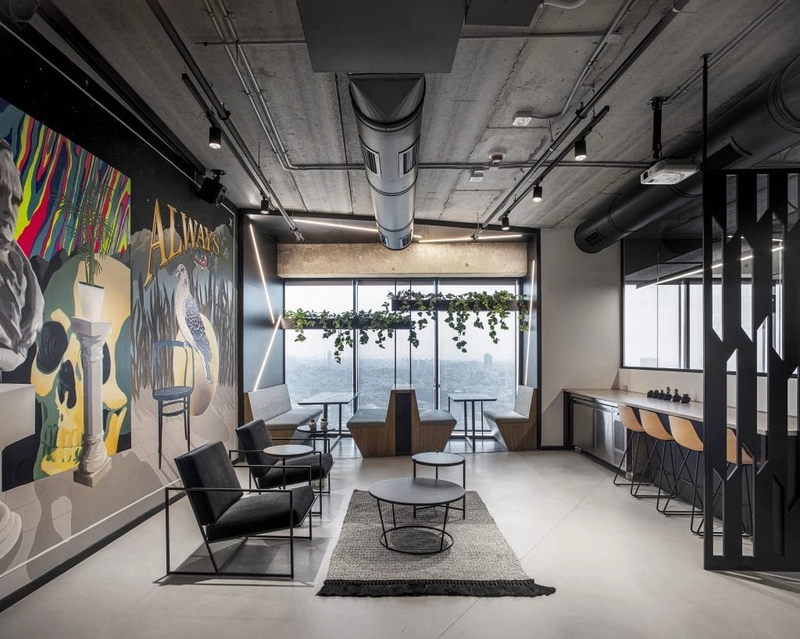
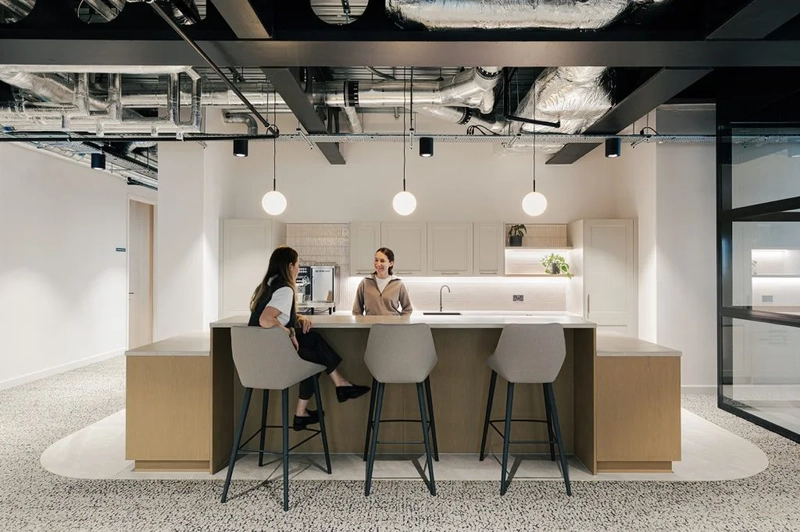
Idea 2 – Flooring. Use glossy polished concrete floors, accented by area rugs to absorb noise.
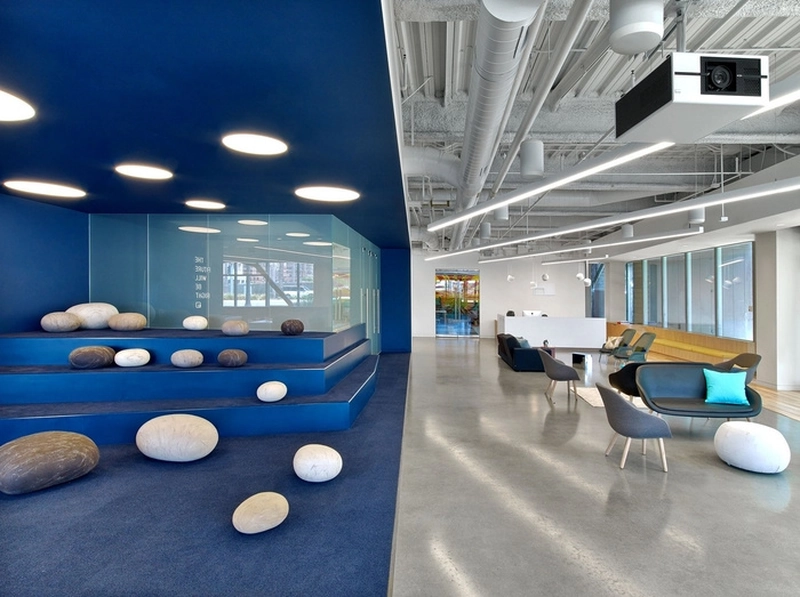
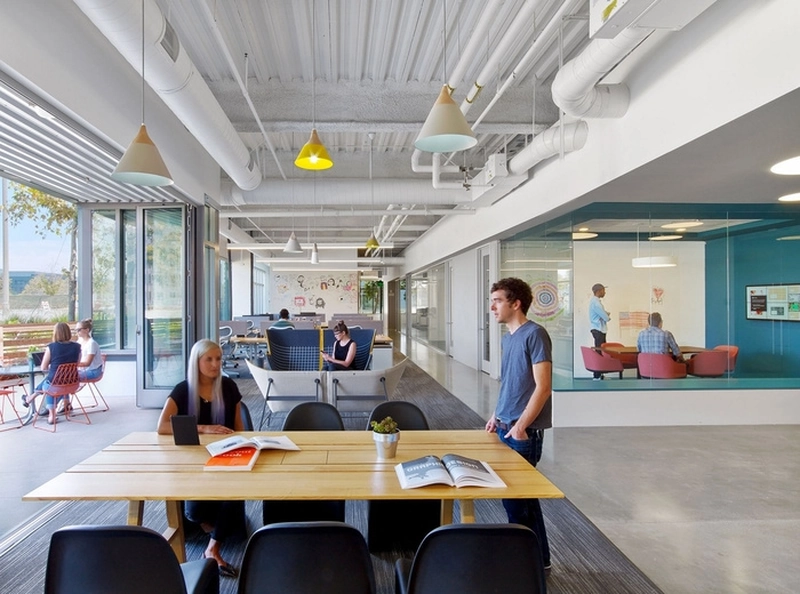
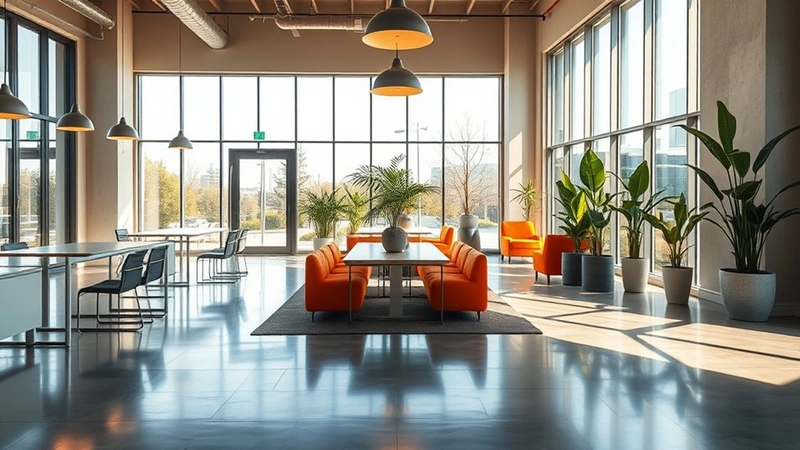
Idea 3 – Desks. Incorporate live-edge natural wood desk surfaces supported by industrial iron legs.
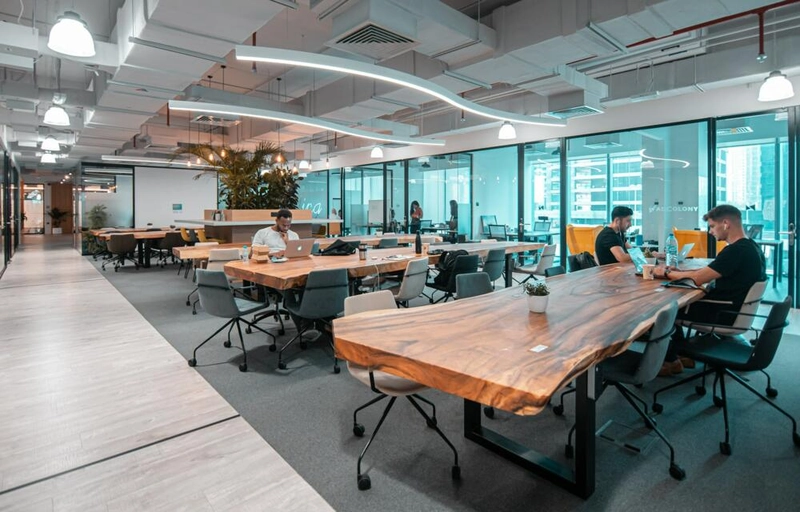
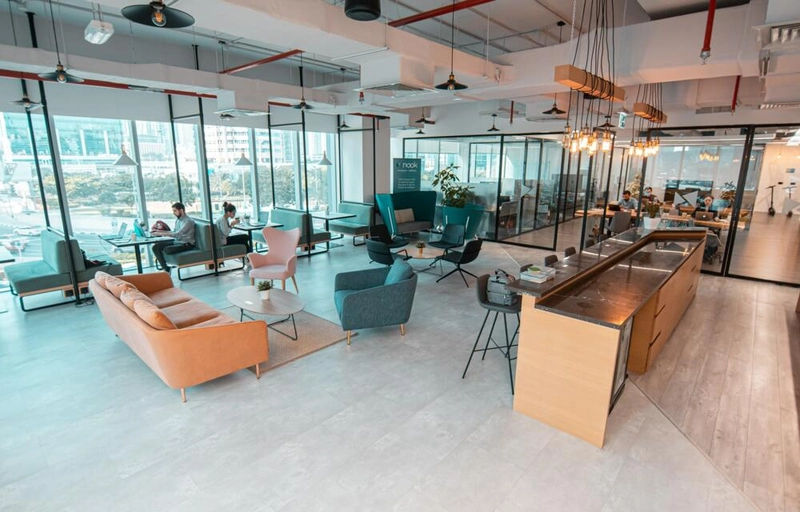
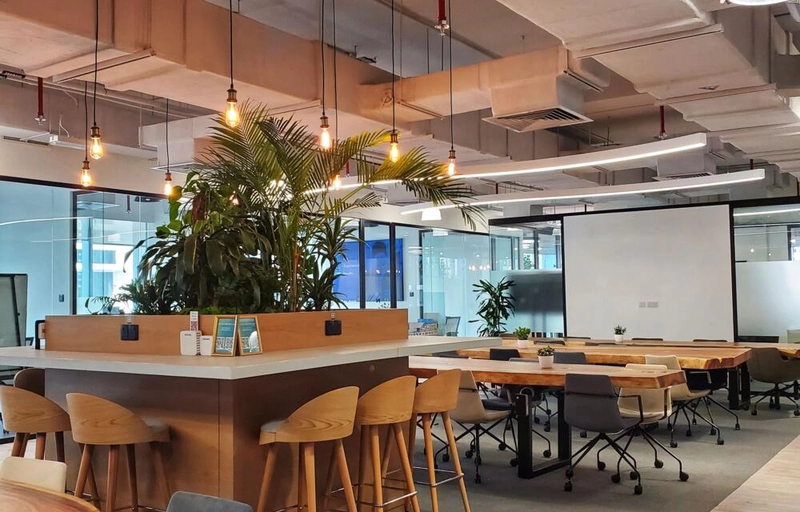
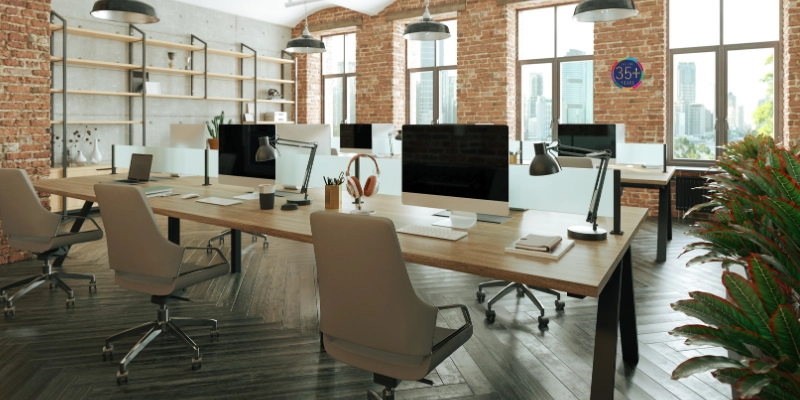
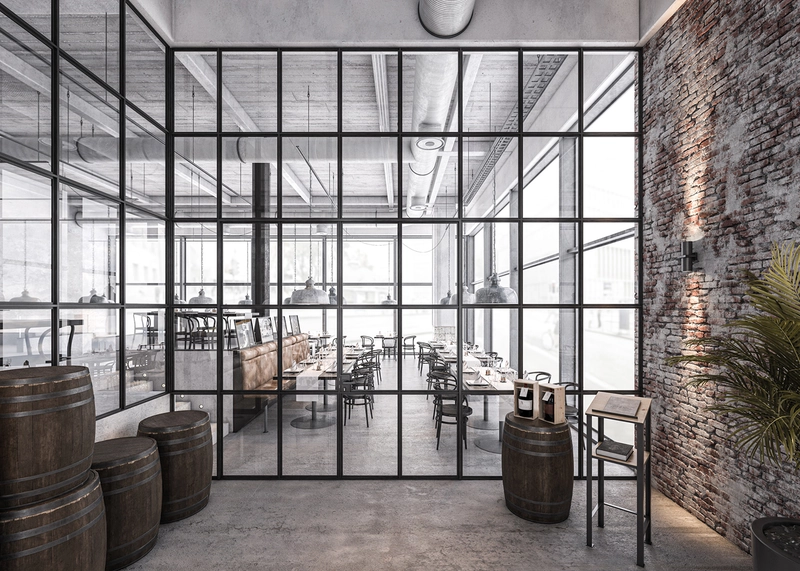
Idea 4 – Partitions. Divide rooms using steel-frame and tempered glass partitions for an open, factory-like feel.
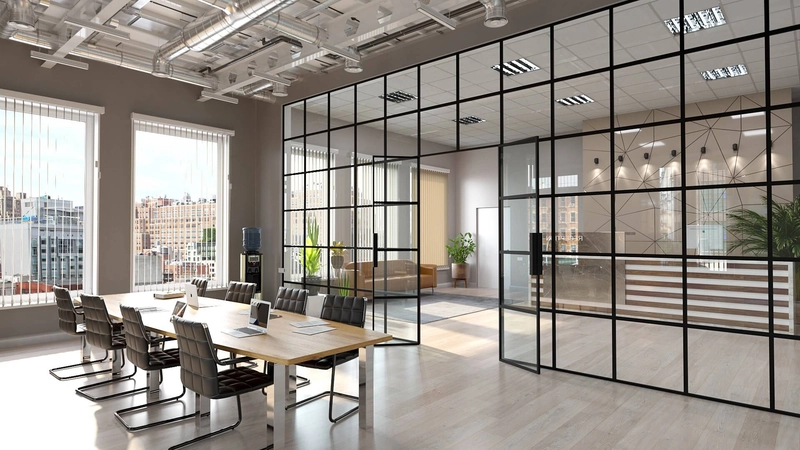
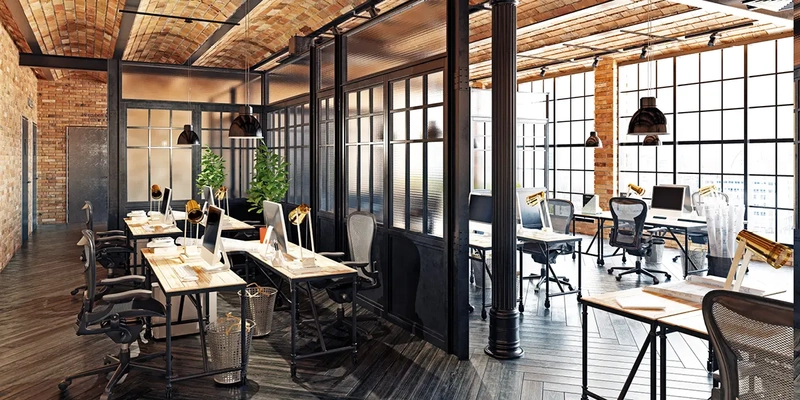
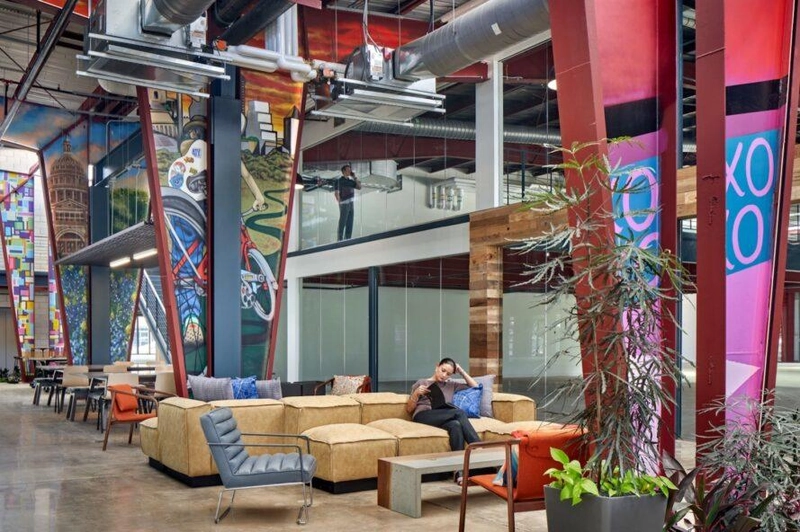
Idea 5 – Lounge Contrast. Balance cold metals and concrete with warm-toned, genuine leather sofas (cognac preferred) in lounge areas.
5. Minimalist Luxury: Statement Simplicity
Minimalism in 2026 has been elevated to “Minimalist Luxury”. Far from being empty, this trend focuses on the authenticity of premium materials and absolute perfection in every detail. Spaces are kept immaculately tidy, free of excessive ornamentation, with emphasis placed on a few statement pieces. This principle works particularly well in modern office room interior design, where executive rooms and meeting spaces need clarity, calm, and quiet authority.
A warm, neutral color palette combined with rich surface textures ensures the space feels calm, sophisticated, and affirms the company’s high standards. This is one of the clearest characteristics of office interior design modern approaches in 2026.
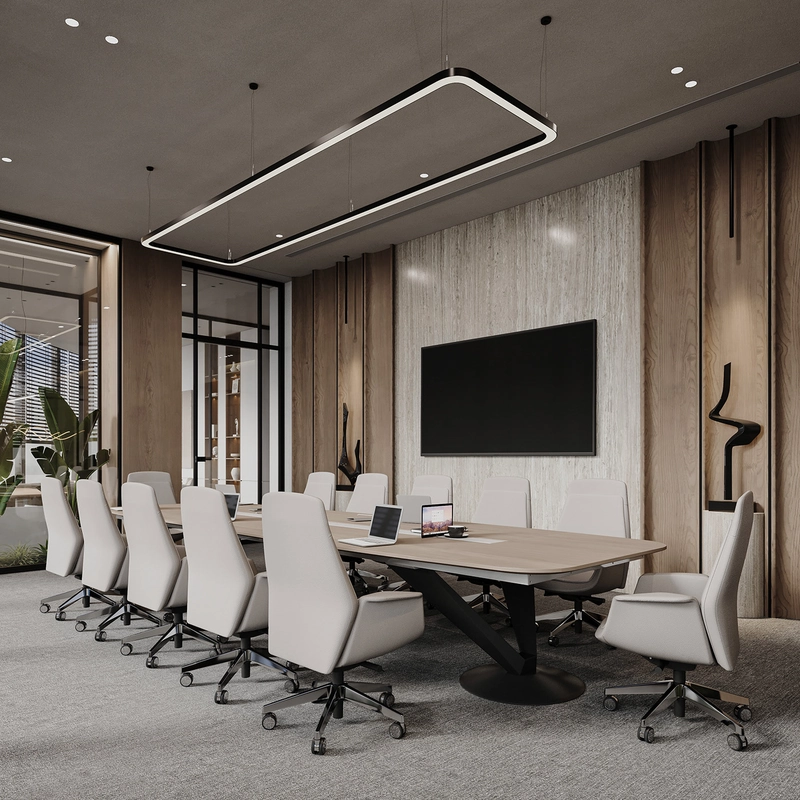
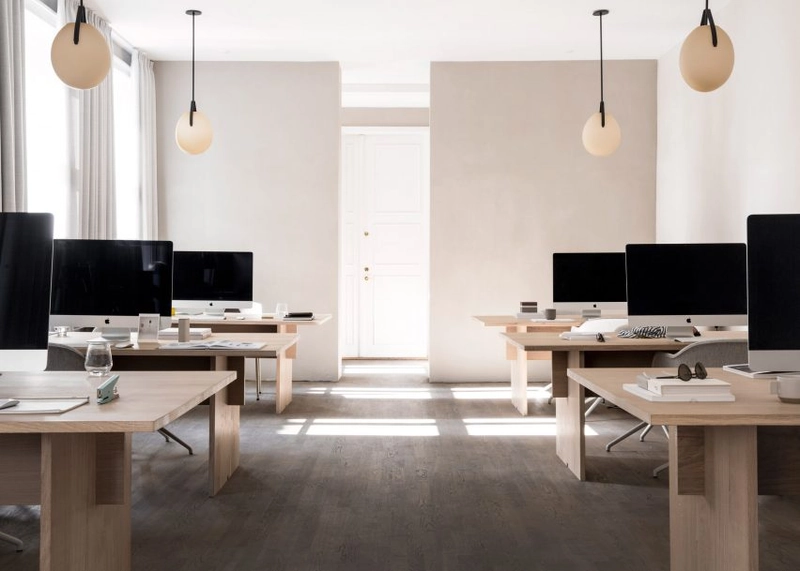
Idea 1 – Palette. The main palette consists of warm neutrals (taupe, beige, cream) combined with high-end materials.
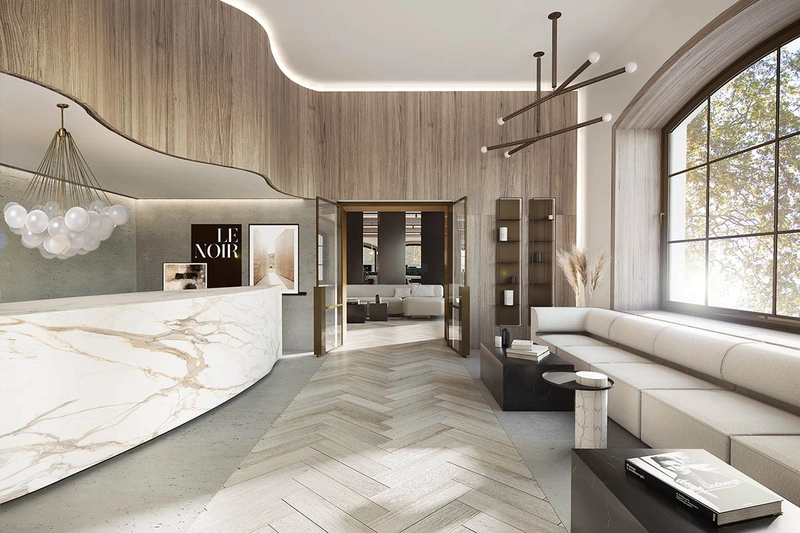
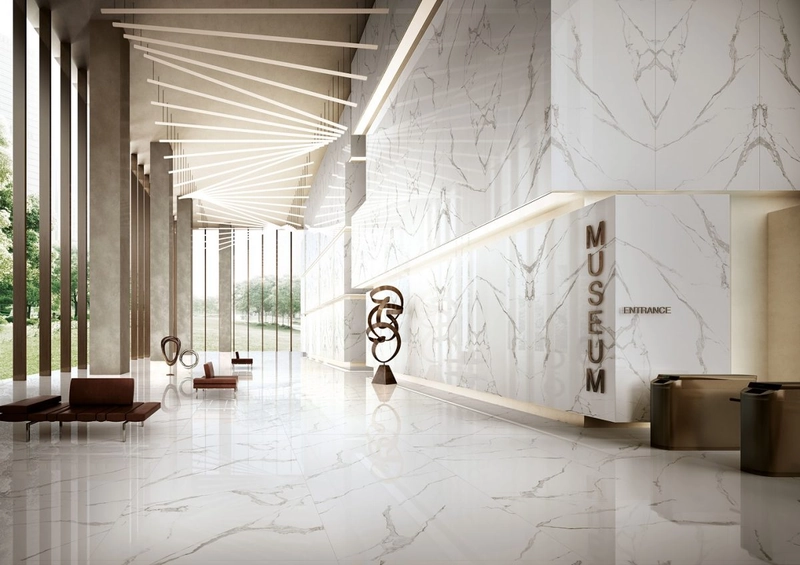
Idea 2 – Reception. Design the reception desk using a single slab of marble or solid stone with a flat, detail-free design.
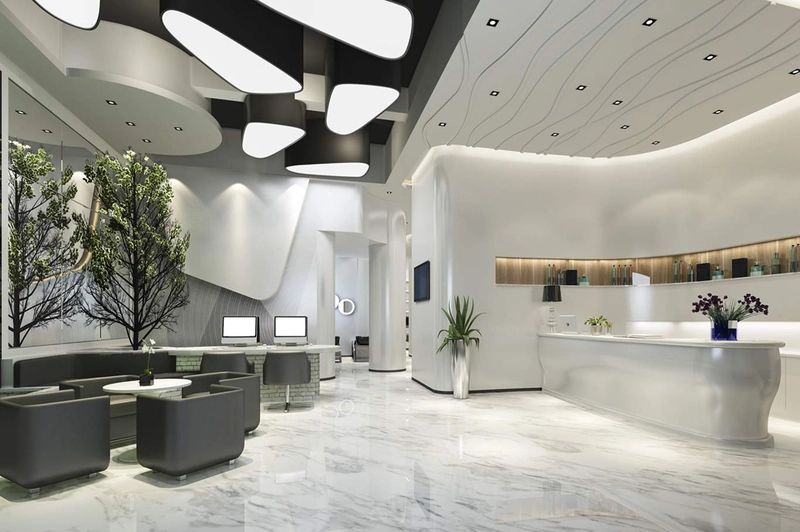
Idea 3 – Focal Points: Use a large or sculptural lighting fixture as the sole dramatic focal point.
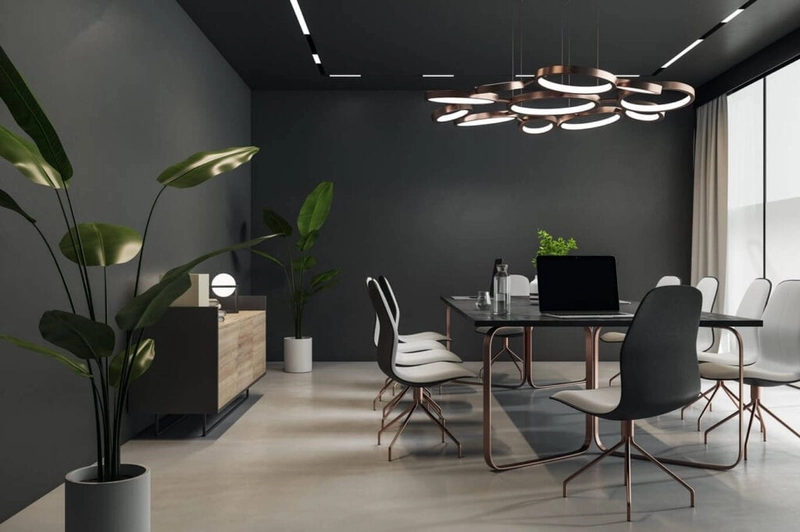
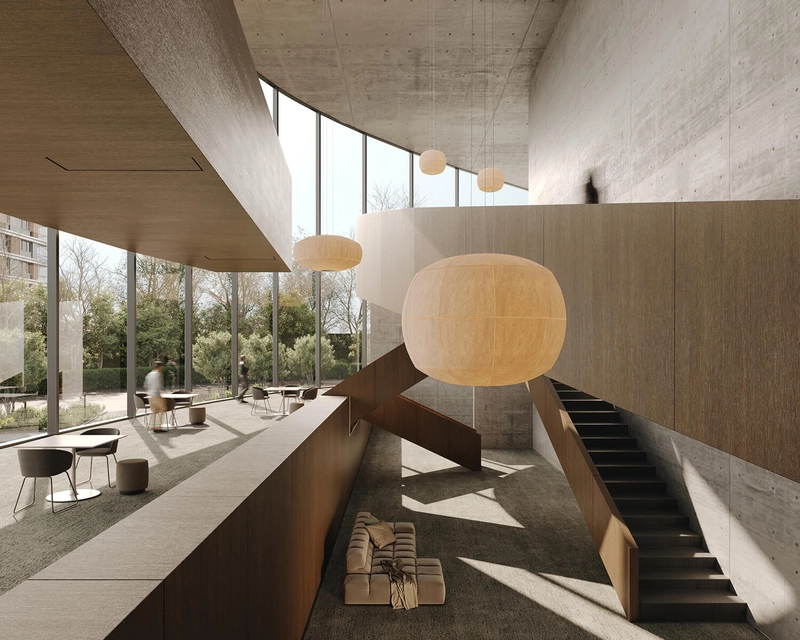
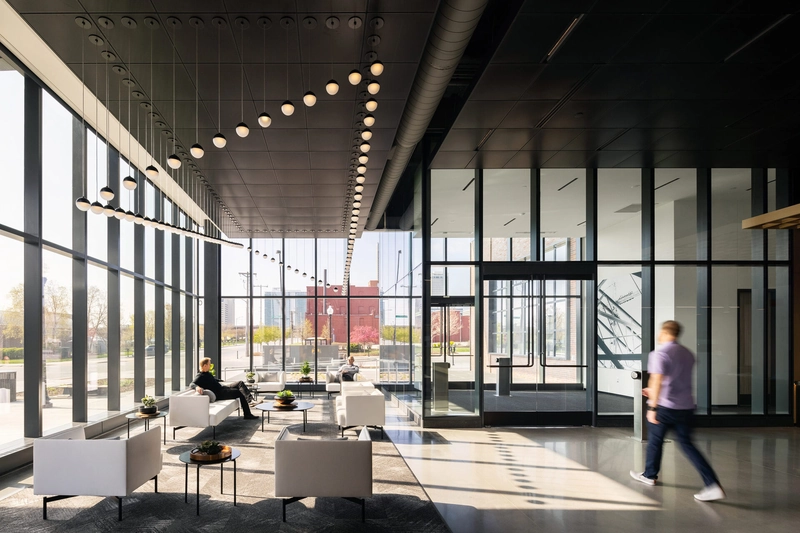
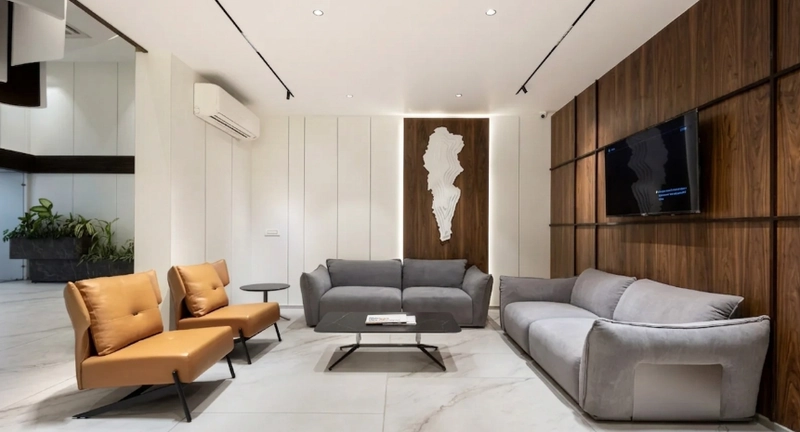
Idea 4 – Walls. Clad walls in walnut wood paneling or limewash plaster for subtle, textural depth.
6. Sustainable and Circular Design: The New Standard
Sustainable design is no longer optional; it is the mandatory standard for modern offices. 2026 marks the boom of circular design, which prioritizes using recycled materials, ensuring straightforward disassembly, and maximizing the lifespan of all furnishings. Adopting Cradle-to-Cradle (C2C) principles not only reduces the carbon footprint but also sends a powerful CSR message to employees and partners.
Idea 1 – Source office furniture from recyclable materials
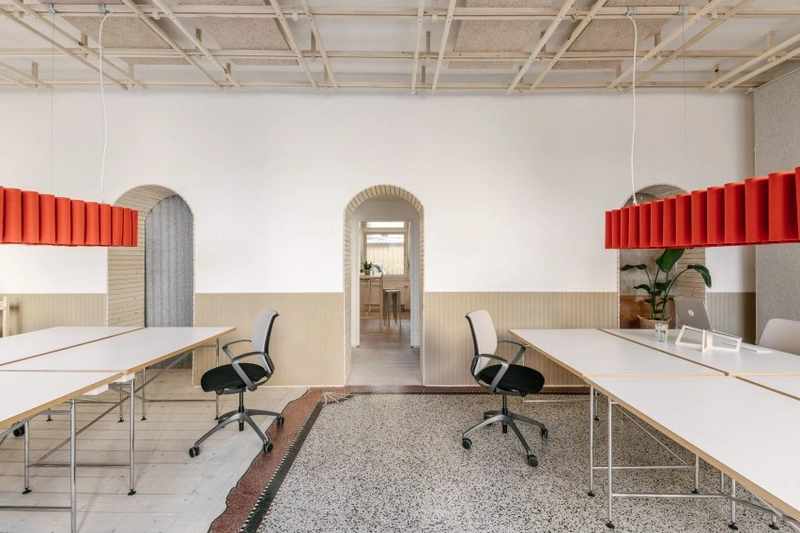
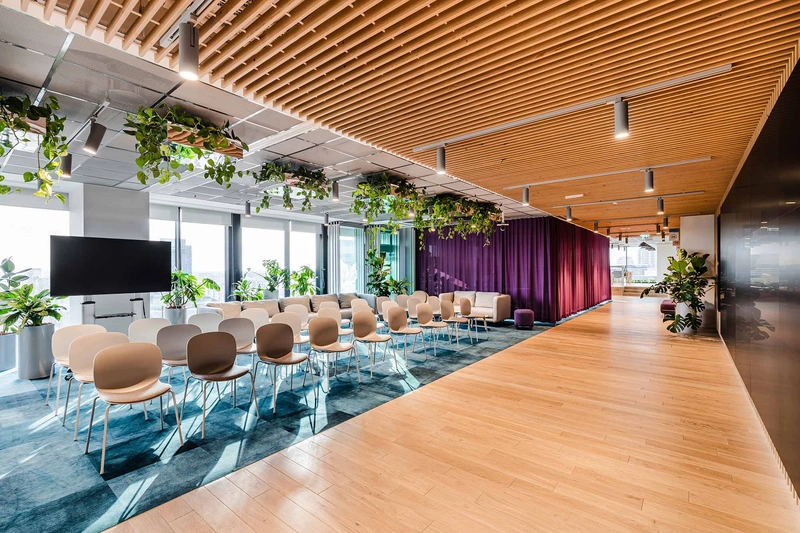
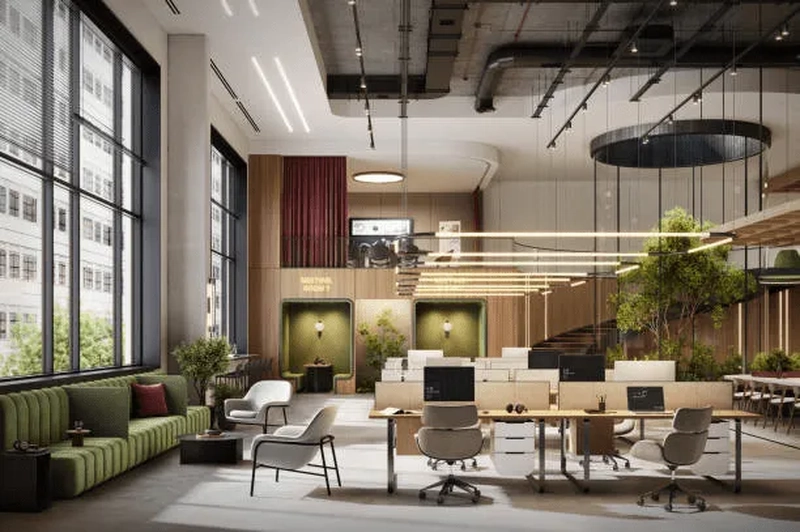
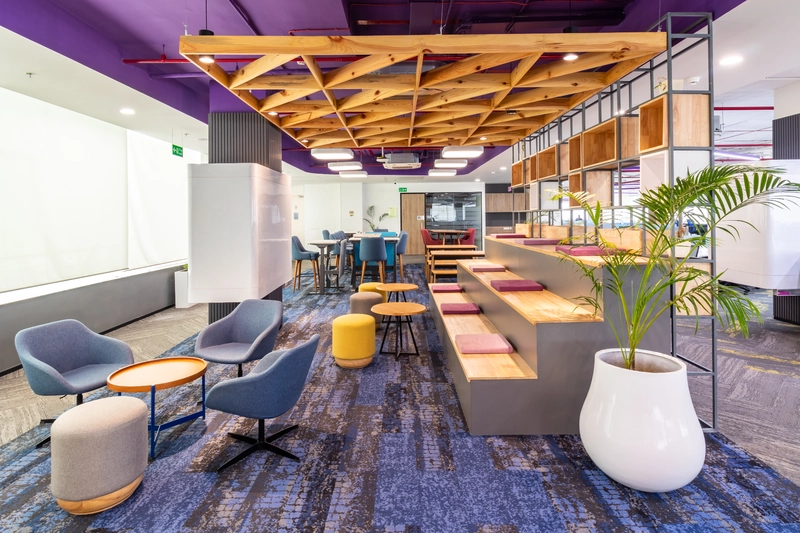
Idea 2. Install flooring, ceilling or wall made of sustainable pressed bamboo or FSC-certified wood.
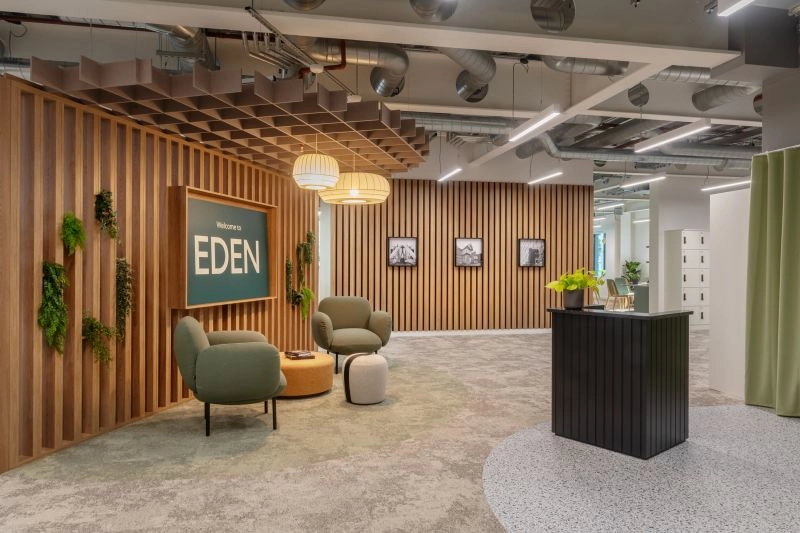
Idea 3 – Use low-VOC wall paint to ensure safe and healthy indoor air quality.
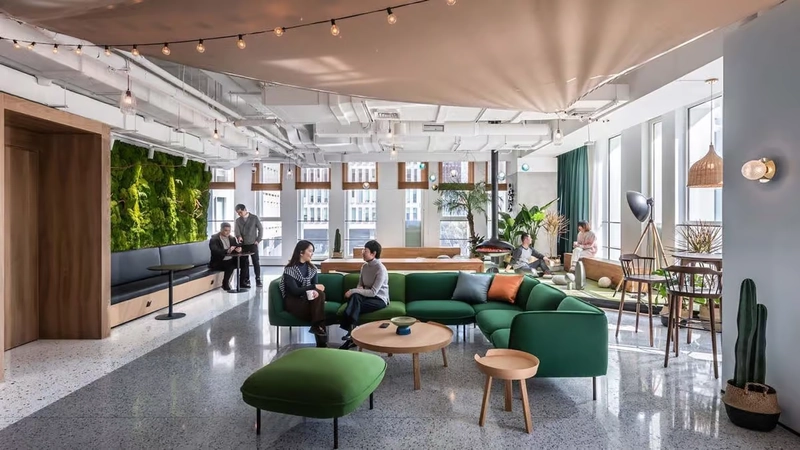
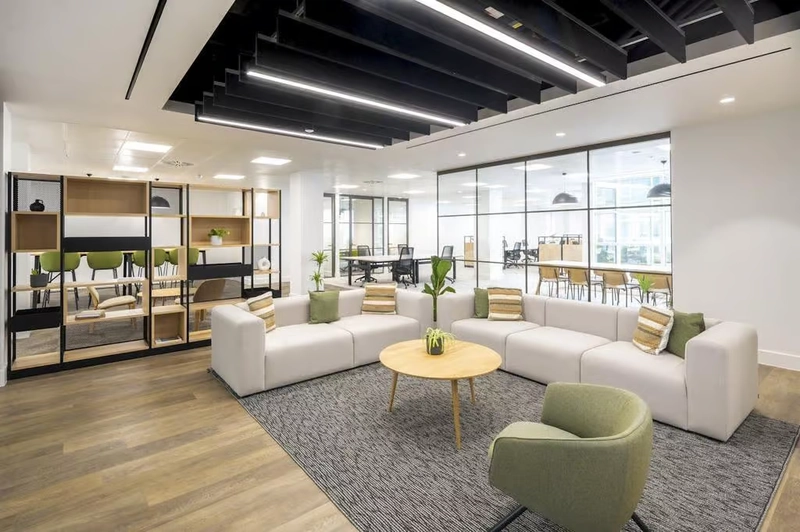
Idea 4 – Acquire high-quality classic or vintage furniture and refurbish it to serve as a high-impact centerpiece, particularly in executive offices.
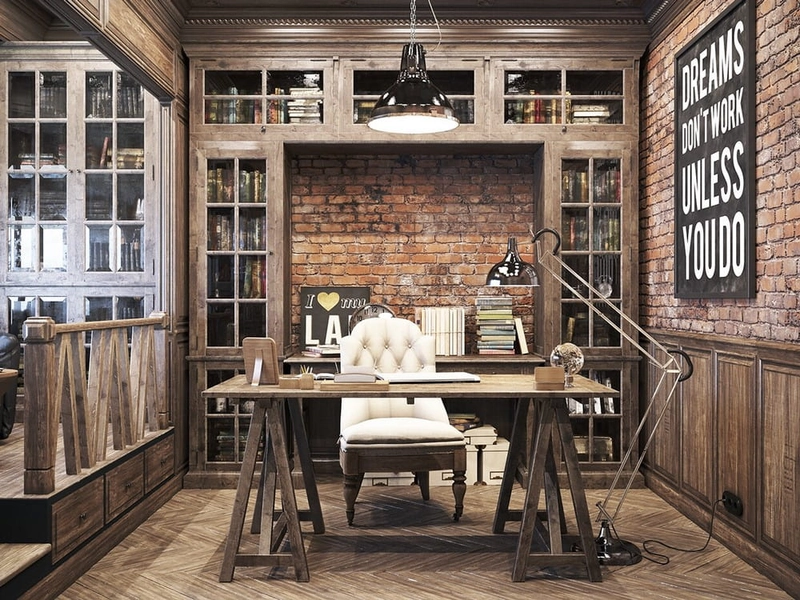
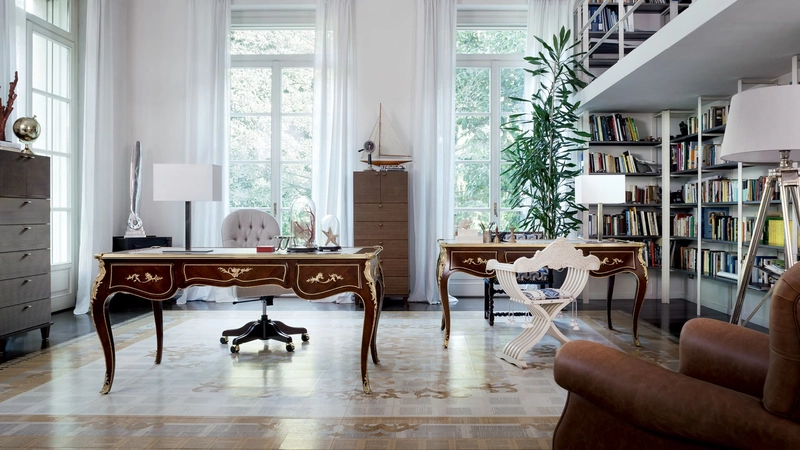
Idea 5 – Utilize modular interior components that allow individual parts to be easily replaced if damaged, rather than discarding the entire unit.
7. Curvilinear and Fluid Forms: Breaking the Grid
To offset the visual rigidity of sharp, corporate geometry, 2026 interior design is embracing soft, curved forms. The introduction of arches and sinuous lines brings new vitality, reduces tension, and creates a welcoming, secure atmosphere. In the office, these smooth lines naturally encourage greater interaction and better flow of ideas.
Idea 1 – Use oval or semi-circular meeting spaces to minimize hierarchy and promote open communication.
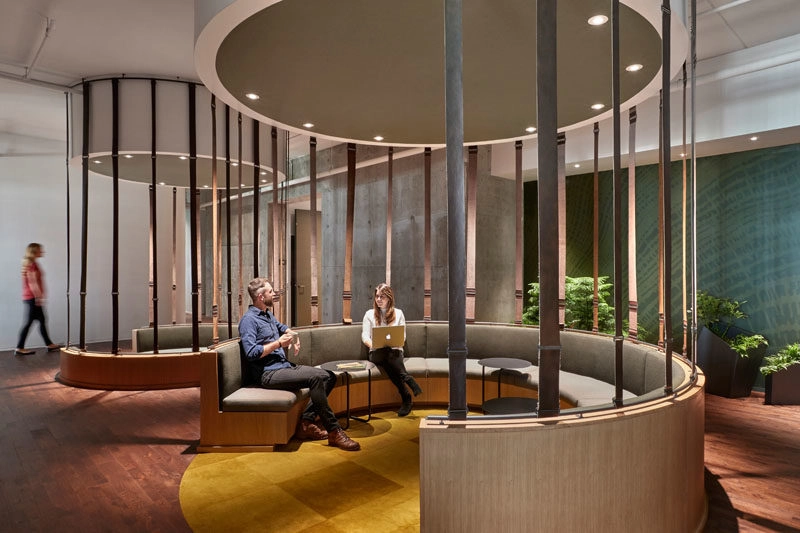
Idea 2 – Design transitional spaces and doorways between departments with arched openings.
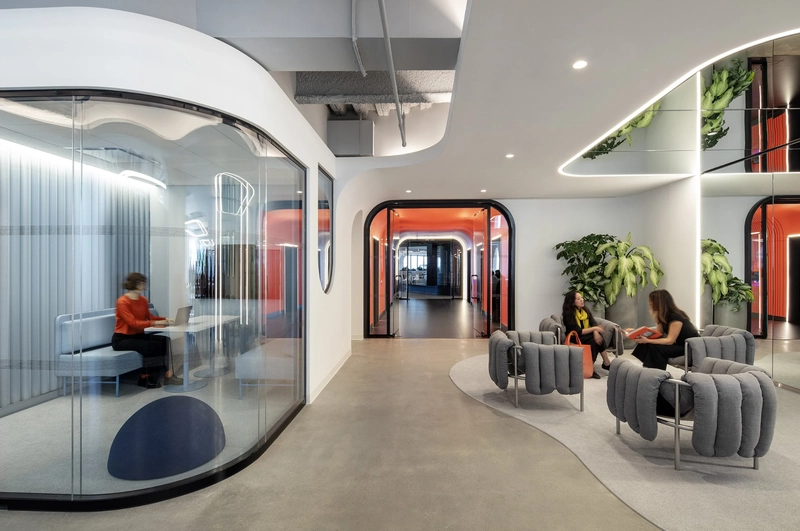
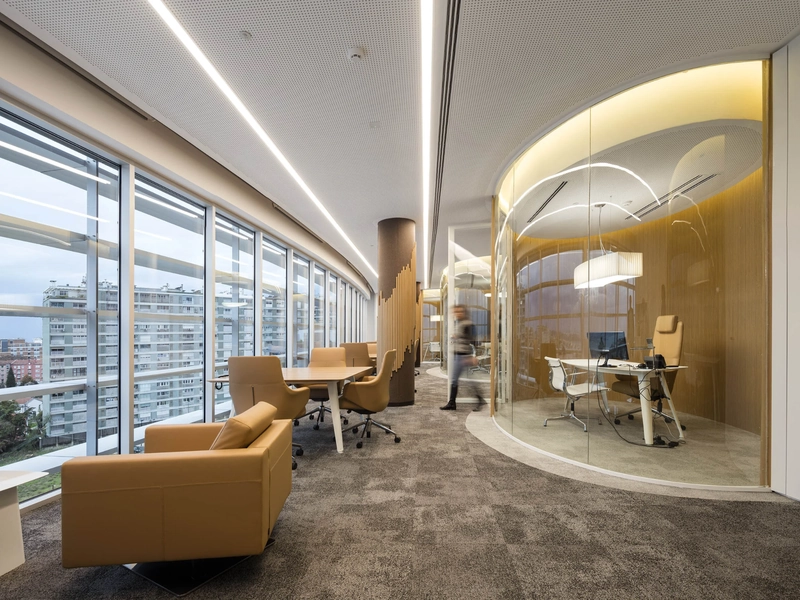
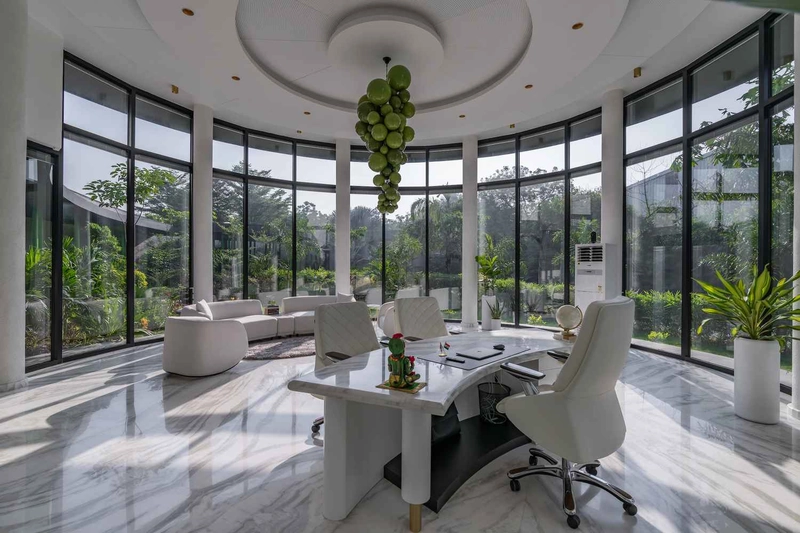
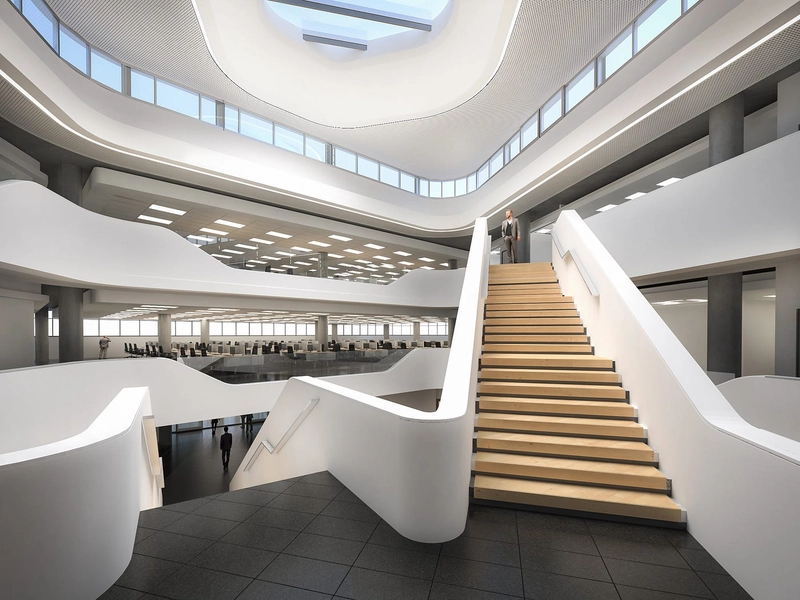
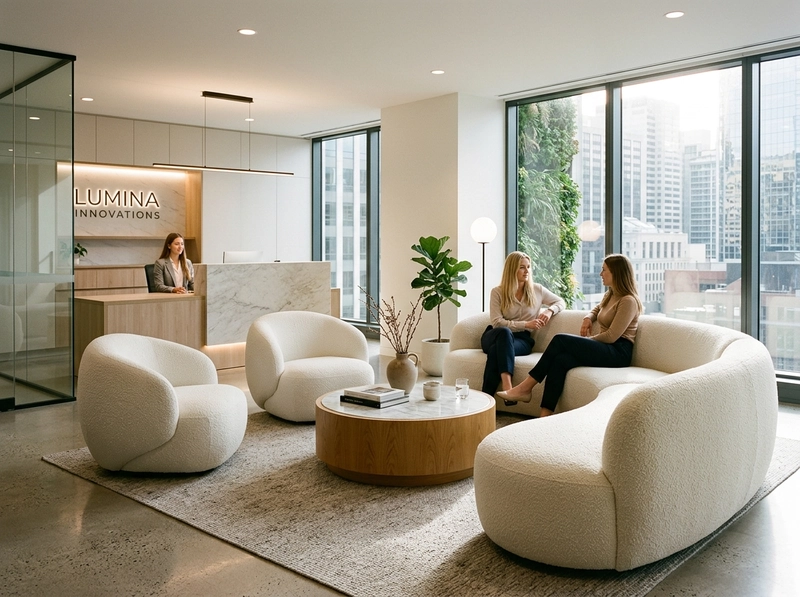
Idea 3 – Select sculptural, rounded-edge lounge sofas, often upholstered in soft, textured bouclé fabric.
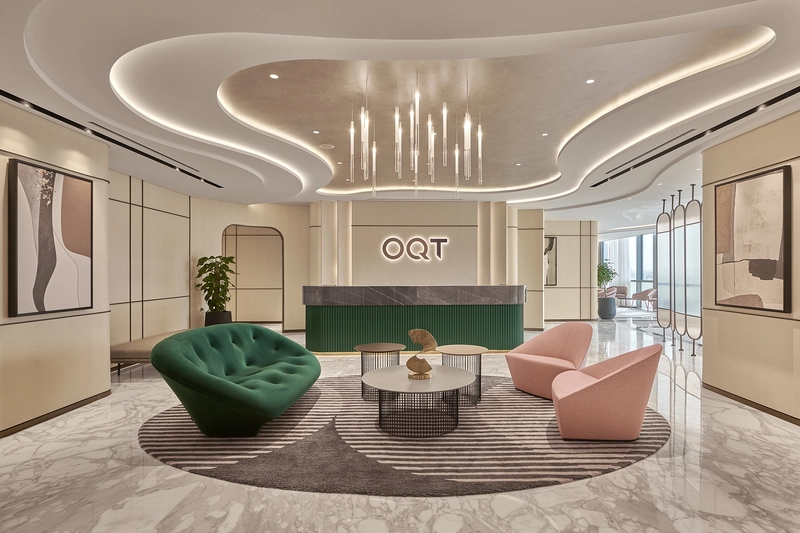
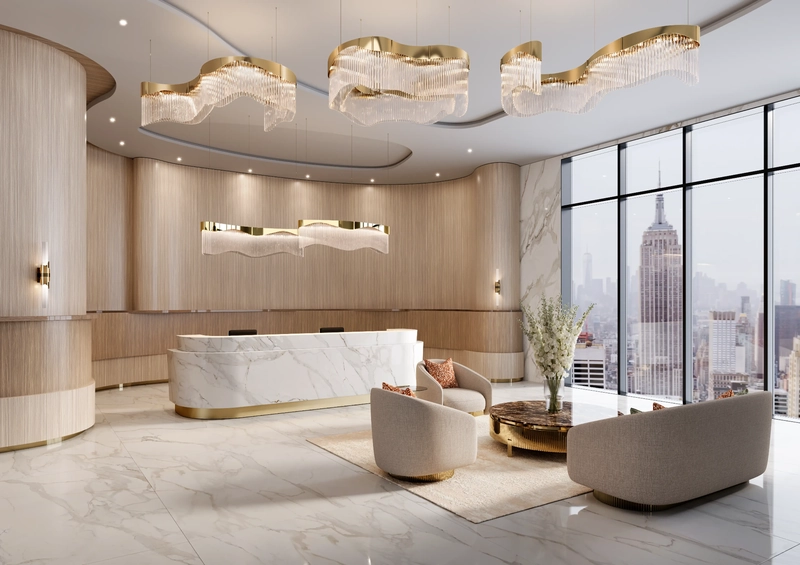
Idea 4 – Group pendant lights in clusters to create a soft, appealing visual effect.
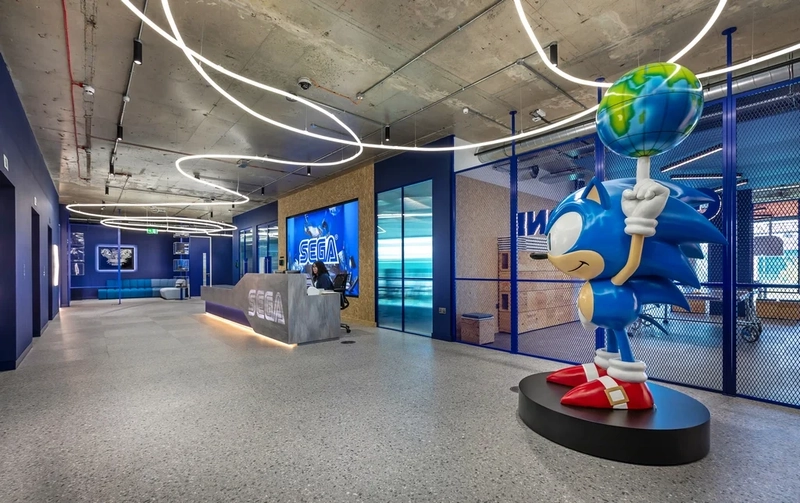
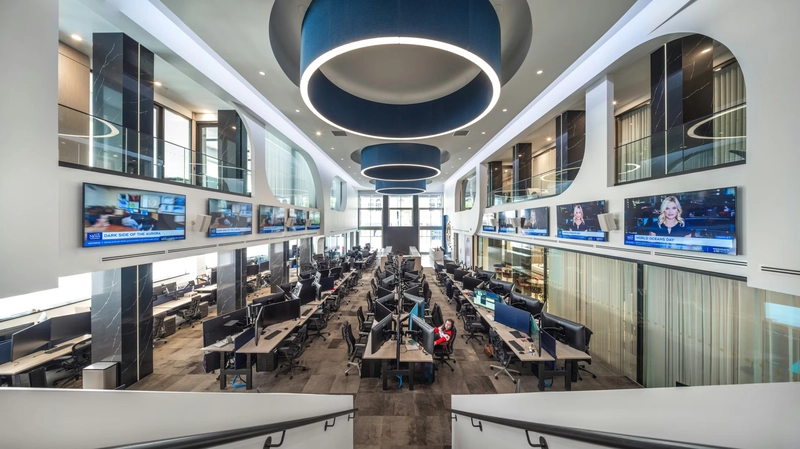
Idea 5 – Install S-shaped space dividers made from ribbed wood panels or fluted glass.
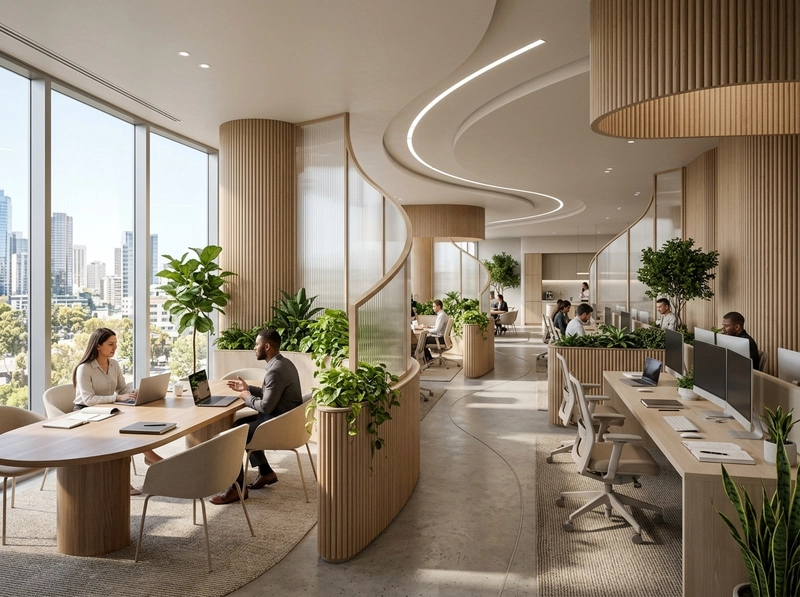
8. Deep Dive: How to Optimize Every Zone for Maximum Productivity
The Grand Entrance: Making a Statement in Your Office Lobby.
- This zone should actively shape the entire company style and welcome experience.
- Skip scattered lighting. Use a central, oversized sculptural pendant or art installation to instantly command visual attention.
- Combine natural surfaces like wood, honed stone, or polished concrete to achieve contemporary depth and authentic beauty.
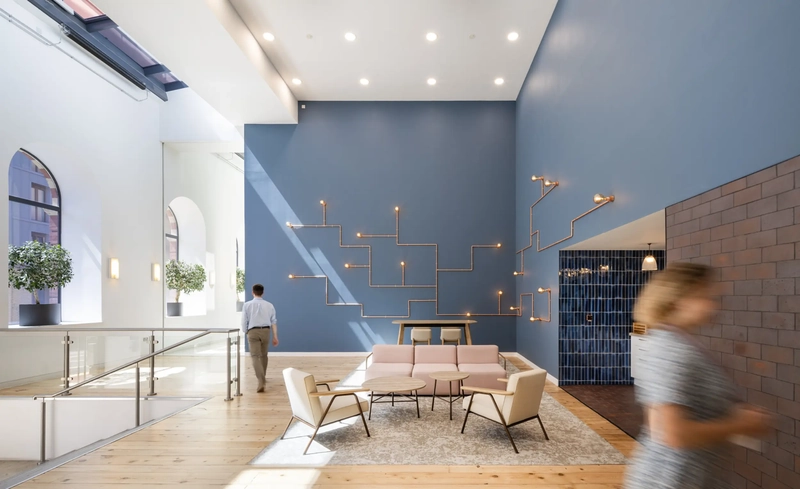
- Integrate vertical gardens (living walls) directly into the lobby design to offer a friendly, stress-reducing first impression for clients.
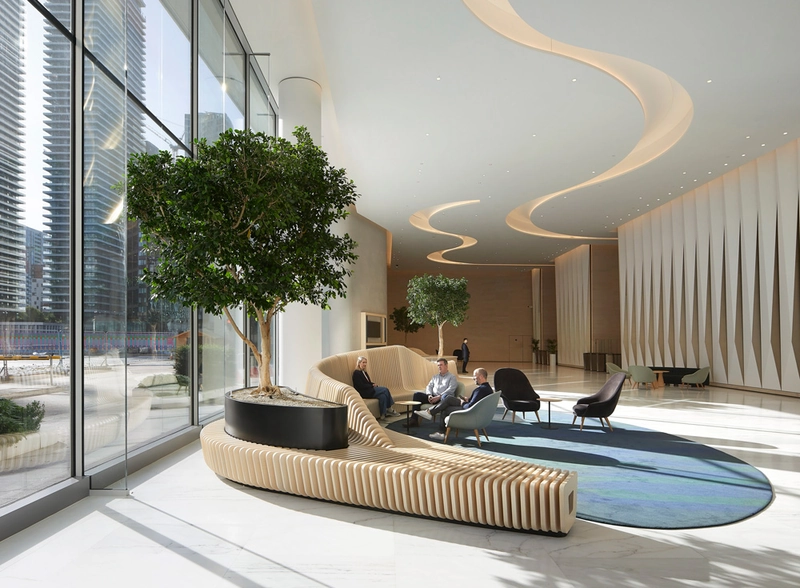
High-Impact Collaboration Hubs: Driving Interaction and Focus
- Modern workspaces require areas that support both high-energy teamwork and necessary periods of deep concentration.
- Implement open-plan layouts strategically mixed with soundproof acoustic pods to ensure deep focus is available amidst group work.
- Use wheeled tables and chairs, modular partitions, and movable walls to rapidly reconfigure spaces for diverse project needs.
- Install high-performance acoustic panels (aiming for SAA ≥ 0.8) to actively reduce noise pollution and boost concentration.
- Create a harmonious blend of energetic group discussion zones and quiet corners for individual tasks.
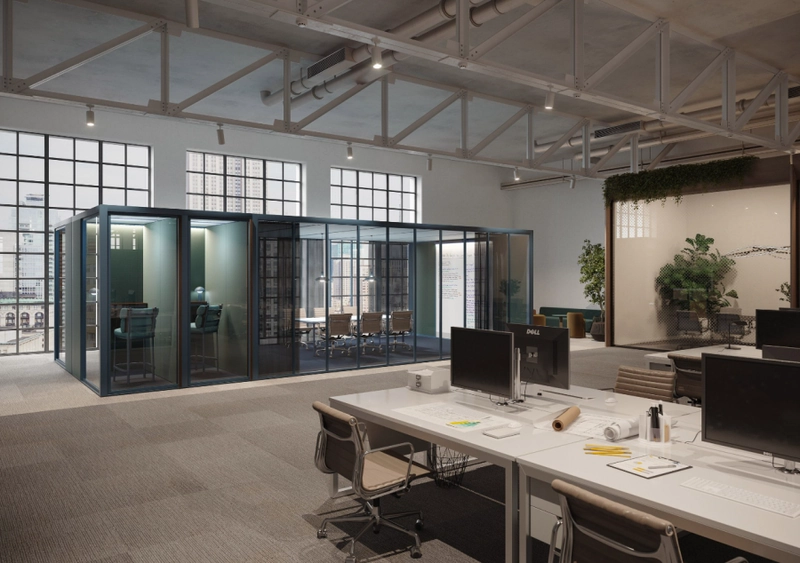
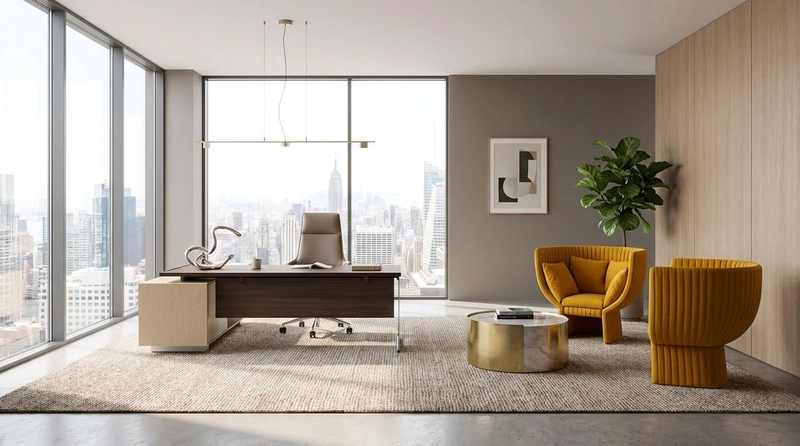
Executive Suites: Minimalist Luxury and Seamless Tech
- For executive spaces, the focus shifts from quantity to quality, emphasizing status through refinement and technology.
- Ditch the clutter: Focus instead on handcrafted furniture and singular, unique art pieces to assert position.
- Prioritize rich textures like fluted glass, natural stone, walnut wood, or high-grade woven fabrics.
- Equip the space with smart systems (automatic temperature control, smart lighting, and concealed charging stations) to maintain a streamlined, minimalist aesthetic.
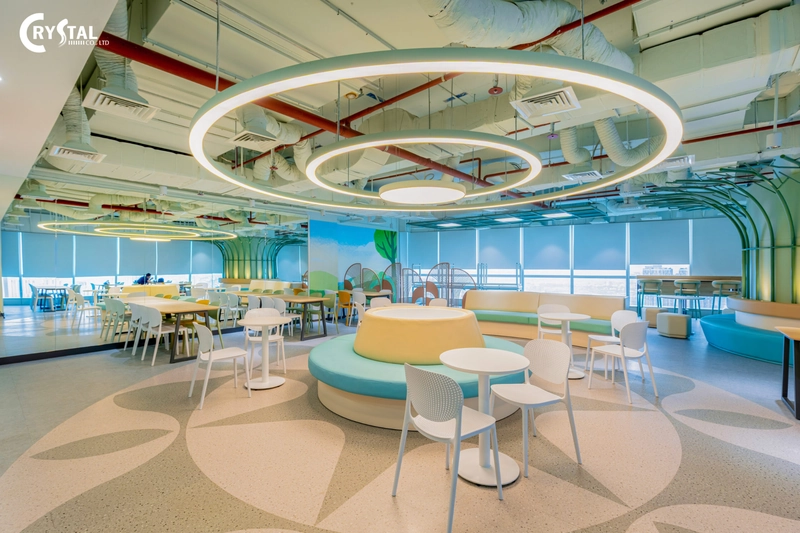
Wellness and Breakout Areas: Restoring Energy and Focus
- These zones are crucial for employee recovery, directly supporting mental health and sustained productivity.
- Therapeutic Color Palette: Use soothing, light tones – pale green and soft beige – to immediately reduce tension and promote a peaceful, relaxing atmosphere.
- Maximized Biophilic Design: Exploit natural sunlight and incorporate abundant indoor greenery; this approach can lower anxiety and regulate employee heart rates.
- Health-Focused Technology: Install circadian lighting that automatically shifts throughout the day, combined with air purification systems and acoustic materials to ensure optimal mental and physical recovery.
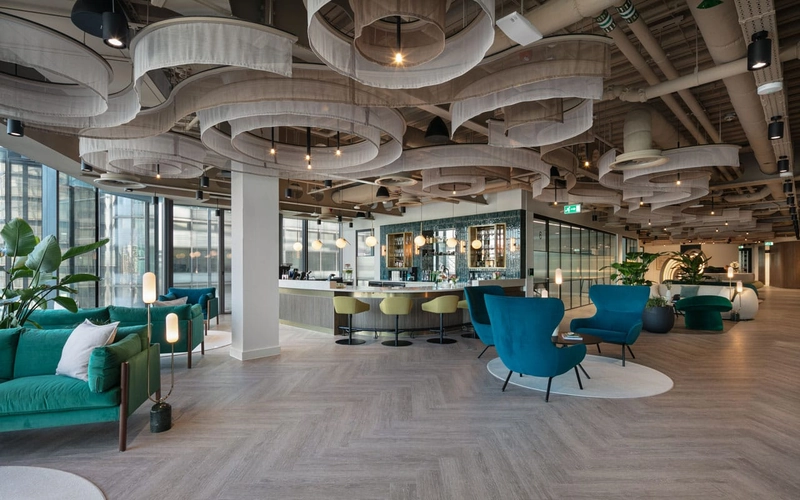
9. Why Work with Crystal Design TPL?
Choosing a design partner comes down to trust: Can they deliver the quality promised, and will they be easy to work with when issues arise? For businesses investing in long-term office interior design, execution quality matters just as much as concept development.
This becomes particularly evident in specialized sectors where space directly impacts perception. In law firm office interior design, every design decision must carefully balance openness with discretion, creating an environment that communicates both professionalism and trust at first glance.
Crystal Design TPL has been answering those questions across over 1,300 completed projects in Vietnam, Korea, and internationally for 28 years. That experience is especially valuable for companies pursuing modern office interior design at a high professional standard.
Our Track Record and Core Benefits:
- Everything In-House. Our team handles design, manufacturing, and construction entirely, including a dedicated 6,000m² production facility. This eliminates third-party quality gaps and coordination ambiguity.
- International Standards with Local Expertise. Our bilingual team from Vietnam and South Korea combines the precision of Korean corporate interior design with deep, first-hand knowledge of the Vietnamese market.
- Budgets That Don’t Move. Our integrated model ensures full visibility and cost control. The approved proposal is the invoice you receive, minimizing the post-completion variations clients usually dread.
- Guaranteed On-Time Delivery. Our reliable, on-schedule handover is a key differentiator. Our clients return and refer us because delivery happens exactly when promised.
- A Warranty That Means Performance. Every project includes a post-completion warranty and dedicated aftercare, guaranteeing the spaces perform well for years, not just look perfect on launch day.
However, delivering this level of consistency requires more than just good design. A well-controlled interior construction process ensures that every technical detail—from materials to finishing—is executed precisely, minimizing risks and maintaining quality across the entire project lifecycle.
Office interior design in 2026 transcends simple aesthetics. It’s a perfect synthesis of function, sustainable materials, smart technology, and deep psychological understanding. By focusing on personalizing and flexibly adapting every area, businesses do not just optimize employee experience; they actively boost physical, intellectual, and emotional well-being.
Ready to Transform Your Workspace?
Are you ready to turn your office into a modern, creativity-sparking environment that drives maximum productivity in 2026? Contact our expert team today. Let us provide specialized design consultation, develop concept drawings, and create a truly signature office space for your business.
|
Contact Crystal Design TPL
|