

Industrial Interior Design: Meaning, Style, Types & 2026 Trends for Offices
The power of Industrial interior design has captivated architects and designers for decades, proving it is far more than a passing trend. Born from repurposed factories and urban lofts, this industrial interior style built its identity on honesty: raw materials left exposed, structure celebrated rather than concealed, and function treated as a form of beauty.
As we look toward 2026, the industrial interior design style continues its evolution, embracing subtle softness, bolder forms, and a more sophisticated balance of color and contrast, while adapting to new expectations around comfort, wellness, and brand image. Whether you are designing a commercial space, a showroom, or an office interior, this guide covers everything you need to know.
1. Introduction to Industrial Style
Industrial style, sometimes referred to as “industrial chic,” is a highly popular and enduring aesthetic trend in interior design. It transforms spaces by merging raw, rugged elements with modern refinement, creating environments that feel both cutting-edge and authentically broken-in. At its core, the industrial interior design meaning is rooted in celebrating structure, utility, and material honesty rather than decorative excess.
Today, many projects are no longer limited to a single style, but instead combine industrial aesthetics with other approaches. This is why contemporary interior designs are often integrated into industrial spaces, helping soften the raw structure while introducing flexibility, comfort, and a more refined visual identity.
1.1. What is industrial interior design?
Industrial interior design is an aesthetic approach that prioritizes a raw, unfinished, and “warehouse” feel.
- Rather than hiding the room’s mechanics behind drywall, it is characterized by intentionally leaving building systems and structural elements exposed. This industrial interior design concept values visibility and honesty, turning structural systems into part of the visual identity.
- This design philosophy prioritizes a material-led approach, allowing high-quality, robust materials, such as solid wood and metal frames, to take center stage and shape the visual identity of the space.
- Whether applied to a modern corporate office, a trendy café, or a residential loft, industrial interior design delivers spaces that are both functional and full of character. Celebrated for its ability to balance raw, durable materials with organic warmth, this style creates environments that feel stylish, practical, and richly expressive.
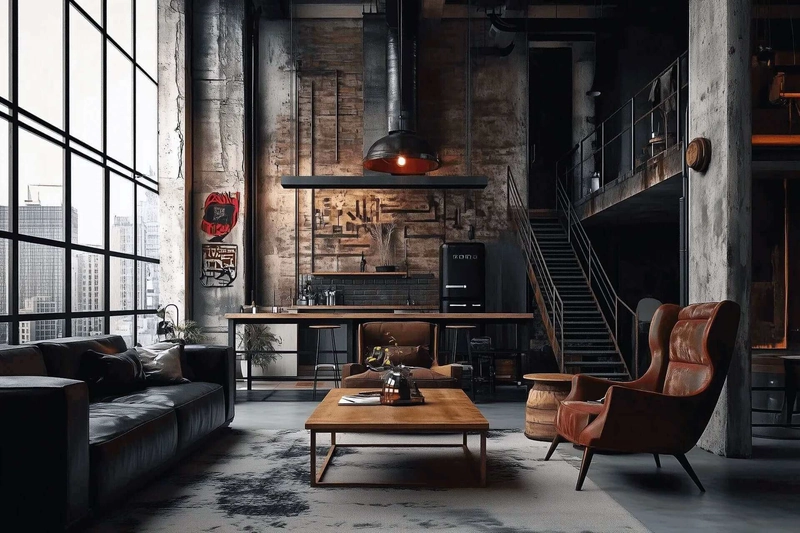
1.2. Origin and influences of industrial style
Origin: The industrial style was born out of practicality, taking its primary cues from old factories, warehouses, and industrial spaces that were converted into lofts and living areas. This origin is central to the industrial interior design meaning, because the look comes from adaptive reuse rather than decoration for decoration’s sake.
Influences:
- Authenticity and History: The style is heavily influenced by a desire for authenticity, often incorporating vintage items, salvaged goods, and reclaimed materials that tell a story through their imperfections, such as nail holes or weathered paint.
- Modern industrial design is heavily influenced by eco-friendly practices. Reusing existing structures, utilizing reclaimed wood, and sourcing recycled metals are core to the aesthetic, making it inherently sustainable.
- Technological Integration: While modern industrial style draws inspiration from the past, it also embraces the future. It combines smart home technology, energy-efficient LED lighting, and voice controls with vintage-style fixtures.
1.3. Key characteristics of industrial style
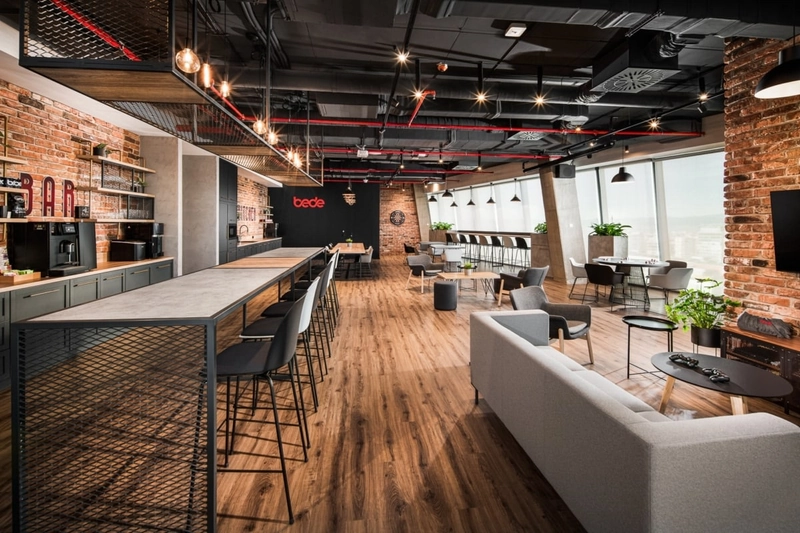
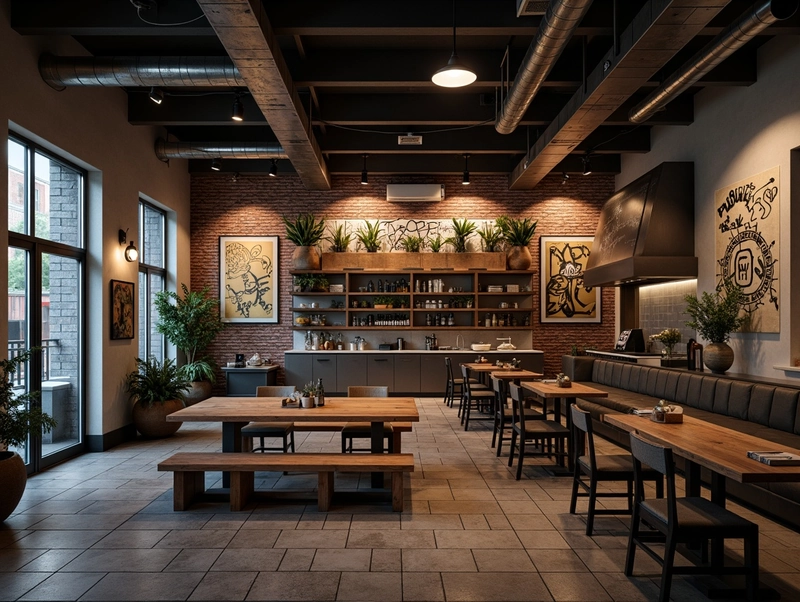
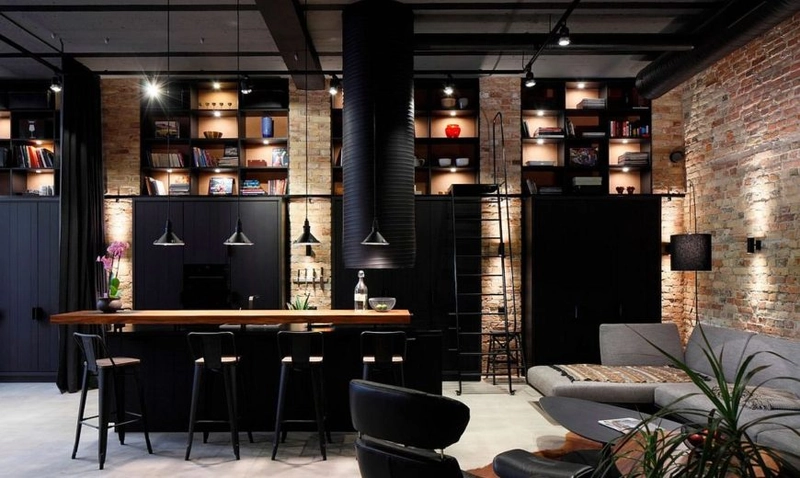
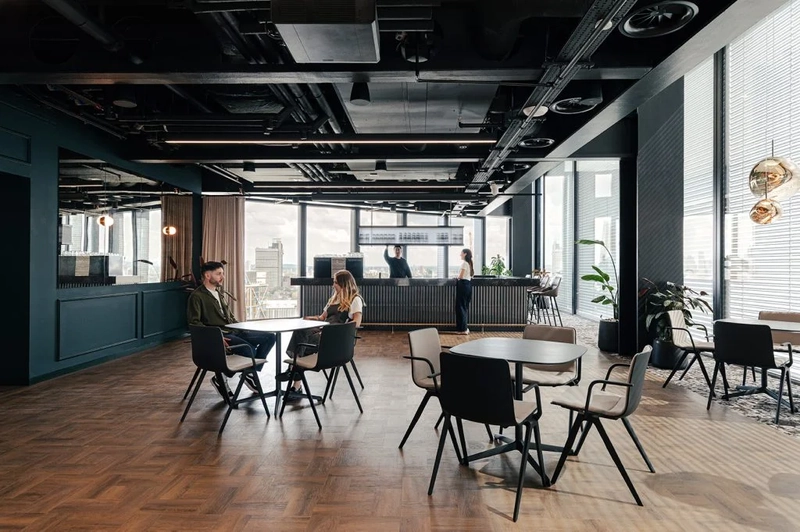
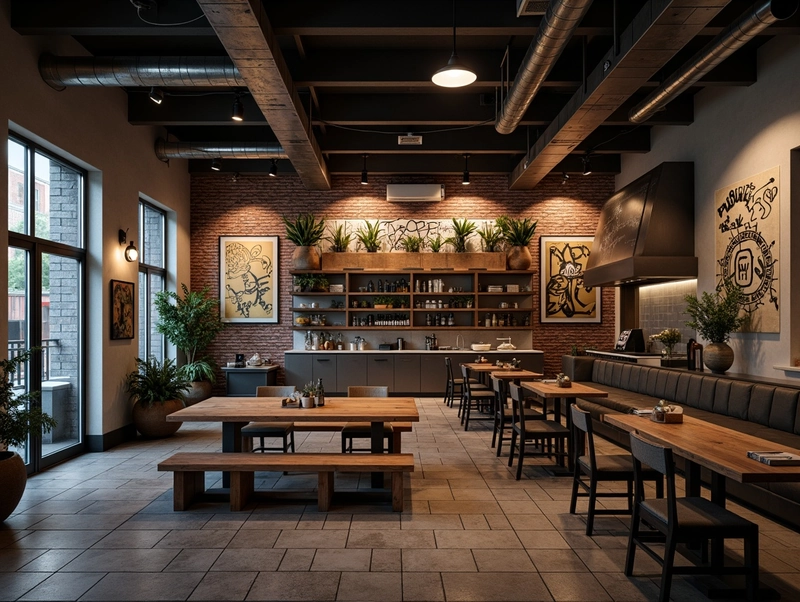
Raw and Exposed Materials:The style is built on a foundation of exposed brick walls, raw or polished concrete floors, and open ceilings that reveal beams, ducts, and piping. These defining elements remain central to the industrial interior design style, particularly in commercial spaces that value authenticity and a strong visual identity.
The Wood and Metal Pairing: A signature trait is the combination of cold, tough metals (like blackened steel, iron, or brushed nickel) with the organic warmth of solid or reclaimed wood. This contrast is one of the most recognizable signatures of industrial interior design.
Earthy and Neutral Color Palettes: The primary canvas consists of grays, blacks, and browns. However, the evolving “neo-industrial” trend softens the look with warm earth tones like terracotta and rust, or broad accents like navy, olive, and sage green.
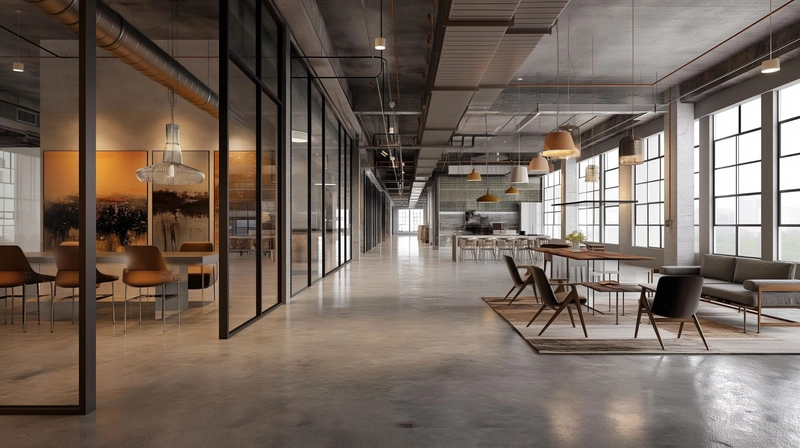
Open Floor Plans: Industrial spaces emphasize openness through large layouts, high ceilings, and abundant natural light. In a well-designed interior, this openness feels intentional, with zones defined by furniture, rugs, or glass partitions instead of walls. To make this work, precision in execution is essential. This is where interior construction plays a critical role, ensuring structures, material transitions, and spatial zoning are delivered exactly as designed.
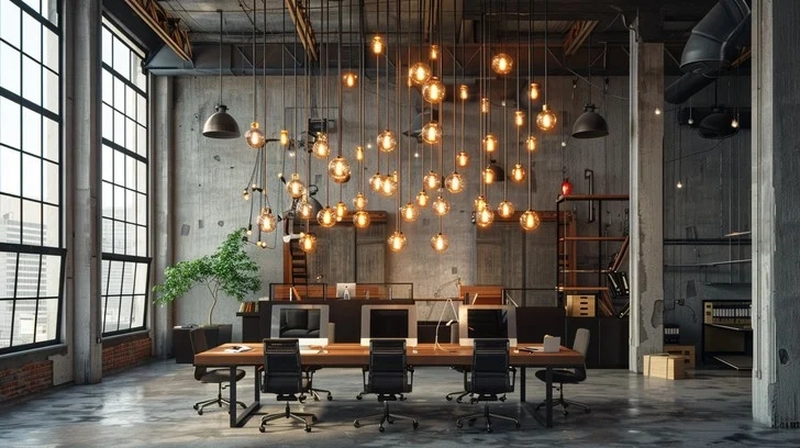
Statement Lighting: Lighting serves as functional art. This is one reason industrial style continues to remain visually distinctive in both offices and showrooms. Key fixtures include exposed Edison bulbs, wire cage lights, oversized metal dome pendants, and articulated workshop-style lamps.
Vintage and Utilitarian Furniture: Furniture often mixes salvaged finds, like old machinist workbenches or metal filing cabinets, with comfortable, oversized seating in materials like distressed leather or chunky fabrics.
1.4. Differences between Minimalist and Industrial Style
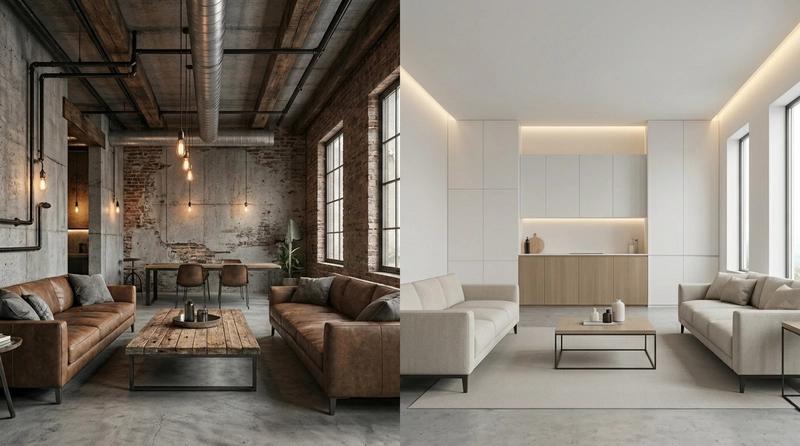
While industrial and minimalist styles can be blended—often referred to as “Scandinavian-Industrial” or “soft industrial”—their pure forms remain distinctly different. For clients still asking what is industrial interior design, this comparison highlights how industrial spaces more openly embrace texture, raw materials, and exposed structural elements than minimalist interiors:
|
Feature |
Industrial Style |
Minimalist Style |
|
Texture and Surface |
Thrives on heavy textural variety. Celebrates roughness (crumbling brick, raw concrete) and imperfections (nicks, scratches in weathered wood). |
Relies on pristine, smooth surfaces and “matchy-matchy perfection”. Can lean into flat gray or “sad beige” aesthetics. |
|
Decoration |
Treats the building’s raw bones (exposed pipes, beams, ductwork) as the primary decoration. |
Hides the room’s mechanics. Inherently minimalist in the amount of decor, skipping clutter. |
|
Finish and Aesthetics |
Embraces a “collected over time” feel, finding beauty in wear, tear, rust, and historical imperfections. Prioritizes character. |
Seeks a flawless, clean finish. Prioritizes perfection. |
2. How to Design an Industrial Interior Space
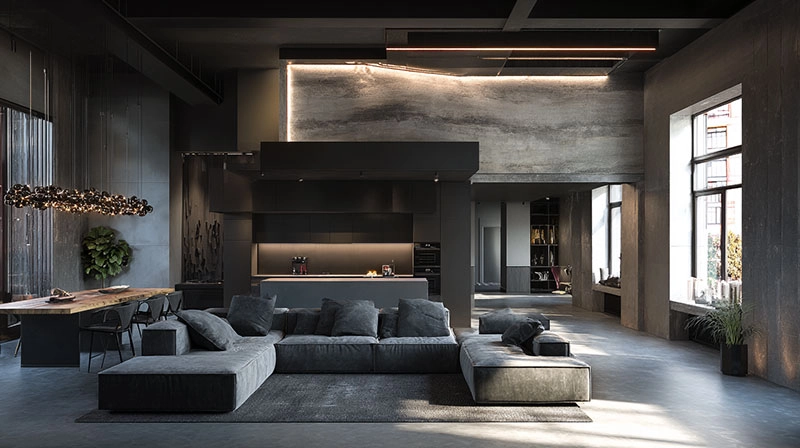
Designing an industrial design interior space requires balancing raw, rugged architectural elements with refined comforts. Whether renovating a modern corporate office or a residential loft, the goal is to create a functional, authentic environment by embracing the building’s structural bones and utilizing a mix of utilitarian and vintage design elements. In practice, the industrial interior design concept works best when raw architecture is balanced with comfort, usability, and clear zoning.
In highly specialized environments, industrial style must also respond to specific operational needs. For instance, law firm office interior design often adapts industrial elements in a more controlled and refined way, ensuring the space still conveys professionalism, clarity, and trust while retaining a modern edge.
2.1. Essential Materials of Industrial Style
Concrete and Exposed Brick:The bold architectural foundation of the industrial style, instantly establishing its raw, unrefined visual language. These materials are essential in defining the character and authenticity that set the industrial style apart.
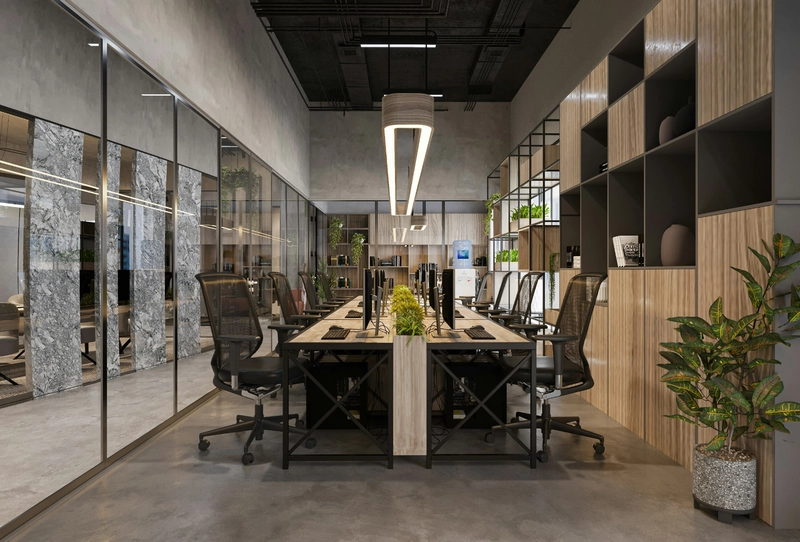
- Designers frequently utilize polished or raw concrete floors and concrete wall panels to provide a sleek, durable, and minimalist backdrop.
- Exposed brick walls are heavily featured to add warmth, history, and texture and are often left in their natural state or sometimes given a light whitewash or matte black finish.
Metal and wood: The balance between metal and timber is one of the most effective ways to ensure industrial interior design feels grounded and inviting, rather than cold or overly rigid.
- Exposed metal structures, such as steel beams, blackened iron frames, and brushed nickel fixtures, provide an edgy, industrial aesthetic.
- These are beautifully contrasted with solid or reclaimed wood, like oak, weathered pine, or walnut, which brings warmth and authenticity through natural imperfections, nail holes, and visible grain.
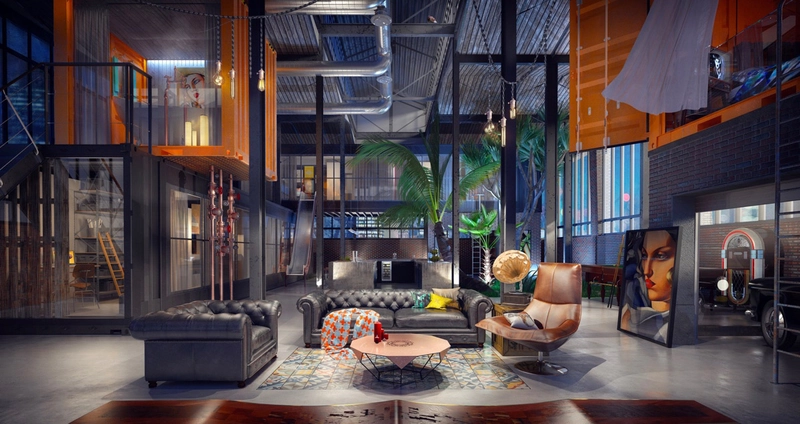
Leather and soft textiles: These softer elements help industrial interiors feel more livable and inviting, adding layers of comfort while balancing the raw, rugged aesthetic.
- To prevent spaces from feeling too cold or echoey, designers rely on tactile materials.
- Aged leather in caramel, cognac, or mahogany tones is highly popular for seating, adding a smooth-but-lived-in texture.
- These are often layered with chunky knits, linen curtains, and plush woven rugs to humanize the hard, man-made surfaces.
2.2. Industrial Furniture
Vintage and Salvaged Finds:
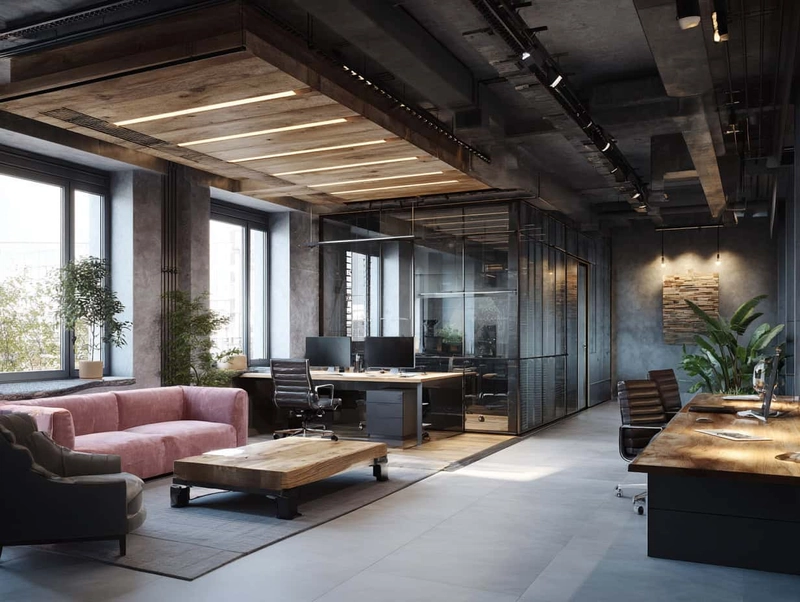
- Industrial furniture often embraces repurposed pieces with a rich sense of history, reflecting how industrial design interior values age, utility, and authenticity. Common examples include vintage machinist workbenches repurposed as console tables, old metal lockers or crates for storage, and antique drafting desks, each adding character and a story to the space.
Modern Minimalist Pieces:
- To avoid a cluttered, theme-park look, vintage items are paired with clean-lined, utilitarian modern furniture. Examples include Parsons-style tables, steel-framed dining chairs, and modular benches with straightforward lines and durable upholstery.
Comfortable and Oversized Seating:
- Large sectionals and plush seating, such as oversized sofas in chunky fabrics or classic leather lounge chairs, are essential staples that help soften the room and divide large open-plan spaces.
Open and Mobile Storage:
- Storage solutions proudly display their contents and mechanical parts. Open wire shelving, steel filing cabinets, and multi-functional furniture on rolling casters or wheels perfectly fit the warehouse aesthetic while offering highly flexible room configurations.
2.3. Industrial lighting
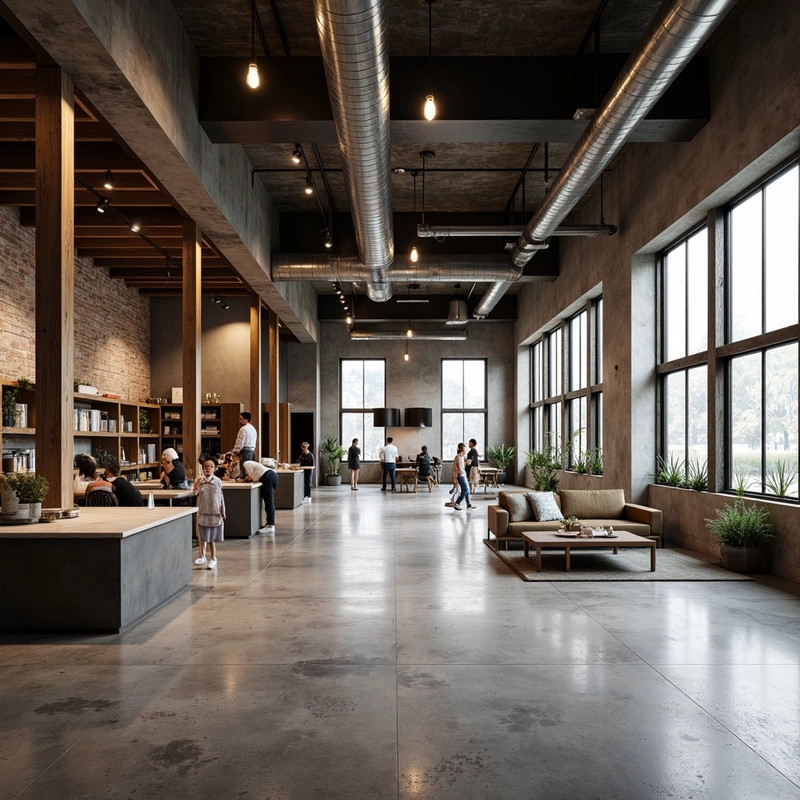
Exposed Edison bulbs: This type of lighting reinforces the workshop-inspired identity of industrial interior design, adding both visual warmth and a distinctive vintage character.
- A hallmark of industrial lighting, Edison bulbs feature visible glowing filaments that instantly convey a vintage workshop feel.
- They are frequently used in pendants, wall sconces, or clustered over dining tables to cast a warm, inviting glow that beautifully highlights rough architectural textures like brick and concrete.
Statement pendants and cage lights: In a large industrial interior, layered lighting plays a crucial role in enhancing both ambiance and functionality, while reinforcing the bold, utilitarian aesthetic.
- Lighting acts as functional art in these spaces. Common fixtures include oversized metal dome pendants used as dramatic focal points, vintage-inspired chandeliers, and wire cage wall lights originally designed to protect bulbs in factories.
Minimalist Linear Lighting:
- For a more contemporary twist, designers also incorporate sleek, minimalist lighting, such as simple black metal bar pendants integrated with modern LEDs. These provide ample illumination without competing with the room’s busier textures.
Task and Track Lighting:
- Floor lamps, articulated “workshop-style” desk lamps, and raw track lighting with pivoting metal shades are widely used to create layered lighting schemes and define specific functional zones within large, open spaces.
3. Industrial Interior Design Trends for 2026
In 2026, the industrial aesthetic has been moving away from a purely cold, rugged look to a more intentional, wellness-driven, and highly functional design. In 2026, industrial interior design has been moving away from a purely cold, rugged look to a more intentional, wellness-driven, and highly functional direction.
3.1. Coexistence of Softness and Structure
A “resimercial” (residential-commercial) or hospitality-inspired approach is replacing the strict, hard-edged industrial spaces of the past.
- Designers contrast raw elements like exposed ceilings, ducts, and concrete with softer details to create balance and comfort. This industrial interior design concept is more human-centered, especially in offices and collaborative spaces.
- To combat the acoustic challenges of open-plan warehouses, heavy emphasis is placed on soft furnishings, such as chunky knit rugs, upholstered lounge seating, and acoustic wall panels.
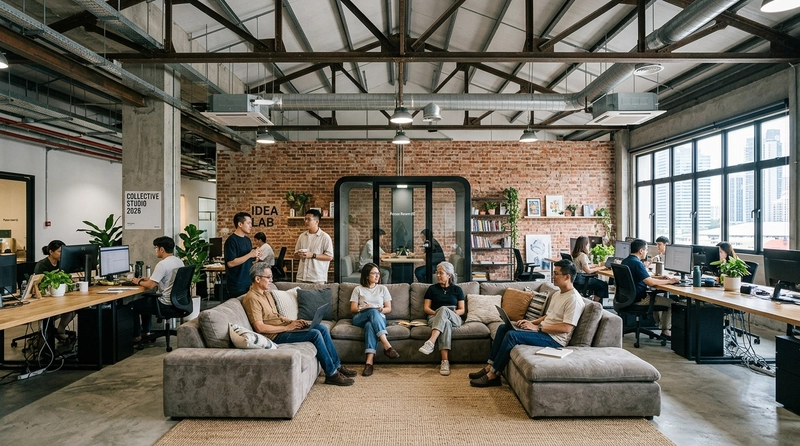
- Also, movable, soundproof acoustic pods and booths are widely used in these open areas, offering important quiet spots for concentrated work or private meetings without needing to build permanent walls.
Idea: A spacious, open-plan creative agency office. The ceiling exposes raw steel beams and silver ductwork. Below, the space is softened by a plush, oversized fabric sectional in a collaborative zone, resting on a thick textured rug. In the background, a sleek, glass-fronted soundproof acoustic pod sits against an exposed brick wall.
3.2. Bold and Sculptural Forms
Among emerging types of industrial interior design, this variation is more expressive, sculptural, and visually dynamic. In 2026 commercial interiors, furniture and lighting serve as bold, functional art:
- Statement lighting is heavily featured to define different zones within large showrooms and open offices; oversized metal dome pendants, clusters of vintage-inspired wire cage lights, and sleek, minimalist linear LEDs draw the eye upward and anchor the space.
- Furthermore, commercial layouts prioritize highly adaptable, modular forms.
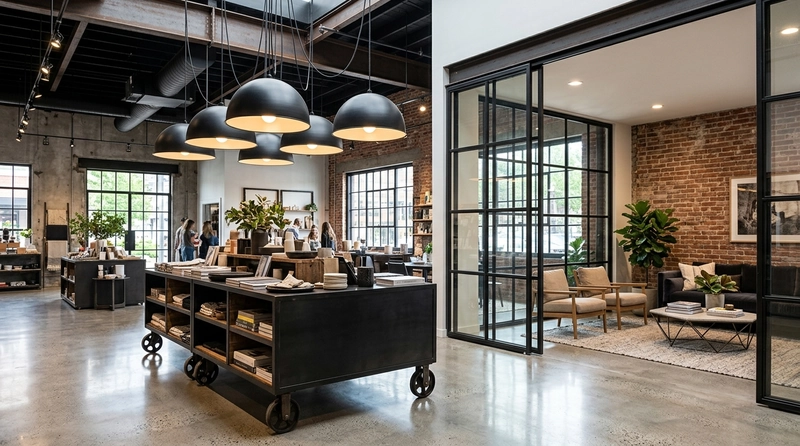
- Spaces are divided by sculptural, mobile elements like sliding acoustic partitions, metal-framed glass doors, and multi-functional storage units on heavy-duty casters, allowing the showroom or office to be reconfigured in minutes.
Idea: A trendy commercial showroom featuring high ceilings and polished concrete floors. Above a sleek, modular display table on industrial wheels hangs a dramatic cluster of oversized, matte-black metal dome pendant lights. A sliding glass-and-steel partition partially separates the display area from a client consultation lounge.
3.3. Contrasting Materials
The main idea of the industrial style focuses on using materials, combining raw metal structures (like blackened steel and wrought iron) with the cozy feel of solid or reclaimed wood. However, 2026 introduces a striking “luxury-industrial fusion.”
- This trend deliberately juxtaposes rugged, gritty materials with high-end, premium finishes to create visual tension.
- A crumbling brick wall or untreated concrete column might be paired with polished marble countertops, aged cognac leather executive chairs, or brushed brass fixtures.
- In corporate environments, this creates a space that feels simultaneously authoritative, innovative, and historically grounded.
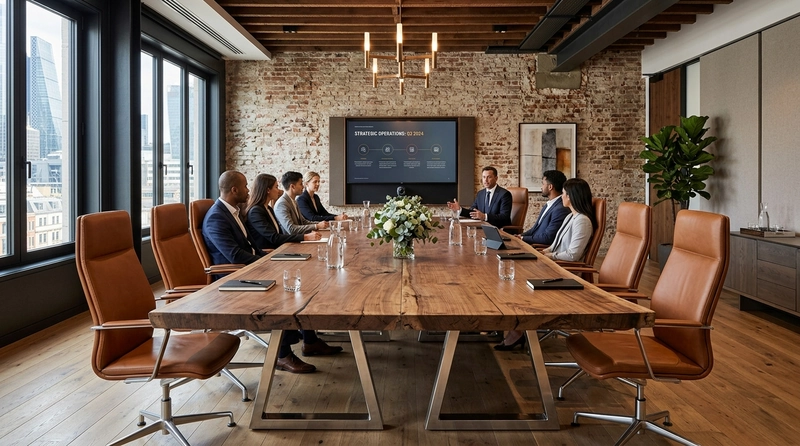
Idea: A luxury corporate boardroom. The centerpiece is a massive conference table crafted from a raw, live-edge reclaimed wood slab supported by polished stainless steel trestle legs. Surrounding the table are sleek, ergonomic chairs upholstered in rich caramel leather, set against a backdrop of a raw, slightly distressed exposed brick wall.
This approach is especially effective in modern office building interior design, where large-scale spaces demand both visual consistency and functional clarity. By combining industrial materials with refined finishes, designers can create environments that feel cohesive across multiple floors and departments.
3.4. Thoughtfully Layered Color Palettes
While classic concrete grays, steel blacks, and weathered browns still form the necessary neutral canvas, 2026 commercial spaces embrace a “neo-industrial” evolution of color. This shows how the industrial interior design style is evolving through more layered, emotionally resonant palettes.
- To align with brand identities without relying on overwhelming corporate logos, designers use purposeful, sophisticated color psychology.
- Workspaces and showrooms are layered with deep, desaturated tones (like navy, charcoal blue, or sage green) and warm earth tones (like terracotta, rust, and ochre).
- These layered palettes are integrated subtly through textiles, acoustic panels, and accent furniture, adding emotional depth and warmth that brings the industrial warehouse aesthetic to life.
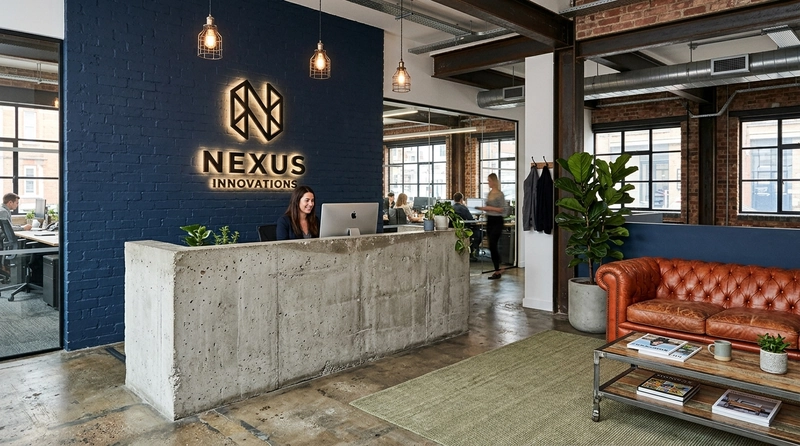
Idea: An industrial-style office reception area. The reception desk is made of raw, cast concrete. The wall behind it is painted in a deep, moody navy blue, featuring a subtle, backlit metal company logo. The waiting area features a distressed rust-orange leather sofa and a muted olive-green acoustic rug.
3.5. Biophilic Design and Natural Element
Biophilic design is no longer just a trend; it is a baseline expectation for commercial well-being and productivity.
- The 2026 industrial office integrates nature directly into its raw architecture to soften the environment and reduce stress. As a result, the modern industrial interior feels more balanced and restorative, with designers embedding natural elements into the space rather than relying on simple potted plants.
- This includes living green walls that contrast beautifully against concrete, and innovative commercial furniture that features preserved grasses and wildflowers elegantly integrated into modular planters and banquette seating.
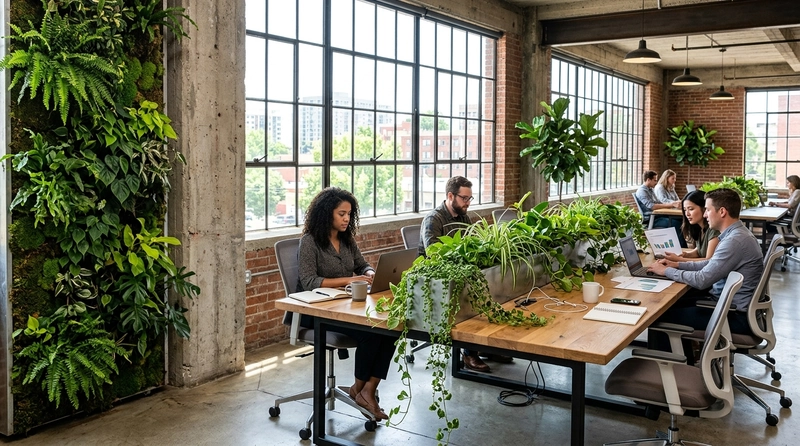
Idea: A bright, hybrid coworking space flooded with natural light from massive steel-framed factory windows. A floor-to-ceiling vertical garden (living wall) climbs up a raw concrete pillar. In the center, a collaborative workstation features an integrated metal trough in the middle of the wooden desk, overflowing with lush, green trailing plants.
3.6. Technology Integrated Into Design (Added Trend)
In 2026, smart technology and AI are essential in commercial spaces, but within industrial design, they are seamlessly integrated to preserve the raw, vintage aesthetic. This marks a key shift in the contemporary industrial design interior approach, where technology remains visually discreet.
- The architecture conceals smart building infrastructure, including occupancy sensors and AI-powered climate control.
- On the furniture level, modern conveniences are embedded directly into raw materials: USB ports and power grids are concealed within blackened metal frames, and wireless charging stations are embedded flush into reclaimed wood tabletops.
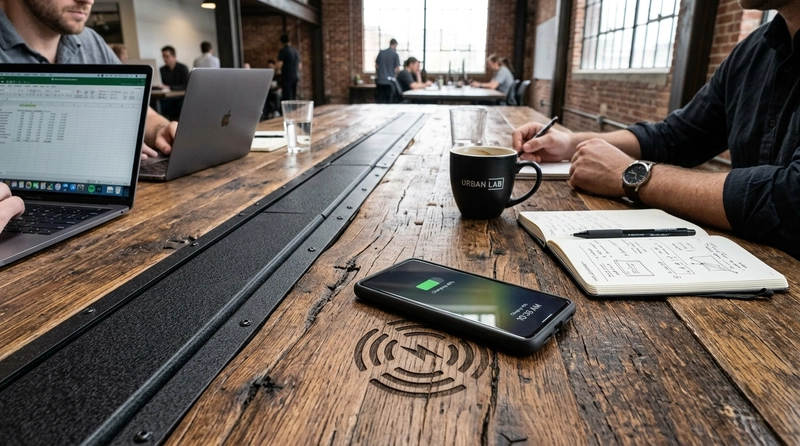
Idea: A close-up of a collaborative meeting table in an industrial office. The tabletop is made of heavily textured, reclaimed barn wood. Etched subtly into the wood is a circular symbol indicating a built-in, invisible wireless charging pad where a modern smartphone is currently resting and charging. A sleek, black metal channel runs down the center of the table, hiding all power cables.
3.7. Circularity and Eco-Responsible Furniture
Sustainability is a mandatory standard in 2026 commercial fit-outs. The industrial style supports this through re-industrialized, second-hand, and repurposed furniture. Today, the industrial interior design meaning also reflects circularity, adaptive reuse, and responsible material choices.
- Offices and showrooms are heavily utilizing circular materials, such as acoustic panels made from recycled PET plastic bottles or old denim, table tops made from upcycled textile composites, and structures forged from recycled steel.
- Furthermore, modular furniture designed for easy disassembly allows commercial spaces to replace individual parts rather than discarding entire desks or chairs, significantly lowering the total cost of ownership and carbon footprint.
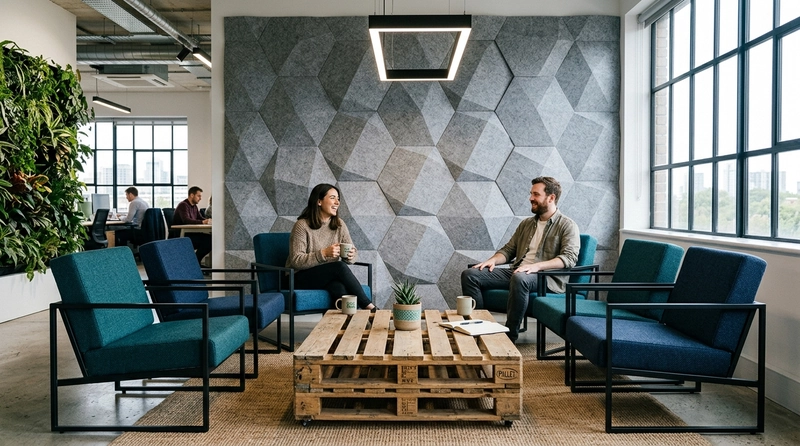
Idea: A modern office breakout zone prioritizing sustainability. The walls are clad in geometric acoustic panels made from recycled, compressed gray felt. The seating consists of modular, steel-framed chairs with upholstery made from recycled ocean plastics, gathered around a coffee table crafted from repurposed industrial shipping pallets.
Industrial interior design has proven its enduring power by successfully evolving from a rugged warehouse aesthetic into a sophisticated, future-ready style. By embracing this thoughtful fusion of raw character and refined comfort, your next project can achieve a space that is not only stylish and authoritative but genuinely built for well-being and the future of work.
Don’t let your Industrial Chic design ideas stay on paper. With our deep expertise in commercial projects, Deco Crystal is committed to creating premium, sustainable, and functionally optimized workspaces. Contact us today for expert consultation and start transforming your vision into reality.
|
Crystal Design – We work to inspire. Contact us for consultation and site survey:
|